Description
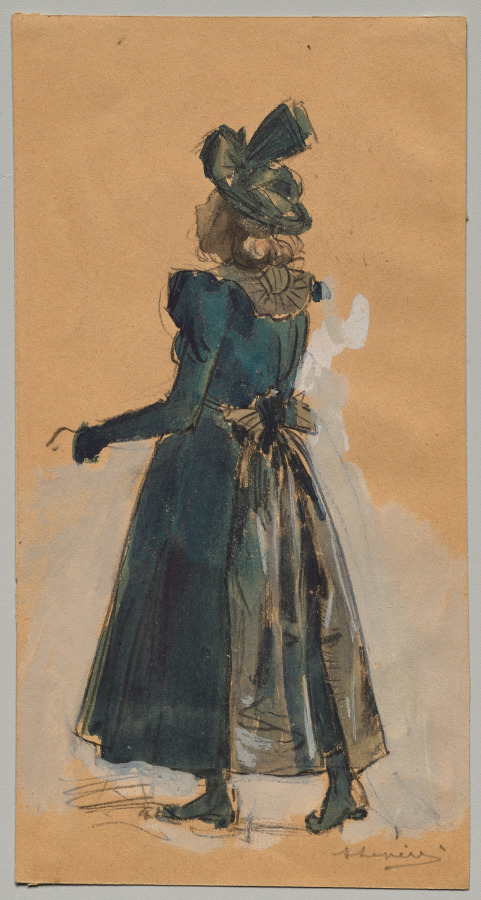
Although celebrated as the leader of the creative revival of wood engraving in late 19th-century France, Lepère was also a painter who used pastel to make studies directly from nature. This study of a woman sewing is inscribed to the artist’s friend, Lotz-Brissonneau, who in 1905 authored the catalogue raisonné of Lepère’s graphic work.
Provenance
Estate of Muriel Butkin (2008 ); Estate of Muriel Butkin
Accession Number
2009.127
Medium
pastel
Dimensions
Sheet: 55.6 x 26.5 cm (21 7/8 x 10 7/16 in.)
Classification
Drawing
Credit Line
Bequest of Muriel Butkin
Tags
Drawing Impressionist & Modern (1851–1900) Pastel French Color: Brown Color: Gray
Background & Context
Background Story
This portrait of a man identified only as Lotz demonstrates Lepère's versatility in pastel, a medium he used less frequently than charcoal and ink but with equal authority. Working in pastel allowed Lepère to combine his draftsmanship with a chromatic richness that his monochrome works could not achieve. The turn of the century date places this work during Lepère's most productive period, when he was simultaneously producing his celebrated Paris street prints and exploring a wider range of subjects and media.
Cultural Impact
Lepère's pastel portraits are relatively rare compared to his graphic work, and they reveal a different side of his talent: the ability to capture a specific human presence rather than a typical scene. The directness of the medium — pastel applied directly to paper with no underdrawing visible — produces an immediacy that connects Lepère's portraiture to the French pastel tradition of La Tour and Perronneau.
Why It Matters
Lotz shows Lepère as a portraitist: observant, direct, and technically assured in a medium he used less often but commanded completely. It is a reminder that the artist who documented Parisian streets was also a close observer of individual human faces.