
Accession Number
2010.162
Medium
black and colored crayons
Dimensions
Sheet: 19.6 x 26.8 cm (7 11/16 x 10 9/16 in.)
Classification
Drawing
Credit Line
Bequest of Muriel Butkin
Tags
Drawing Neoclassical & Romantic (1751–1850) Swiss Color: Orange Color: White
Background & Context
Background Story
Theophile Alexandre Steinlen (1859-1923) was a Swiss-French artist known for the characterfully observed, precisely composed drawings and prints that make him one of the most accomplished artists of the 19th- and 20th-century French tradition. Three Figures from the 1900s depicts three figures in the characterfully observed, precisely composed manner that distinguishes Steinlen's best work from the more general drawing of his contemporaries. Steinlen was known for his characterfully observed, precisely composed depictions of Parisian working-class life that capture the personality and dignity of his subjects with remarkable empathy, and Three Figures shows the French drawing tradition at its most accomplished.
Cultural Impact
Three Figures is important in the history of French drawing because it demonstrates the characterfully observed, precisely composed manner that Steinlen brought to depictions of Parisian working-class life as one of the most accomplished artists of the 19th- and 20th-century French tradition. Steinlen's characterfully observed, precisely composed depictions of Parisian working-class life—capturing the personality and dignity of his subjects with remarkable empathy—represent one of the most accomplished traditions in French drawing, and the 1900s drawing shows this tradition at its most characterfully observed.
Why It Matters
Three Figures is Steinlen's characterfully observed drawing: three figures rendered in the precisely composed manner of one of the most accomplished artists of the 19th- and 20th-century French tradition. The 1900s drawing shows Parisian working-class life at its most characterfully observed.
Related Artworks
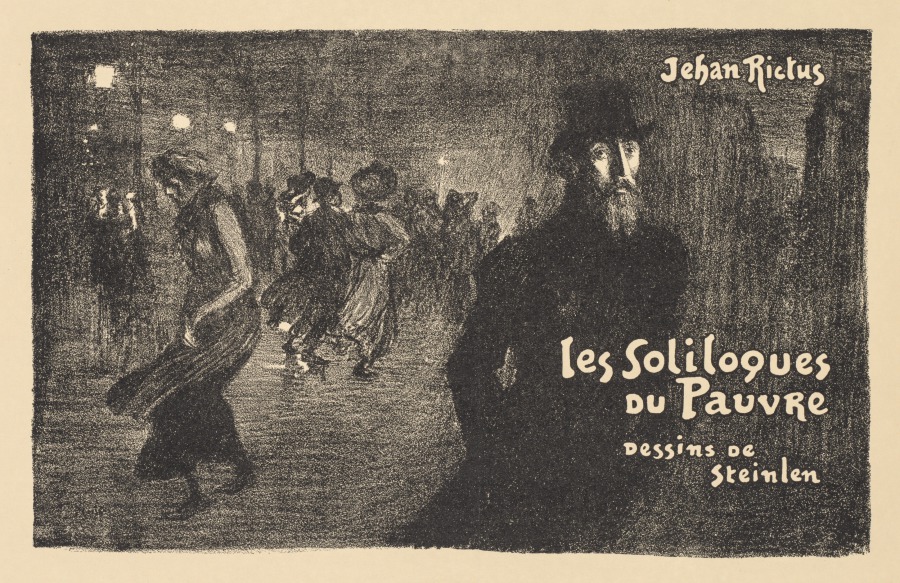
Paris by Night (Paris La Nuit)
Théophile Alexandre Steinlen
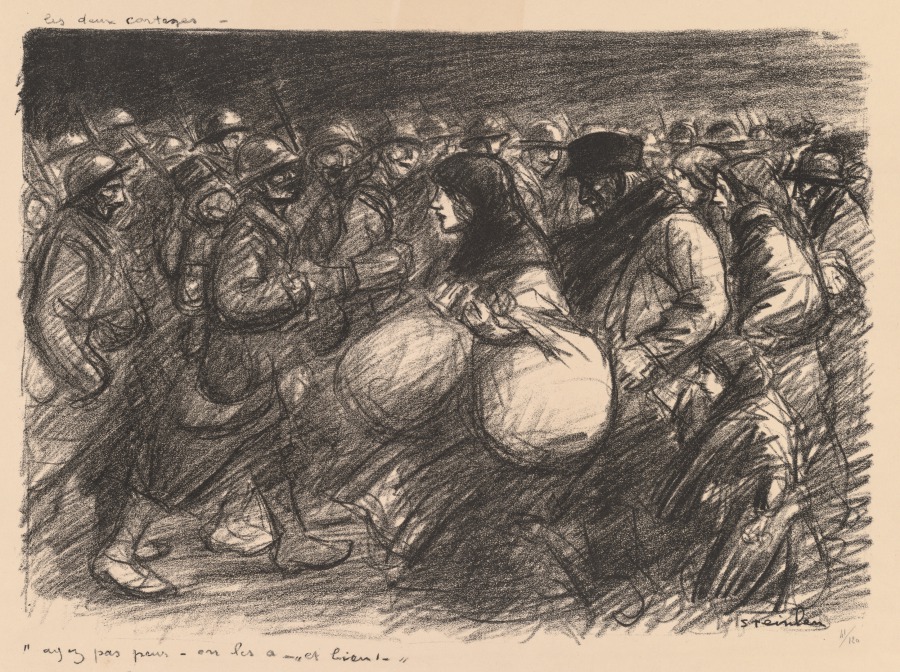
War Sketches: The Two Processions (Croquis de guerre: Les deux cortèges – “Ayez pas peur - on les a - et bien!”)
Théophile Alexandre Steinlen
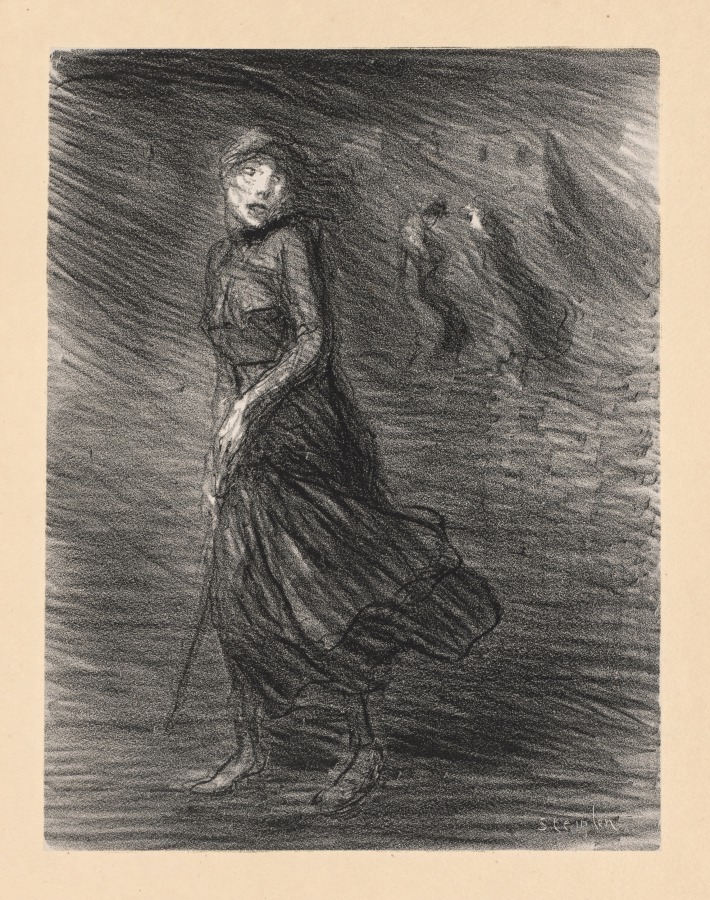
In the Street (Dans la Rue)
Théophile Alexandre Steinlen
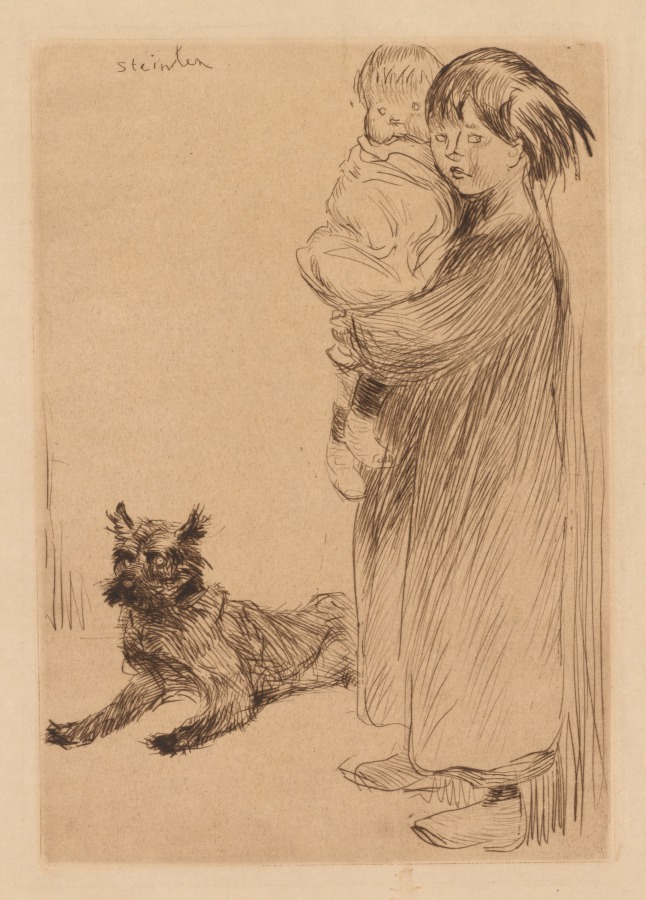
The Big Sister (La Grande Soeur)
Théophile Alexandre Steinlen