
Provenance
(Charles Sessler, Philadelphia); sold 16 September 1929 to Lessing J. Rosenwald [1891-1979], Jenkintown, PA;[1] gift 1943 to NGA.
[1] According to Rosenwald papers in NGA Gallery Archives; pertinent copies in NGA curatorial files.
Accession Number
1943.11.5
Medium
oil on canvas
Dimensions
overall: 81 x 66 cm (31 7/8 x 26 in.) | framed: 94 x 75.9 x 4.9 cm (37 x 29 7/8 x 1 15/16 in.)
Classification
Painting
Credit Line
Rosenwald Collection
Tags
Painting Early Modern (1901–1950) Oil Painting Canvas French
Background & Context
Background Story
The Stockade marks a dramatic shift in Forain's subject matter. After decades of chronicling Parisian nightlife and society, he turned in his later career to darker, more harrowing subjects: the courtroom, the prison, the stockade. This painting of prisoners behind barriers is painted with the same rapid, slashing brushwork as his racetrack scenes, but the lightness is gone, replaced by an almost Goyaesque darkness. The stockade bars create a literal and metaphorical frame that turns the painting into a commentary on confinement and justice.
Cultural Impact
Forain's shift from society chronicler to social critic paralleled his involvement in the Dreyfus Affair, which split French society in the 1890s. His later courtroom and prison paintings reflect a disillusionment with the social world he had once depicted with such satirical relish. The stockade is both a physical structure and a symbol of the systems that confine human beings.
Why It Matters
The Stockade shows Forain's artistic range and moral seriousness. The chronicler of Parisian pleasures could also paint Parisian cruelties, and this late work reveals a depth that his lighter satires sometimes conceal.
Related Artworks
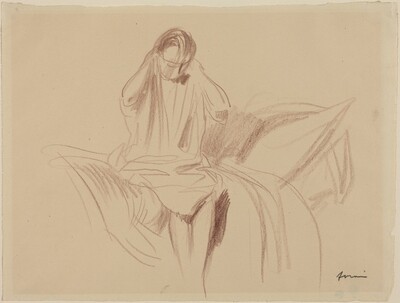
Morning
Forain, Jean-Louis
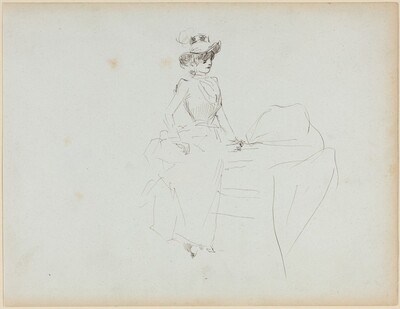
a) Woman with Bustle (recto); b) Sketch of a Woman's Face (verso)
Forain, Jean-Louis

a) Butler and Maid Resting (recto); b) Study of a Man Carrying a Package (verso)
Forain, Jean-Louis

a) Au village (In the Village) (recto); b) Au village (In the Village) (verso)
Forain, Jean-Louis