Provenance
(Villa Grisebach Auktionen, 8 June 2002, no. 145). (Arturo Cuéllar, Zurich); gift to NGA, 2005.
Accession Number
2005.50.1
Medium
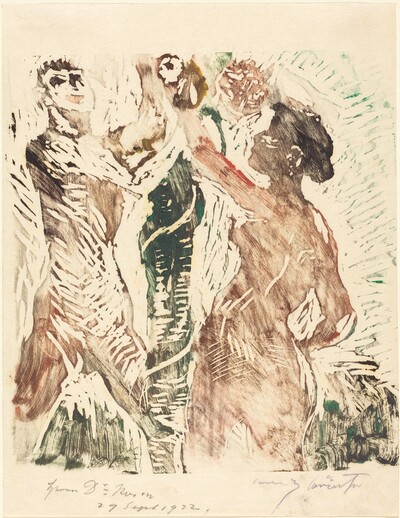
pastel on laid paper, laid down on cardboard
Dimensions
overall: 42.2 x 51.2 cm (16 5/8 x 20 3/16 in.)
Classification
Drawing
Credit Line
Anonymous Gift
Tags
Drawing Impressionist & Modern (1851–1900) Pastel Paper Board German
Background & Context
Background Story
Lovis Corinth (1858-1925) was a German painter known for the combination of Impressionist technique and Expressionist intensity that makes his work a bridge between German Impressionism and Expressionism. Woodland Path from the 1890s depicts a forest path in the pastel medium that Corinth used for his most spontaneous landscape sketches. The 1890s date places this in Corinth's early period, when he was developing the Impressionist manner that would later give way to the more intense Expressionist style of his later career. The pastel medium allows a spontaneity and directness that Corinth's oil paintings lack, making this woodland path sketch a document of his Impressionist manner at its most immediate.
Cultural Impact
Woodland Path is important in Corinth's oeuvre because it demonstrates the Impressionist manner from which his later Expressionist style would develop. The pastel medium allows a spontaneity that his oil paintings lack, and the 1890s date places this in the period when Corinth was still working in an Impressionist manner that would later give way to the more intense Expressionist style of his mature work.
Why It Matters
Woodland Path is Corinth's Impressionist manner in pastel: a forest path rendered with the spontaneity and directness that the pastel medium allows, documenting the Impressionist manner from which his later Expressionist style would develop. The 1890s sketch bridges German Impressionism and the Expressionism to come.