Provenance
Frank Moss [1838-1924], Washington; by inheritance to his wife, Annie Moss [1846-1938, née Annie Bathurst Harrison], Washington; gift 1929 to the Corcoran Gallery of Art, Washington; acquired 2015 by the National Gallery of Art.
Accession Number
2015.19.52
Medium
oil on canvas
Dimensions
overall: 45.72 × 36.83 cm (18 × 14 1/2 in.) | framed: 63.5 × 54.29 × 8.26 cm (25 × 21 3/8 × 3 1/4 in.)
Classification
Painting
Credit Line
Corcoran Collection (Gift of Mrs. Frank Moss)
Tags
Painting Impressionist & Modern (1851–1900) Oil Painting Canvas French
Background & Context
Background Story
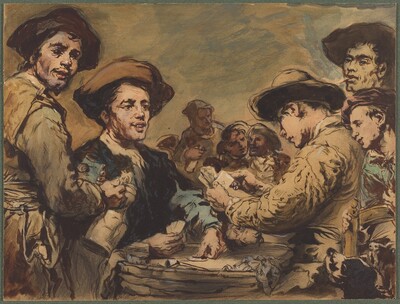
Théodule Ribot (1823-1891) was a French painter known for his intimate domestic scenes and still lifes, painted in a dark palette influenced by the Spanish masters and the French realism of the mid-19th century. Seated Woman from 1880-85 is a late work depicting a woman in a simple interior, rendered with the dark palette and direct observation that distinguish Ribot's best work. The 1880s date places this in Ribot's late period, when his style had achieved the simplicity and directness that come from decades of working within a limited range of subjects and a restricted palette.
Cultural Impact
Ribot's domestic paintings are important in the history of 19th-century French realism because they combine the dark palette and direct observation of Spanish painting with specifically French subjects—the domestic interiors, kitchen scenes, and still lifes that are the humble counterparts of the more ambitious history paintings that dominated the Salon. Seated Woman demonstrates Ribot's ability to find significance in the simplest domestic subject: a woman seated in an interior, rendered with the dignity that Ribot brought to all his sitters.
Why It Matters
Seated Woman is Ribot's late realism at its most direct: a woman in a simple interior rendered with the dark palette and dignified observation that characterize his best work. The 1880-85 date places this in Ribot's late period, when the simplicity and directness of his style had become the means of finding significance in the humblest domestic subjects.