Provenance
Prince Alberto Giovanelli [1896-1937], Venice, until c. 1930.[1] (Count Alessandro Contini Bonacossi, Rome); purchased 1931 by the Samuel H. Kress Foundation, New York;[2] gift 1939 to NGA.
[1] According to typed note from the Kress Records, NGA curatorial files.
[2] According to typed note from the Kress Records, NGA curatorial files, and Fern Rusk Shapley, _Catalogue of Italian Paintings_, 2 vols., Washington, D.C., 1979: 1:268; see also The Kress Collection Digital Archive, https://kress.nga.gov/Detail/objects/2182.
Accession Number
1939.1.64
Medium
oil on canvas
Dimensions
overall: 49.9 x 61.7 cm (19 5/8 x 24 5/16 in.) | framed: 65.4 x 55.9 x 3.8 cm (25 3/4 x 22 x 1 1/2 in.)
Classification
Painting
Credit Line
Samuel H. Kress Collection
Tags
Painting Baroque (1600–1750) Oil Painting Canvas Italian
Background & Context
Background Story
Pietro Longhi (1701-1785) was a Venetian painter known for his small-scale genre scenes of Venetian aristocratic and domestic life that record the social customs of 18th-century Venice with the precision of an ethnographer. The Game of the Cooking Pot from c. 1744 depicts a group of Venetian aristocrats playing a party game in the intimate, observational manner that distinguishes Longhi's best work. The cooking pot game was a popular Venetian party game, and Longhi's depiction records the social custom with the same precision that he brought to all his genre scenes of Venetian life.
Cultural Impact
The Game of the Cooking Pot is important in the history of Venetian genre painting because it records a Venetian social custom with the ethnographic precision that distinguishes Longhi's best work. Longhi's genre scenes of Venetian aristocratic life are the visual equivalent of Goldoni's comedies—they record the social customs of 18th-century Venice with the same precision that the great Venetian dramatist brought to his plays, making Longhi's paintings invaluable documents of Venetian social life.
Why It Matters
The Game of the Cooking Pot is Longhi's Venetian social life recorded: a group of aristocrats playing a party game in the intimate, observational manner that makes his genre scenes the visual equivalent of Goldoni's comedies. The c. 1744 painting records a Venetian social custom with the precision of an ethnographer.
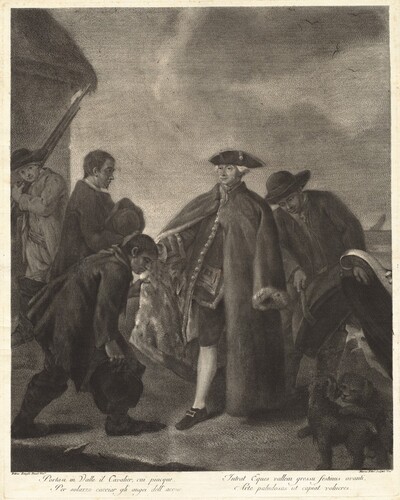
![A Venetian Procurator of San Marco [recto]](https://api.nga.gov/iiif/11519f5e-9b5f-4b3d-9c94-dec0a18aa95c/full/400,/0/default.jpg)
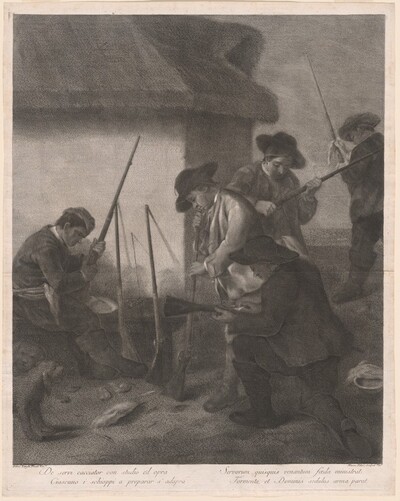
![Portrait of a Procurator [verso]](https://api.nga.gov/iiif/010ac9b4-3c13-4313-9e66-d8de843ac015/full/400,/0/default.jpg)