Provenance
Alphonse Kann [1870-1948], Paris; (his sale, Galerie Georges Petit, Paris, 6-8 December 1920, no. 10). Josef Stransky [1885-1936], possibly owned with (Wildenstein & Co., New York); sold 1929 to Chester Dale [1883-1962], New York; gift 1943 to NGA.
Accession Number
1943.7.3
Medium
oil on canvas
Dimensions
overall: 51 x 41.3 cm (20 1/16 x 16 1/4 in.) | framed: 70 x 60 x 8.6 cm (27 9/16 x 23 5/8 x 3 3/8 in.)
Classification
Painting
Credit Line
Chester Dale Collection
Tags
Painting Baroque (1600–1750) Oil Painting Canvas
Background & Context
Background Story
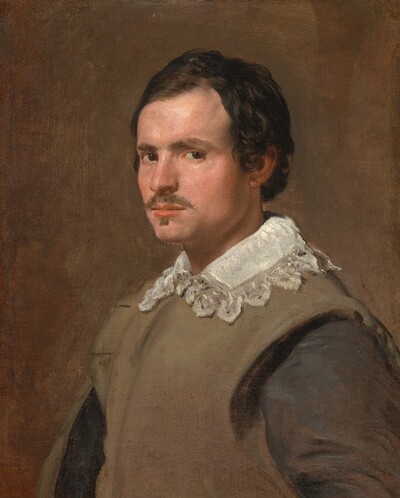
This portrait, attributed to a follower of Chardin, demonstrates the influence his style exerted on 18th-century French painting beyond the genres where he is best known. Chardin himself rarely painted portraits — his genius was for still life and genre scenes — but his emphasis on psychological presence, subdued palette, and tactile surface quality was absorbed by a generation of painters. This unknown sitter, painted with careful attention to the texture of skin and fabric and with the kind of quiet contemplation that characterizes Chardin's best work, shows how his aesthetic principles could be adapted to the portrait tradition.
Cultural Impact
The Follower of Chardin attribution reminds us that Chardin's influence extended well beyond the Salon walls. Painters throughout France adopted his subdued palette, his focus on surface texture, and his preference for quiet observation over dramatic gesture. The result was a quieter, more honest strain of 18th-century portraiture that ran alongside the more theatrical styles of Nattier and Boucher.
Why It Matters
This portrait shows that Chardin's revolution was not limited to still life and genre. His way of seeing — with patience, honesty, and attention to the tactile world — could transform any subject, including portraiture.