Masters of Their Craft
Artists
Discover the visionaries who shaped the course of art history.
31,194 artists in the collection

Briosco, Benedetto
Italian
Lombard, active 1477 - after 1514
Benedetto Briosco (c.1460–c.1517) was an Italian Renaissance sculptor and architect, active in Lombardy. Briosco was born in Pavia, and is thought to have apprenticed in Milan. His sepulchre monument of Ambrogio Grifi (1489) in the church of San Pietro in Gessate in Milan is his first documented work. The statue is characterized by a crude realism. Also from his early years in Milan, in which he collaborated with Francesco Cazzaniga, are the Brivio Monument in the Basilica of Sant'Eustorgio (1489) and the Della Torre Monument in Santa Maria delle Grazie (1483–1484). From around 1492 he was involved in the sculptural program of the Certosa di Pavia. He collaborated on the decoration of the façade with Giovanni Antonio Amadeo, and after the death of Amadeo he took over as sole director of the design and sculpting of the main portal (1501–1507). He also worked on the tomb of Gian Galeazzo Visconti (under Giovanni Cristoforo Romano). In 1508-13 he worked in the Cathedral of Cremona (sculpting the Urn of Saints Peter and Marcellinus). Traveling from Lombardy to Piedmont, in the church of San Giovanni in Saluzzo he built the tomb of Ludovico II of Saluzzo. He sculpted the noteworthy statue...

Briosco, called Riccio, Andrea
Italian
Paduan, 1470 - 1532
Andrea Riccio (c. 1470 – 1532) was an Italian sculptor and occasional architect, whose real name was Andrea Briosco, but is usually known by his sobriquet meaning "curly"; he is also known as Il Riccio and Andrea Crispus ("curly" in Latin). He is mainly known for small bronzes, often practical objects such as inkwells, door knockers or fire-dogs, exquisitely sculpted and decorated in a classicizing Renaissance style. He was born at Padua, and first trained as a goldsmith by his father, Ambrogio di Cristoforo Briosco. He later began to study bronze casting under Bartolomeo Bellano, a pupil of Donatello. As an architect, he is known for the church of Santa Giustina in his native city. His masterpieces are the bronze Paschal candelabrum in the choir in Basilica of Sant'Antonio at Padua (1515), and the two bronze reliefs (1507) of David dancing before the Ark and Judith and Holofernes in the same church. His bronze and marble tomb of the physician Girolamo della Torre in the church of San Fermo at Verona was beautifully decorated with reliefs, which were taken away by the French and are now in the Louvre. His smaller, easily transportable, works appealed to collectors across Europe...
Briot, Isaac
French
French, 1585 - 1670
Briquet, Alfred
French
French, 1833 - 1926
Briscoe, Arthur
British
British, 1873 - 1943
Leonard W. Briscoe is a fictional character on NBC's long-running police procedural and legal drama television series Law & Order. He was created by Walon Green and René Balcer and portrayed by Jerry Orbach. He was featured on the show for 12 complete seasons and part of another, from 1992 to 2004, making him one of the longest-serving main characters in the series' history, as well as the longest-serving police detective on the show. He also appeared in three Law & Order spin-offs and was part of the original cast of Law & Order: Trial by Jury, appearing in the first two episodes prior to his death. He appears in 282 episodes across the Law & Order franchise (273 episodes of Law & Order, two episodes of Law & Order: Trial by Jury, one episode of Law & Order: Criminal Intent, three episodes of Law & Order: Special Victims Unit, and three crossover episodes of Homicide: Life on the Street), the TV movie Exiled and the Law & Order video games Law & Order: Dead on the Money, Law & Order: Double or Nothing, Law & Order: Justice Is Served and Law & Order: Legacies. Prior to Orbach's recurring role, he played lawyer Frank Lehrman on Season 2 Episode 2, "The Wages of Love". Orbach's performance...
Brisley, Stuart
British
British, born 1933
Stuart Brisley (born 1933) is a British artist.

Bristol, Horace
American
American, 1908 - 1997
Horace Bristol (November 16, 1908 – August 4, 1997) was a twentieth-century American photographer, best known for his work in Life. His photos appeared in Time, Fortune, Sunset, and National Geographic magazines.
Bristol Porcelain Factory
British
British
British

British 17th Century
English
Early modern Britain is the history of the island of Great Britain roughly corresponding to the 16th, 17th and 18th centuries. Major historical events in early modern British history include numerous wars, especially with France, along with the English Renaissance, the English Reformation and Scottish Reformation, the English Civil War, the Restoration of Charles II, the Glorious Revolution, the Treaty of Union, the Scottish Enlightenment and the formation and the collapse of the First British Empire.
British 18th Century
British
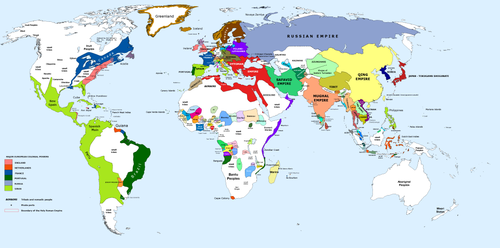
The 18th century lasted from 1 January 1701 (represented by the Roman numerals MDCCI) to 31 December 1800 (MDCCC). During the 18th century, elements of Enlightenment thinking culminated in the Atlantic Revolutions. Revolutions began to challenge the legitimacy of monarchical and aristocratic power structures. The Industrial Revolution began mid-century, leading to radical changes in human society and the environment. The European colonization of the Americas and other parts of the world intensified and associated mass migrations of people grew in size as part of the Age of Sail. During the century, slave trading expanded across the shores of the Atlantic Ocean, while declining in Russia and China. Western historians have occasionally defined the 18th century otherwise for the purposes of their work. For example, the "short" 18th century may be defined as 1715–1789, denoting the period of time between the death of Louis XIV of France and the start of the French Revolution, with an emphasis on directly interconnected events. To historians who expand the century to include larger historical movements, the "long" 18th century may run from the Glorious Revolution of 1688 to the Battle of...