Masters of Their Craft
Artists
Discover the visionaries who shaped the course of art history.
31,194 artists in the collection

Cock, Jan Wellens de
Netherlandish
Netherlandish, c. 1480 - c. 1527
Jan Wellens de Cock or Jan de Cock (c. 1460/1480 – in or before 1521) was a Flemish painter, woodblock artist and draftsman of the Northern Renaissance active in Antwerp. Recent discoveries and a re-evaluation of the links between the works attributed to Wellens de Cock and those of contemporaneous artists of Leiden have caused a large portion and potentially all of the works formerly attributed to him to be re-attributed to one or more anonymous artists active in Antwerp or Leiden referred to by the notname Pseudo Jan Wellens de Cock or Master J. Kock or some other anonymous artists believed to have worked in Leiden in the studio or immediate circle of Cornelis Engebrechtsz.
Cock, Matthys
Netherlandish
Netherlandish, c. 1509 - 1548
Cocks, John H.
American
American, 1850 - 1938
Cockson, Thomas
English
English, active c. 1591/1636
Coclé
Coco Fusco
Coco Schoenberg
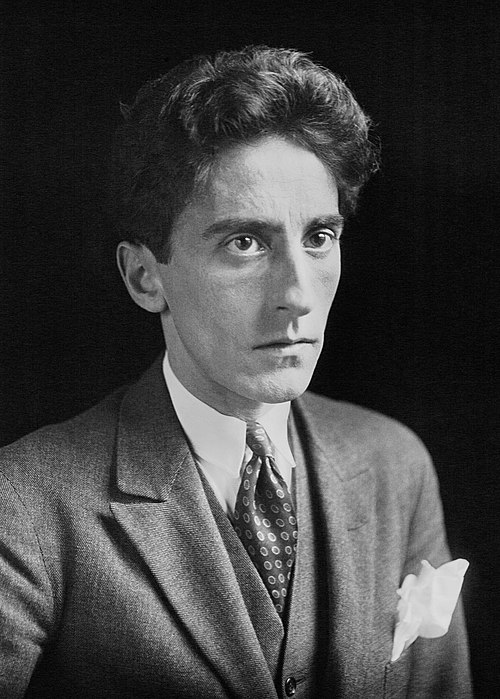
Cocteau, Jean
French
French, 1889 - 1963
Jean Maurice Eugène Clément Cocteau (UK: KOK-toh, US: kok-TOH; French: [ʒɑ̃ mɔʁis øʒɛn klemɑ̃ kɔkto]; 5 July 1889 – 11 October 1963) was a French poet, playwright, novelist, designer, film director, visual artist and critic. He was one of the foremost avant-garde artists of the 20th century and highly influential on the Surrealist and Dadaist movements, among others. The National Observer suggested that "of the artistic generation whose daring gave birth to Twentieth Century Art, Cocteau came closest to being a Renaissance man". He is most notable for his novels Le Grand Écart (1923), Le Livre blanc (1928), and Les Enfants Terribles (1929); the stage plays La Voix Humaine (1930), La Machine Infernale (1934), Les Parents terribles (1938), La Machine à écrire (1941), and L'Aigle à deux têtes (1946); and the films The Blood of a Poet (1930), Les Parents Terribles (1948), Beauty and the Beast (1946), Orpheus (1950), and Testament of Orpheus (1960), which alongside Blood of a Poet and Orpheus constitute the so-called Orphic Trilogy. He was described as "one of [the] avant-garde's most successful and influential filmmakers" by AllMovie. Cocteau, according to Annette Insdorf, "left behind...
Codazzi, Niccolò
Italian
Italian, 1642 - 1693
Codde, Pieter
Coder Taylor Associates
Codrescu, Alice
active 1970s