Provenance
Hendricus Petrus Bremmer (1871-1956), The Hague, by 1950 [The Hague 1950]. H. Bremmer, Zeist, by 1960 [Paris 1960]. Sold by E. V. Thaw and Co., New York, to the Art Institute of Chicago, 1969.
Accession Number
31640
Medium
Pen and brown ink, with touches of pen and black ink, graphite and graphite frottage, and traces of black chalk, on grayish-white paper laid down on cardboard
Dimensions
33.7 × 43.8 cm (13 5/16 × 17 1/4 in.)
Classification
pen and ink drawings
Credit Line
Robert Allerton Fund
Background & Context
Background Story
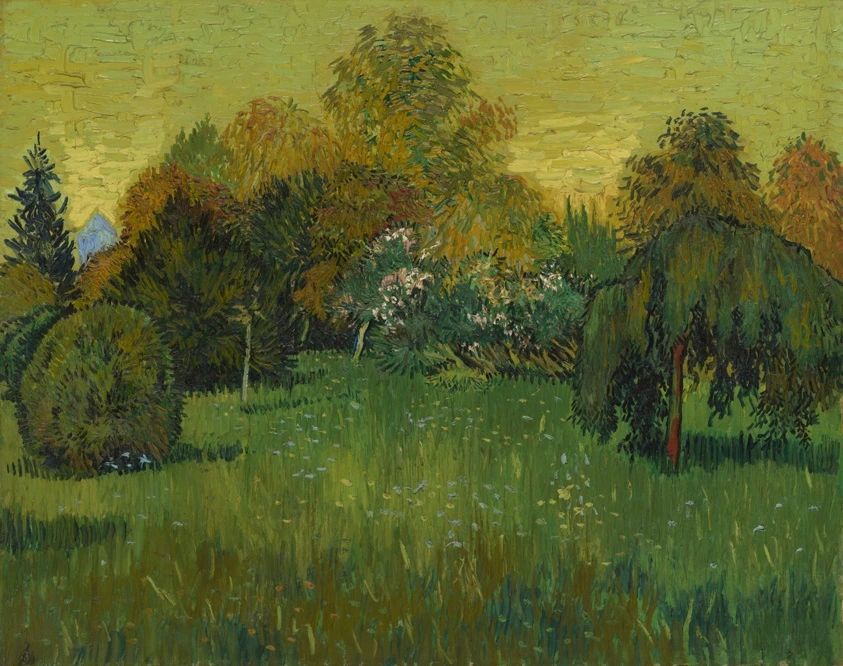
Vincent van Goghs Tetards (Pollards) from 1884 is a pen and brown ink drawing with touches of black ink, graphite frottage, and black chalk on grayish-white paper that depicts pollarded trees, a subject that the Dutch artist treated repeatedly during his Nuenen period as both a formal study of the relationship between natural and cultivated form and an expression of the psychological state that he associated with the landscape of the Dutch countryside. Van Gogh, who was living in Nuenen in the southern Netherlands when he produced this drawing, was in the period of his most sustained engagement with the Dutch landscape tradition, producing drawings and paintings that combine the topographic specificity of the Dutch realist landscape with the expressive intensity that would characterize his later work. The pollarded trees, which have been cut back to their trunks to promote new growth, provided van Gogh with a subject that combines the natural form of the tree with the human intervention of the pruning, creating an image that is simultaneously a record of agricultural practice and a meditation on the relationship between cultivation and nature. The graphite frottage, which creates the textured ground of the drawing by rubbing graphite over the textured surface of the paper or an underlying material, is a technique that van Gogh used to create the atmospheric effects of the Dutch landscape, in which the flat, featureless terrain is given visual interest by the texture of the earth and the vegetation. The year 1884 places this drawing in the period before van Goghs move to Paris and his discovery of Impressionism, when he was producing the dark-toned drawings and paintings of the Dutch countryside that are among his most accomplished early works.
Cultural Impact
Van Goghs Nuenen drawings are significant documents for understanding the development of his style and the relationship between his early Dutch work and his later Post-Impressionist paintings. Tetards demonstrates the combination of topographic observation and expressive intensity that makes his early work significant. The drawing influenced the development of expressive landscape drawing.
Why It Matters
A 1884 pen and brown ink drawing by van Gogh on grayish-white paper depicting pollarded trees with graphite frottage and black chalk, combining Dutch realist topographic observation with the expressive intensity of his Nuenen period before the transformative discovery of Impressionism in Paris.