Portrait of a Woman with a Black Fichu

Description

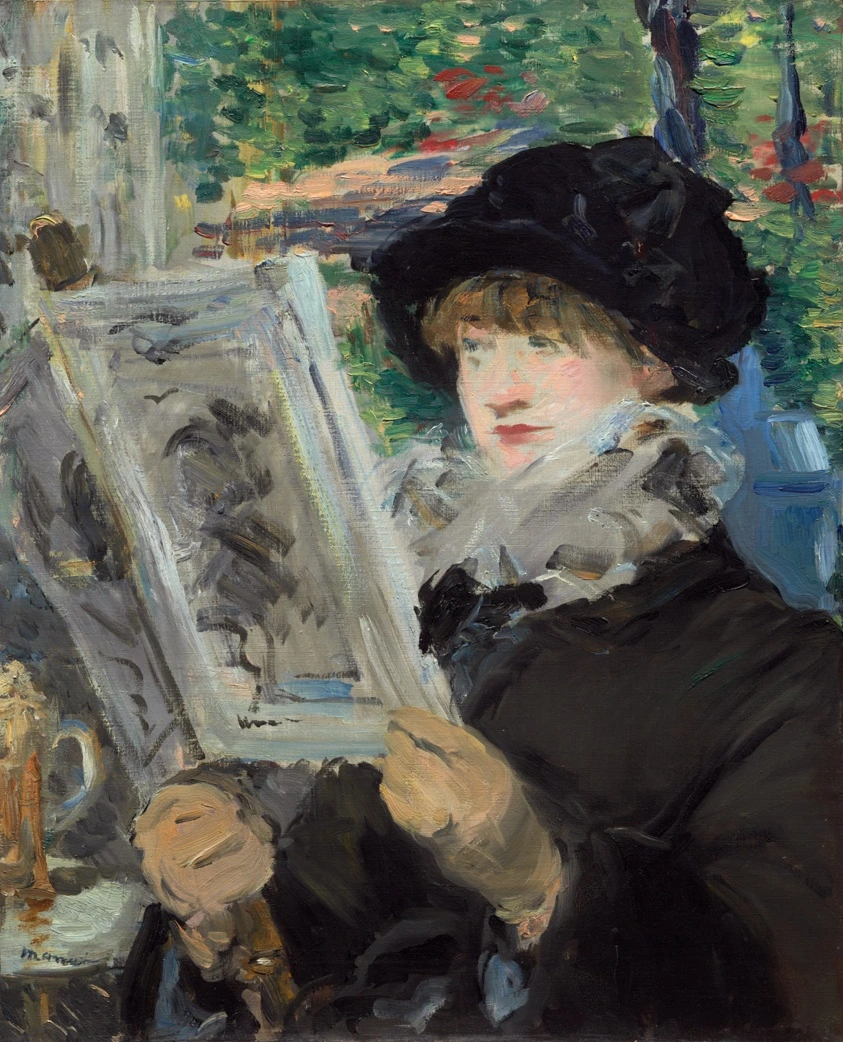
Using just a few brushstrokes, Manet gave a full sense of this unidentified sitter’s jovial personality. Her amused half-smile may speak to a pleasant exchange between artist and model. This painting offers valuable insight into Manet’s working process. He initially blocked out the figure with dark, painted lines and then moved on to short, precise strokes in the costume and face. Finally, he applied a thinned green wash that was likely the first step toward patterned background, left unfinished.

The woman’s coiffure, a pile of blue-black hair with curly bangs, helps date this work to the late 1870s.

Portrait of a Woman with a Black Fichu

Édouard Manet

c. 1878

Accession Number

14594

Medium

Oil on canvas

Dimensions

62.2 × 51.2 cm (24 1/2 × 20 1/8 in.); Framed: 83.8 × 72.7 × 10.8 cm (33 × 28 5/8 × 4 1/4 in.)

Classification

Painting

Museum

The Art Institute of Chicago

Chicago, United States

Credit Line

Mr. and Mrs. Lewis Larned Coburn Memorial Collection
Background & Context

Background Story

"Portrait of a Woman with a Black Fichu" is one of Manet's most elegant portraits from his Impressionist period, painted around 1878 during the years when he was systematically studying women's fashion and society with the same attention to surface detail that he had applied to café life and urban modernity. The sitter is unknown—probably a friend or model rather than a commissioned portrait—and her anonymity allows the painting to function as a study in black, the color that Manet had made his signature since the 1860s. The fichu itself is rendered with extraordinary tactile precision: the thin black fabric wraps around the neck and shoulders, its folds suggested by a few swift strokes that convey both the weight of the material and the translucency of the light passing through it. The face emerges from this dark framing with a pallor that Manet achieved through underpainting rather than highlighting, creating a glow that seems to come from within rather than being imposed from without. The palette is restricted almost entirely to blacks, warm flesh tones, and the palest suggestion of background, making the canvas a meditation on tonal contrast that rivals Whistler's contemporary arrangements. The painting also reflects Manet's social position in 1878: he was increasingly accepted by the establishment he had once scandalized, and his portraits of fashionable women carried a commercial appeal that his more provocative subjects lacked. Art historians have connected this work to the broader French tradition of the "femme en noir," from Ingres's society portraits to the mourning dress of the Second Empire, though Manet's treatment is more informal, less hieratic than these precedents.

Cultural Impact

This Impressionist portrait refined Manet's signature black into tactile elegance, rivaling Whistler's tonal arrangements while documenting the fashionable Parisian woman as a study in restrained surface beauty.

Why It Matters

It matters because Manet painted a woman in black and made the darkness breathe—proving that absence of color could be as expressive as a rainbow.