Provenance
The artist to Albert Ludovici, 1898-at least 1905 [inscription; London 1905]. Charles Deering (1852–1927), Chicago [stamp (Lugt 516) verso, lower right, in blue]; by descent to his daughters, Mrs. Chauncey McCormick (née Marion Deering; 1886–1965), Chicago and Mrs. Richard Ely Danielson (née Barbara Deering; 1885–1957), Chicago; given to the Art Institute of Chicago, 1927.
Accession Number
50756
Medium
Graphite (recto) on cream wove paper with printed text in black ink (verso)
Dimensions
18.8 × 17.8 cm (7 7/16 × 7 1/16 in.)
Classification
graphite
Credit Line
The Charles Deering Collection
Background & Context
Background Story
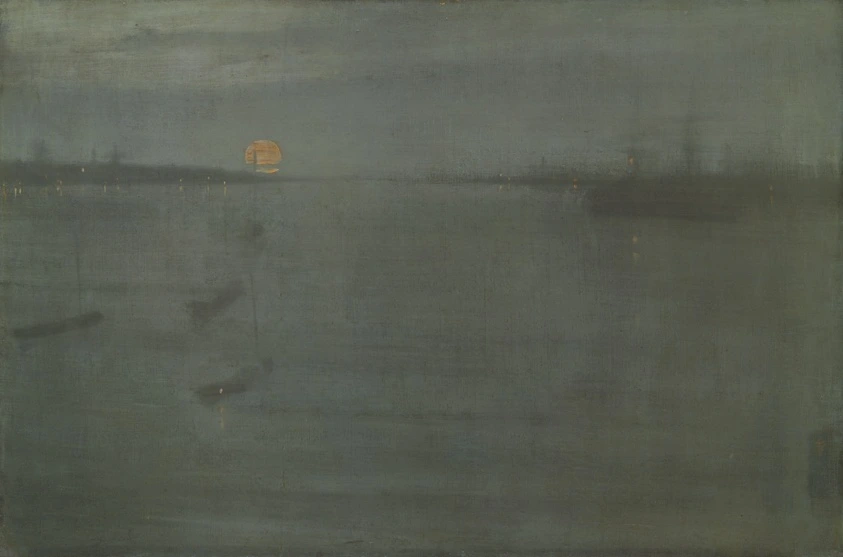
James McNeill Whistler's Sketch of the Peacock Room (1898) is a graphite drawing on cream wove paper with printed text on the verso. The Peacock Room was one of Whistler's most celebrated works, a room-sized decorative scheme created for the London home of the shipping magnate Frederick Leyland. The room, now in the Freer Gallery of Art in Washington, D.C., features gilded shelves, blue-and-white porcelain, and a magnificent mural of peacocks painted in rich blues and golds. This sketch shows Whistler working out the design for the room, the graphite lines capturing the arrangement of the shelves, the placement of the porcelain, and the overall decorative scheme. The cream wove paper with printed text on the verso suggests that Whistler was sketching on whatever paper was at hand, perhaps during a visit to the room. This sketch is a valuable document of the creation of one of the most important decorative schemes of the 19th century.
Cultural Impact
The Peacock Room is one of the most famous interior decorations of the Aesthetic Movement, a masterpiece of Whistler's decorative genius that continues to captivate visitors to the Freer Gallery.
Why It Matters
This sketch of the Peacock Room captures Whistler's working process for his most famous decorative scheme, the graphite lines revealing the careful planning behind the room's spectacular design.