Provenance
Klee-Gesellschaft, Bern, from 1946 [according to the Paul Klee Foundation]. Curt Valentin (1902-1954), New York, from 1951 [according to the Paul Klee Foundation]; given by the estate of Curt Valentin to the Art Institute, 1955.
Accession Number
83814
Medium
Watercolor, over graphite, on off-white wove paper, hinged on cream wove card
Dimensions
32.2 × 43 cm (12 11/16 × 16 15/16 in.)
Classification
watercolor
Credit Line
Gift from the estate of Curt Valentin
Background & Context
Background Story
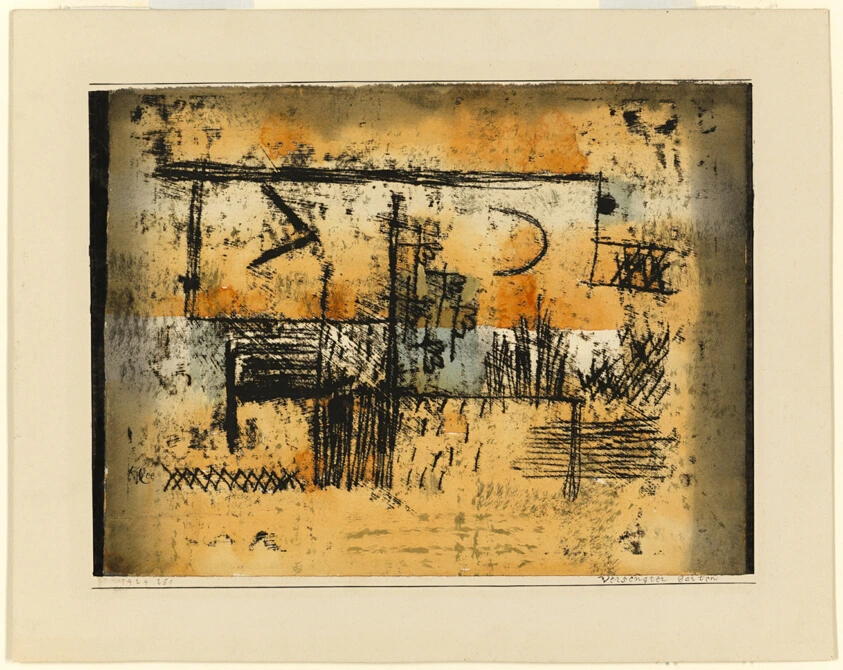
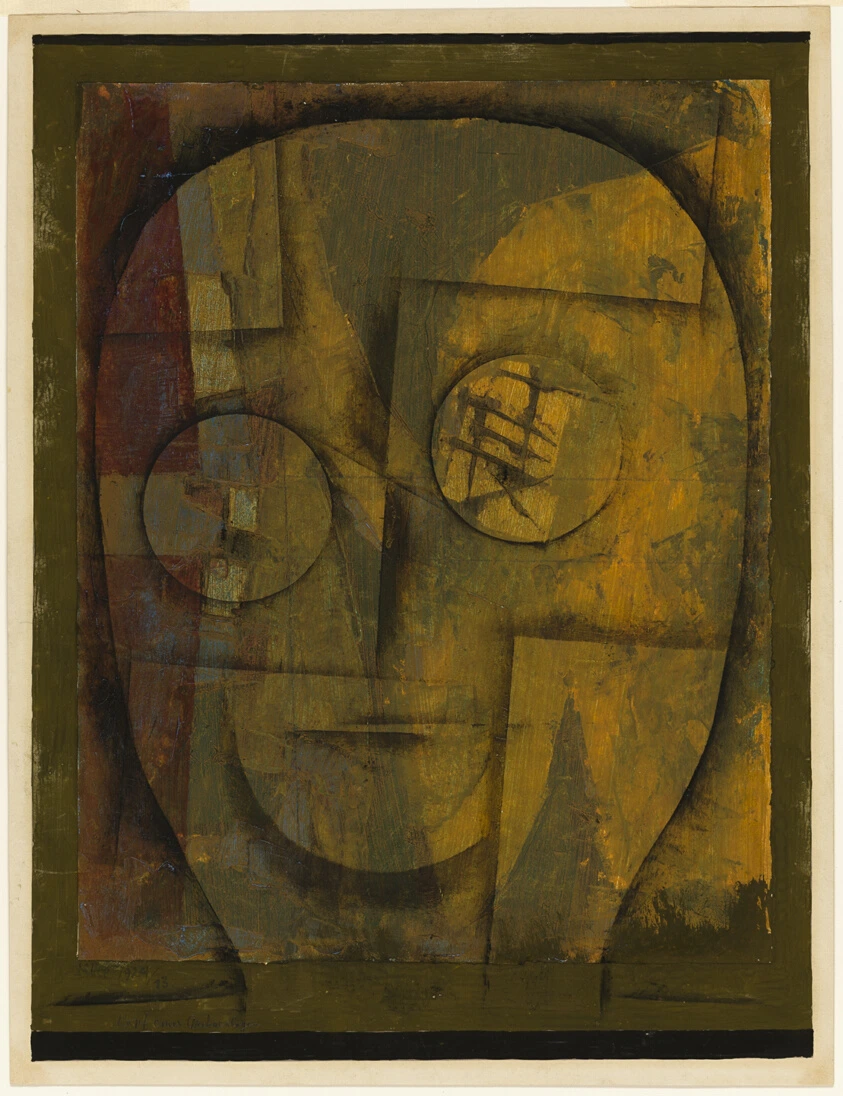
"Painter's Studio" is a 1933 watercolor that documents Paul Klee's working environment during his final years in Germany before the Nazi dismissal that would force him to return to Switzerland. The composition shows the studio as a dreamlike space, with easels, canvases, and painting materials arranged in a whimsical geometry that reflects Klee's belief that the artist's environment should be as imaginative as the art produced within it. The palette is characteristically restrained—pale blues, warm browns, and touches of red that suggest rather than describe the clutter of a working studio. The watercolor medium allows Klee to move between precise architectural lines and atmospheric washes, creating a space that is simultaneously real and imagined. This ambiguity is central to Klee's mature style: his studios are never merely documentary but always symbolic, representing the creative mind as a building filled with incomplete projects and potential futures. The 1933 date is significant: Klee was under increasing political pressure, his work labeled "degenerate" by the Nazi regime, and his studio was no longer a refuge but a threatened space. Yet the image avoids oppression, maintaining the playfulness that Klee considered essential to his art. Art historians have compared this work to the studio paintings of Courbet and Picasso, noting that where these predecessors emphasized the social status or creative power of the artist, Klee focuses on the poetics of the workspace itself. The painting also demonstrates Klee's mastery of watercolor as an architectural medium: the transparent layers build walls and floors while maintaining the luminosity that distinguishes his best works on paper.
Cultural Impact
This 1933 studio watercolor transformed threatened workspace into whimsical architectural dream, demonstrating Klee's mastery of transparent watercolor as a medium for creative poetics under political pressure.
Why It Matters
It matters because Klee painted his studio as a poem while the world outside burned it—proving that imagination could be a refuge even when reality refused.