Accession Number
14700
Medium
Watercolor and graphite on ivory wove paper
Dimensions
30 × 35 cm (11 13/16 × 13 13/16 in.)
Classification
watercolor
Credit Line
Olivia Shaler Swan Memorial Collection
Background & Context
Background Story
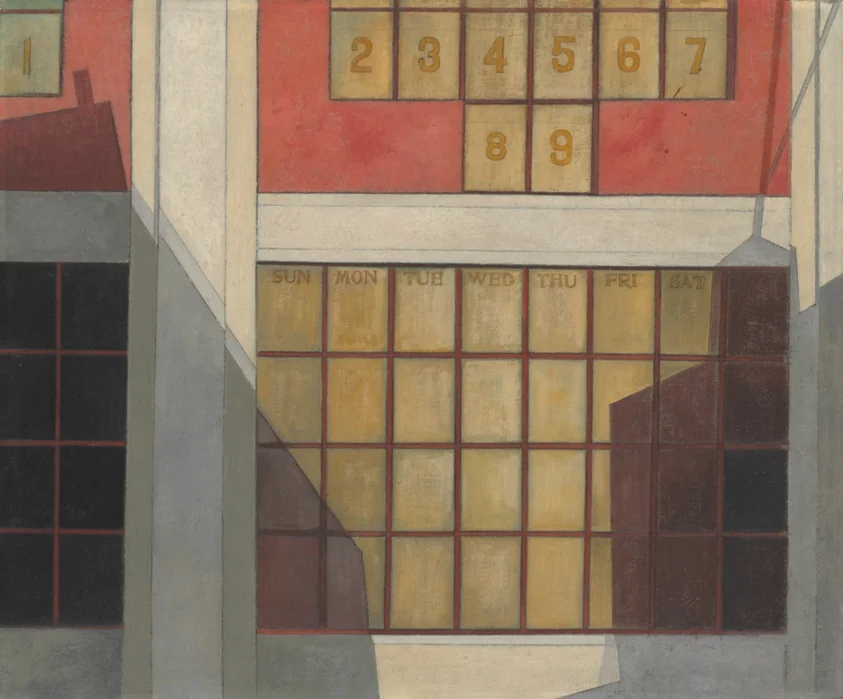
"Still Life: Apples and Green Glass" is a 1925 watercolor by Charles Demuth that demonstrates the American Precisionist painter's mastery of the still life genre and his ability to transform ordinary objects into compositions of extraordinary formal beauty and chromatic harmony. The composition is a medium-sized watercolor—30 × 35 centimeters—showing apples and a green glass rendered with the watercolor and graphite on ivory wove paper creating a surface of extraordinary clarity and luminosity, the transparent washes suggesting both the physical presence of the objects and the optical effects of light passing through glass and reflecting off fruit. The ivory wove paper provides a warm, luminous ground that makes the watercolor colors appear rich and inviting, enhancing the sense of domestic tranquility and aesthetic contemplation. The 1925 date places this work in the period of Demuth's most mature watercolor production, when he was producing the still lifes that established his reputation as the leading American interpreter of the European modernist tradition. Art historians have connected this watercolor to the broader tradition of the still life in modern art, from the paintings of Cézanne to the precisionist works of Sheeler, noting that Demuth's treatment is more focused on the crystalline precision and the chromatic harmony, the transformation of everyday objects into geometric compositions of light and color, than the expressive brushwork or the symbolic content of these other traditions.
Cultural Impact
This 1925 watercolor made apples and glass geometrically harmonic through medium 30cm transparent luminosity and ivory-paper warm domestic tranquility, using mature Precisionist European-modernist vocabulary to transform everyday objects into optical light-color composition beyond Cézanne expressive constructive brushwork.
Why It Matters
It matters because Demuth painted some apples and a glass and made the paper feel like it was counting every reflection—proving that even a kitchen table could be a cathedral if the watercolor was clear enough.