Description
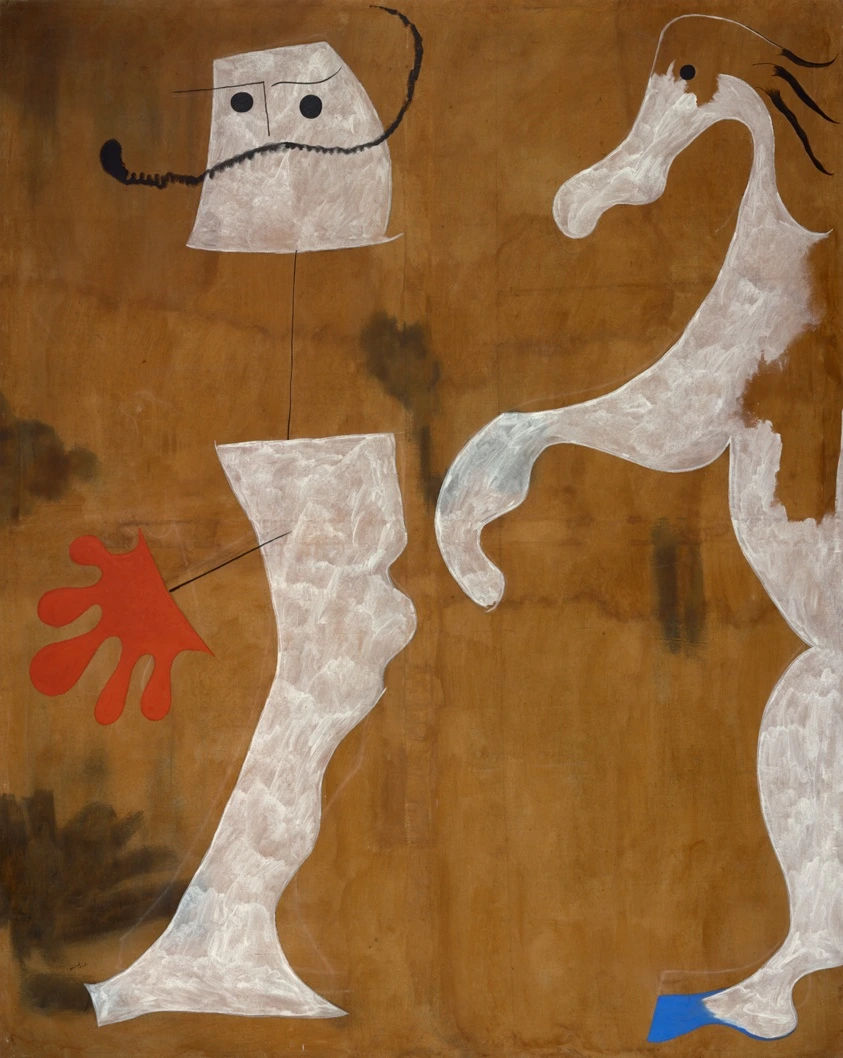
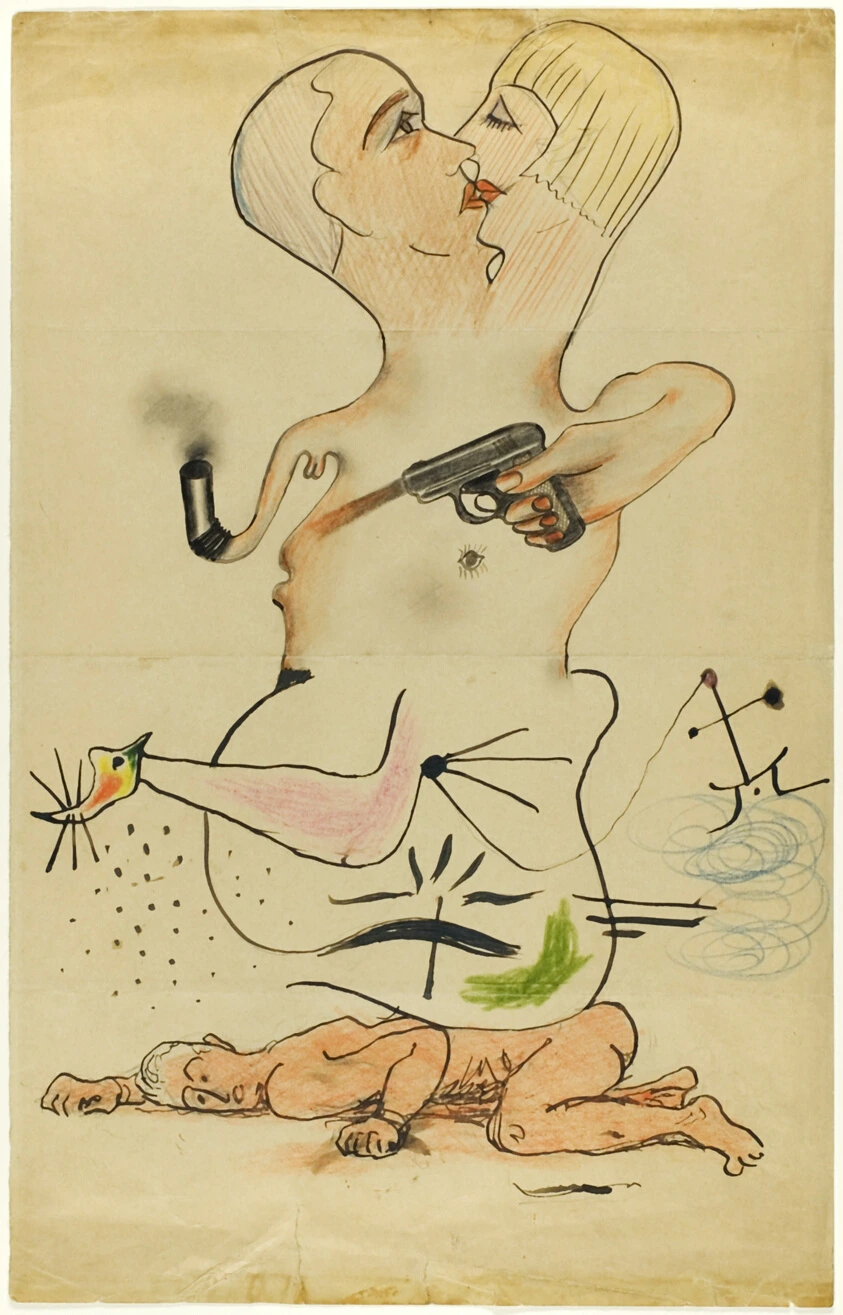
The Spanish artist Joan Miró was one of the leading exponents of Surrealism. His drawing The Kerosene Lamp has often been interpreted as autobiographical—a view of the artist's studio—but the elements of his work are intended to be suggestive rather than specific in meaning.
Provenance
Possibly Paul Eluard, Paris [New York 1993]. Mme Marie Cuttoli (died 1973), Paris, by March 1945-at least 1962 [New York 1993; Dupin 1962]. Sold, Sotheby’s, London, July 4, 1962, lot 246 to Richard Feigen and Company, New York [sale catalogue addenda]. Sold by Ellen J. Myers, New York, to the Art Institute, 1978.
Accession Number
52780
Medium
Charcoal, with red Conté and colored crayons, touches of graphite, and scraping, heightened with white oil paint, on canvas prepared with a glue ground
Dimensions
81 × 100.3 cm (31 15/16 × 39 1/2 in.)
Classification
charcoal
Credit Line
Joseph and Helen Regenstein Foundation, Helen L. Kellogg Trust, Blum-Kovler Foundation, Major Acquisitions and gifts from Mrs. Henry C. Woods, Members of the Committee on Prints and Drawings, and Friends of the Department
Background & Context
Background Story
Joan Miro's The Kerosene Lamp (1924) is a charcoal drawing with red Conte and colored crayons, touches of graphite, and scraping, heightened with white oil paint on canvas prepared with a glue ground. This work dates from 1924, a pivotal year in Miro's career when he was developing the mature surrealist style that would define his art. The Kerosene Lamp is a still life or interior scene, but the subject is transformed through Miro's emerging vocabulary of abstract forms and signs. The charcoal, Conte crayons, graphite, and oil paint create a rich, varied surface. The scraping creates texture, while the white oil paint adds highlights. The canvas prepared with a glue ground provides a smooth, absorbent surface. This work belongs to the period when Miro was moving away from the detailed naturalism of his early work toward the free, imaginative style that would make him famous. The humble kerosene lamp becomes the occasion for a composition of extraordinary formal invention.
Cultural Impact
Miro's works of 1924 mark the breakthrough to his mature surrealist style, one of the most significant turning points in 20th-century art.
Why It Matters
This mixed-media work transforms a simple kerosene lamp into a composition of extraordinary formal invention, the combination of materials and the emerging surrealist vocabulary marking a breakthrough in Miro's artistic development.