Description
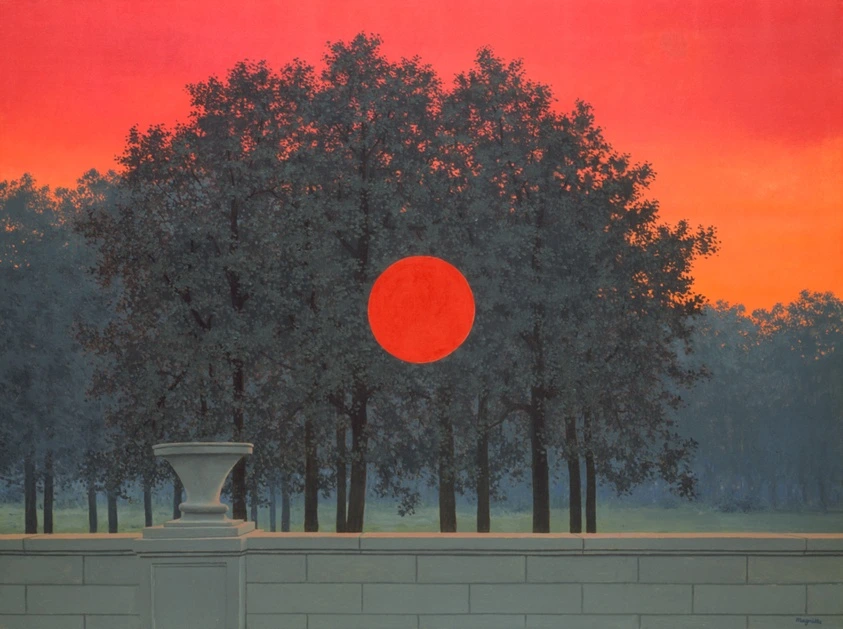
In the spring of 1948, René Magritte debuted an astonishing body of work, including the painting seen here, in which he set out to challenge the notion of artistic sincerity. Radiantly expressive and looking nothing like his paintings of the previous two decades, this new style—termed his période vache, or “nasty style”—used lurid colors and crude paint handling to convey the ongoing unease of Europe after the Second World War.
Seasickness, arguably the most iconic painting from this moment, has no nautical elements. Yet the title is paid off by a garish sport coat and slab of ham sweltering in the sun that were intended to make viewers feel mild visual nausea. As Magritte explained at the time: “I live in a very unpleasant world . . . that’s why my painting is a battle, or rather a counteroffensive.”
Provenance
Accession Number
248383
Medium
Oil on canvas
Dimensions
54 × 65 cm (21 1/4 × 25 1/2 in.)
Classification
N/A
Credit Line
The Lacy Armour, Eloise W. Martin Legacy, and Kate S. Buckingham endowment funds