Provenance
The artist; sold to Gordon Onslow-Ford (1912-2003) with the aid of André Breton (1896-1966), Paris, 1940; transferred from the studio of Pablo Picasso to Gordon Onslow-Ford, San Francisco, 1948 (physical transfer of object delayed) [letter from Gordon Onslow-Ford of April 15, 1951 in curatorial file]; sold to the Art Institute of Chicago, 1951.
Accession Number
75315
Medium
Oil and chalk on canvas
Dimensions
100 × 81 cm (39 3/8 × 31 7/8 in.)
Classification
Painting
Credit Line
Gift of Florene May Schoenborn and Samuel A. Marx
Background & Context
Background Story
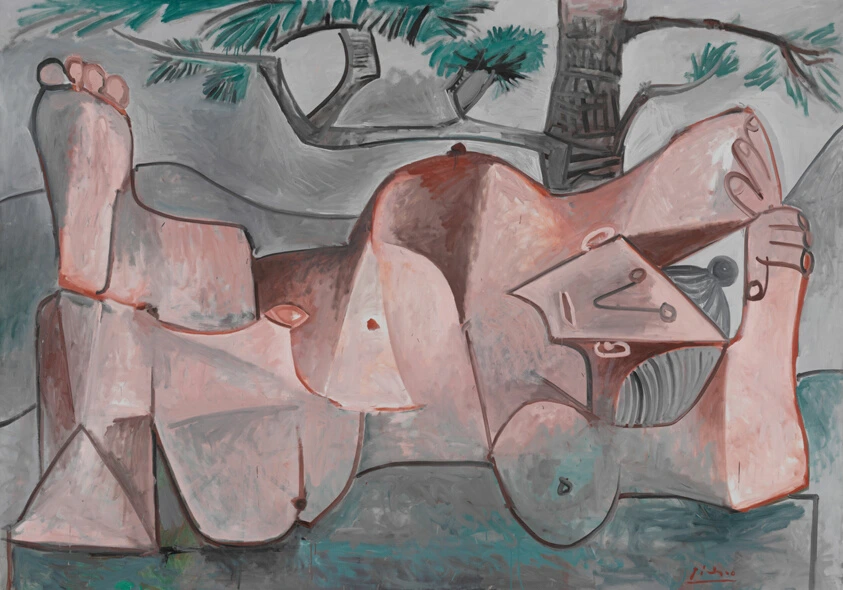
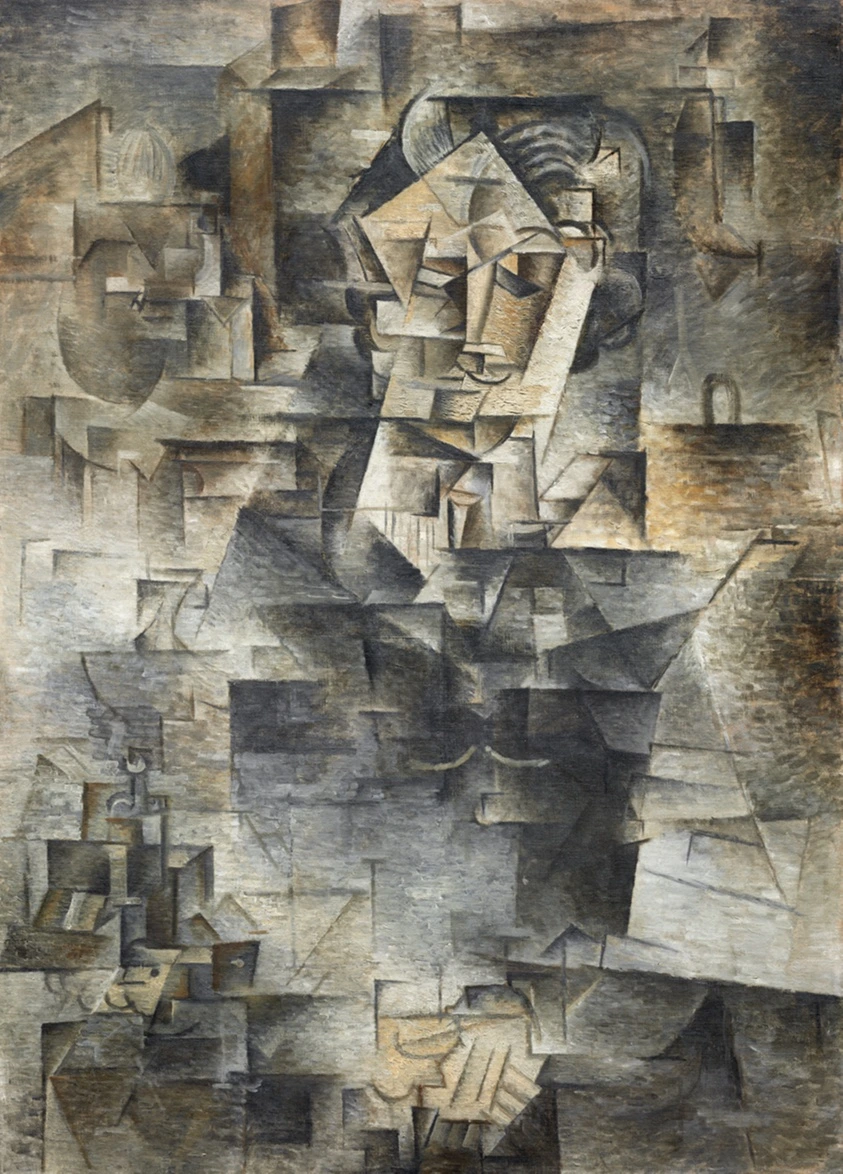
Painted in 1927, "Figure" belongs to the most radical phase of Picasso's Surrealist engagement, when his forms dissolved into biomorphic abstractions that critics called "monstrous" and "pathological." The canvas depicts a female body—not identifiable as a specific model, though the period is associated with his clandestine relationship with Marie-Thérèse Walter—transformed into a collection of bulbous, overlapping shapes that suggest anatomy without describing it. The head is tilted at an impossible angle, the breasts multiplied and displaced, the limbs reduced to tapering curves that recall both marine organisms and African carvings. The medium of oil and chalk on canvas allowed Picasso to build up opaque layers while also leaving visible the preliminary drawing, creating a stratified surface that records the painting's own genesis. The palette is restricted to ochre, gray, and black, with occasional warm accents that emerge like bruises from the neutral ground. This figure type influenced Surrealist painting across Europe, from Masson's automatic drawings to Dalí's soft watches, and it established the biomorphic female as a central motif of twentieth-century art. The work also carries psychological weight: contemporaries read these distorted bodies as expressions of unconscious anxiety about sexuality and creativity, and later feminist critics have analyzed them as symptoms of masculine fear. Picasso himself was typically evasive about meaning, claiming that he painted forms because they pleased him, not because they represented anything. Whether symptom or strategy, "Figure" remains one of the most challenging and influential canvases in the history of the female nude.
Cultural Impact
This canvas established the biomorphic female as a central motif of Surrealism, influencing twentieth-century representations of the body from Dalí to contemporary feminist art.
Why It Matters
It matters as Picasso's most disturbing body—a woman made of curves and shadows that refuses to sit still for anyone's gaze.