Accession Number
237324
Medium
Lithograph and watercolor on wove paper
Dimensions
29.3 × 40.9 cm (11 9/16 × 16 1/8 in.)
Classification
lithograph
Credit Line
Gift of David Q. and Mary H. Bell
Background & Context
Background Story
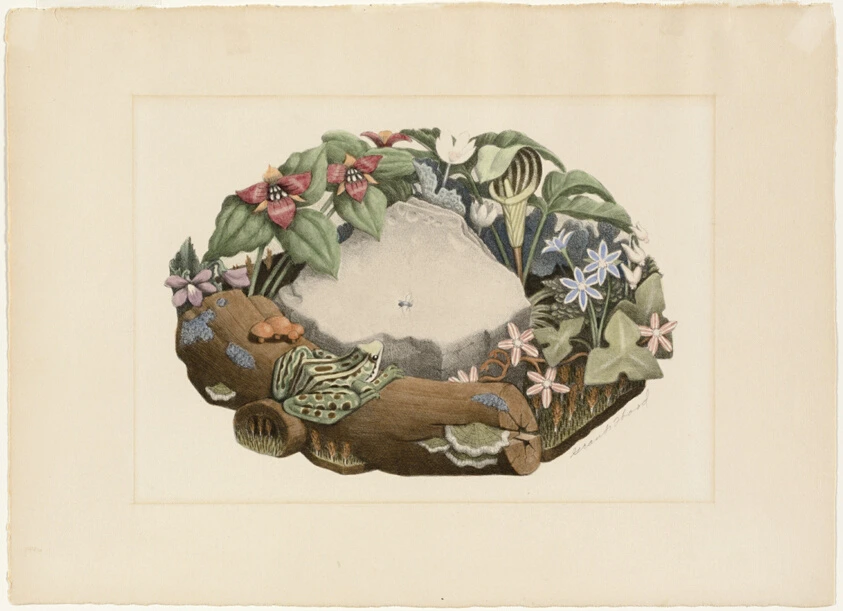
"Tame Flowers" is a 1939 lithograph and watercolor by Grant Wood that serves as a companion piece to "Wild Flowers," demonstrating the American Regionalist painter's engagement with the theme of domesticated nature and the contrast between the wild and the cultivated in the American landscape. The composition is a medium-sized print—29.3 × 40.9 centimeters—showing cultivated or domestic flowers in a composition that suggests both the orderly beauty of the garden and the homely charm of the farmyard, the lithograph providing the graphic precision and the watercolor adding the chromatic warmth and the domestic tranquility. The combination of print and watercolor creates a surface of extraordinary clarity and inviting warmth, the graphic precision suggesting the structured formality of the garden and the watercolor washes suggesting the soft light and the gentle care of the gardener. The 1939 date places this work in the same year as "Wild Flowers," suggesting that Wood was systematically exploring the theme of flowers in the American landscape, each print offering a different perspective on the relationship between nature and cultivation. Art historians have compared this print to the flower paintings of the American impressionists and the botanical illustrations of the popular press, noting that Wood's treatment is more focused on the graphic style and the cultural symbolism, the transformation of natural beauty into national icon, than the painterly surface or the scientific accuracy of these other traditions.
Cultural Impact
This 1939 companion lithograph-watercolor made domesticated flowers culturally symbolic through medium 29cm graphic garden formality and watercolor homely-care softness, using systematic same-year flower exploration to transform cultivated beauty into national icon beyond Impressionist painterly accuracy.
Why It Matters
It matters because Wood printed tame flowers and made the paper feel like it was sitting in a farmhouse window—proving that even a garden could be America if the lithograph was warm enough.