Provenance
Estate of the artist [Lugt 1338]. Maurice Joyant (died 1930), Paris, by 1927 [Joyant 1927]. M. G. Dortu, by 1931 [according to Paris 1931]. M. Knoedler and Company, New York, by March 1935 [Boston 1935]; sold to the Art Institute, 1944.
Accession Number
51386
Medium
Pastel and graphite on cream wove paper
Dimensions
43.9 × 26.7 cm (17 5/16 × 10 9/16 in.)
Classification
crayon
Credit Line
Margaret Day Blake Collection
Background & Context
Background Story
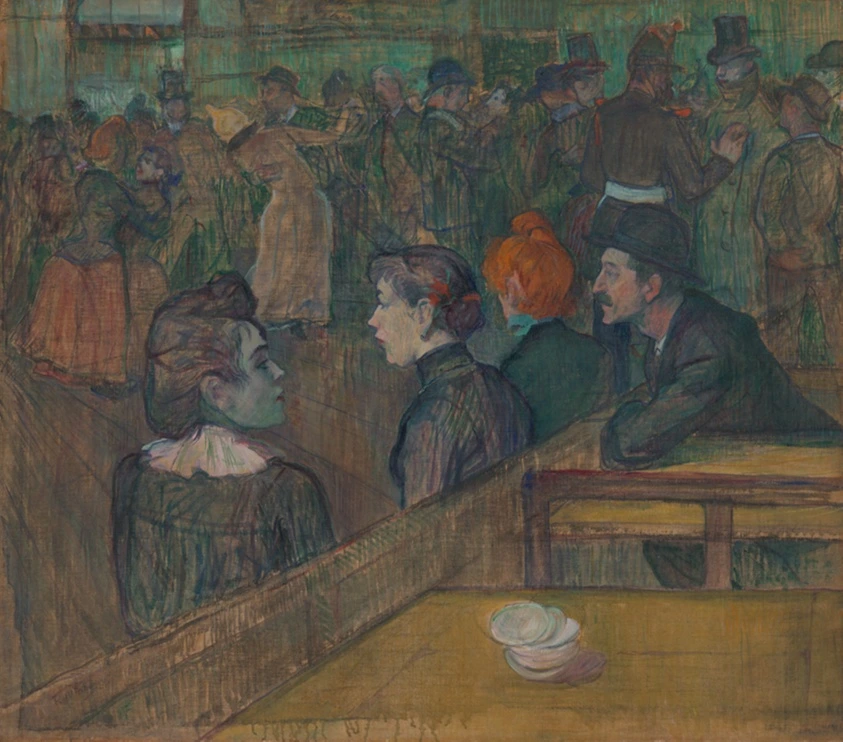
Henri de Toulouse-Lautrec's "At the Circus: Trained Pony and Baboon" (1899) is a pastel and graphite drawing on cream wove paper from the series of circus drawings that Lautrec produced in 1899. This series was created during a period of hospitalization for alcoholism and depression, and the circus subjects may have represented a return to the happier memories of his youth. This drawing shows a trained pony and a baboon performing in the circus ring, the animals rendered with Lautrec's characteristic economy and wit. The pastel technique is rapid and expressive, the colors bright and varied, capturing the festive atmosphere of the circus. The graphite provides underlying structure. The cream wove paper provides a warm ground. The circus animals, with their incongruous combination of natural animal behavior and trained performance, were a subject that appealed to Lautrec's sense of the absurd and his affection for the world of popular entertainment. This drawing is both a document of circus life and a work of art that captures the strange beauty of the trained animal act.
Cultural Impact
Lautrec's 1899 circus drawings are among his most poignant works, created during a period of personal crisis and representing a return to the subjects that had given him the greatest pleasure.
Why It Matters
This pastel drawing of a trained pony and baboon captures the strange beauty and humor of the circus animal act, Lautrec's rapid technique and bright colors conveying the energy and spectacle of the performance.