Provenance
Private collection, Paris, until 1931. (Raphael Gerard, Paris) in 1932. (Besnard sale, Hôtel Drouot, Paris, March 1933); purchased by (Etienne Bignou, Paris) for Chester Dale, New York; bequest 1963 to NGA.[1]
[1]Provenance according to Chester Dale files in NGA curatorial records.
Accession Number
1963.10.32
Medium
oil on wood
Dimensions
overall: 27.2 x 18.7 cm (10 11/16 x 7 3/8 in.) | framed: 43.2 x 35.6 cm (17 x 14 in.)
Classification
Painting
Credit Line
Chester Dale Collection
Tags
Painting Impressionist & Modern (1851–1900) Oil Painting French
Background & Context
Background Story
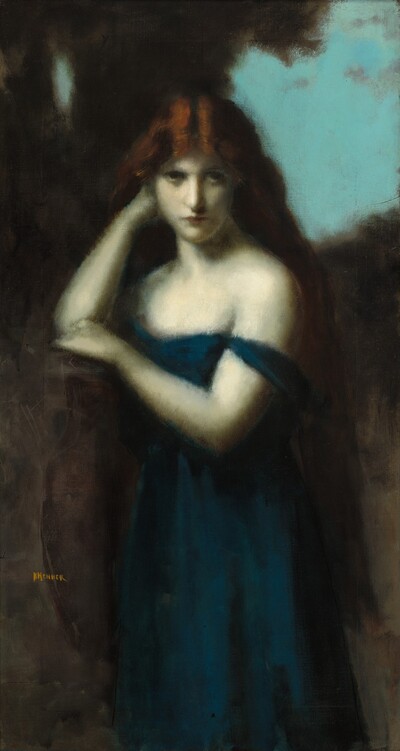
Alsatian Girl from 1873 is one of Henner's most characteristic subjects, depicting a woman from Alsace (Henner's native region) with the sfumato modeling and limited palette that distinguish his work. The 1873 date places this just after the Franco-Prussian War (1870-71) in which Alsace was annexed by Germany, giving the subject of an Alsatian girl a particular political resonance. Henner, who was from Alsace, painted many versions of the Alsatian subject as a response to the annexation of his native province, and the painting's sfumato manner gives the subject an emotional intensity that more direct political art would lack.
Cultural Impact
Alsatian Girl is important in Henner's oeuvre because it combines his signature sfumato manner with the political subject of Alsace's annexation by Germany after the Franco-Prussian War. The 1873 painting is one of many versions of the Alsatian subject that Henner painted as a response to the annexation of his native province, giving the sfumato manner an emotional and political resonance that transcends its purely aesthetic appeal.
Why It Matters
Alsatian Girl is Henner's political sfumato: a woman from his native Alsace rendered with the soft-focus manner that gives the annexation of Alsace by Germany after the Franco-Prussian War an emotional intensity that direct political art would lack. The 1873 painting combines aesthetic manner with political meaning.