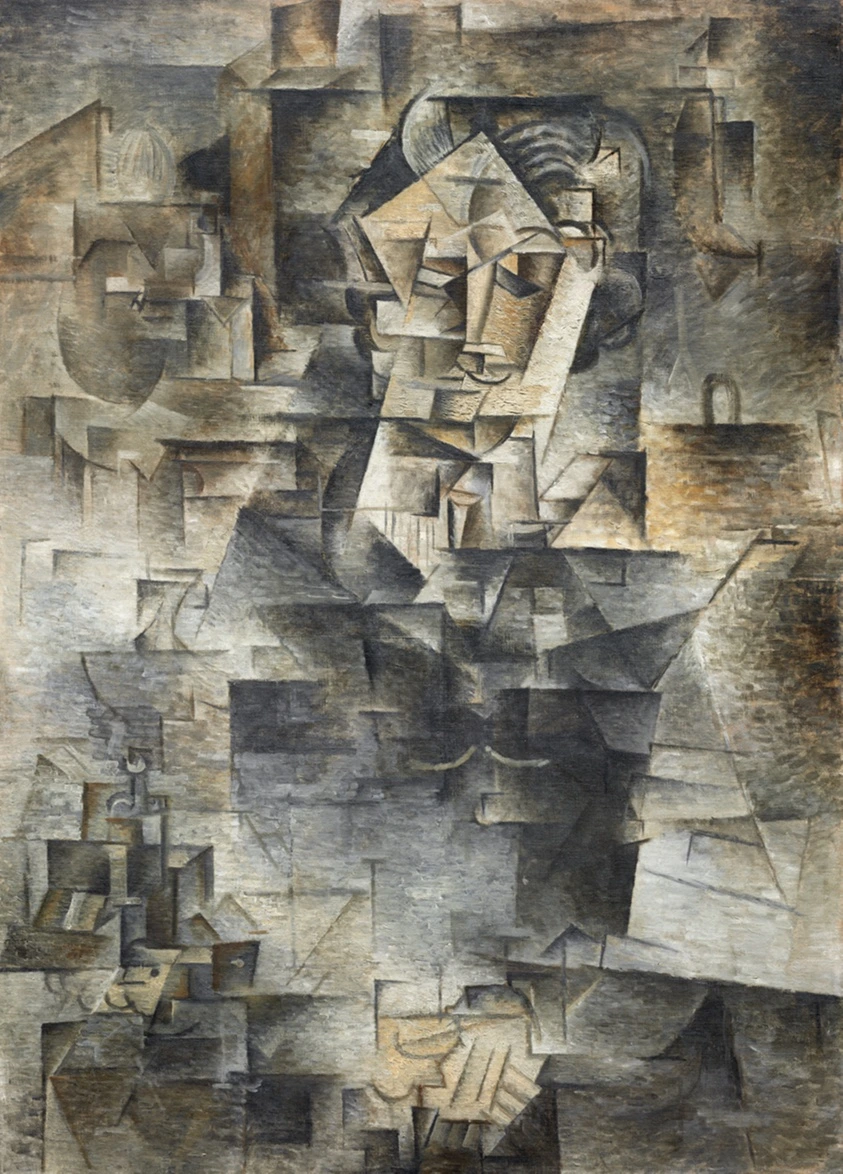
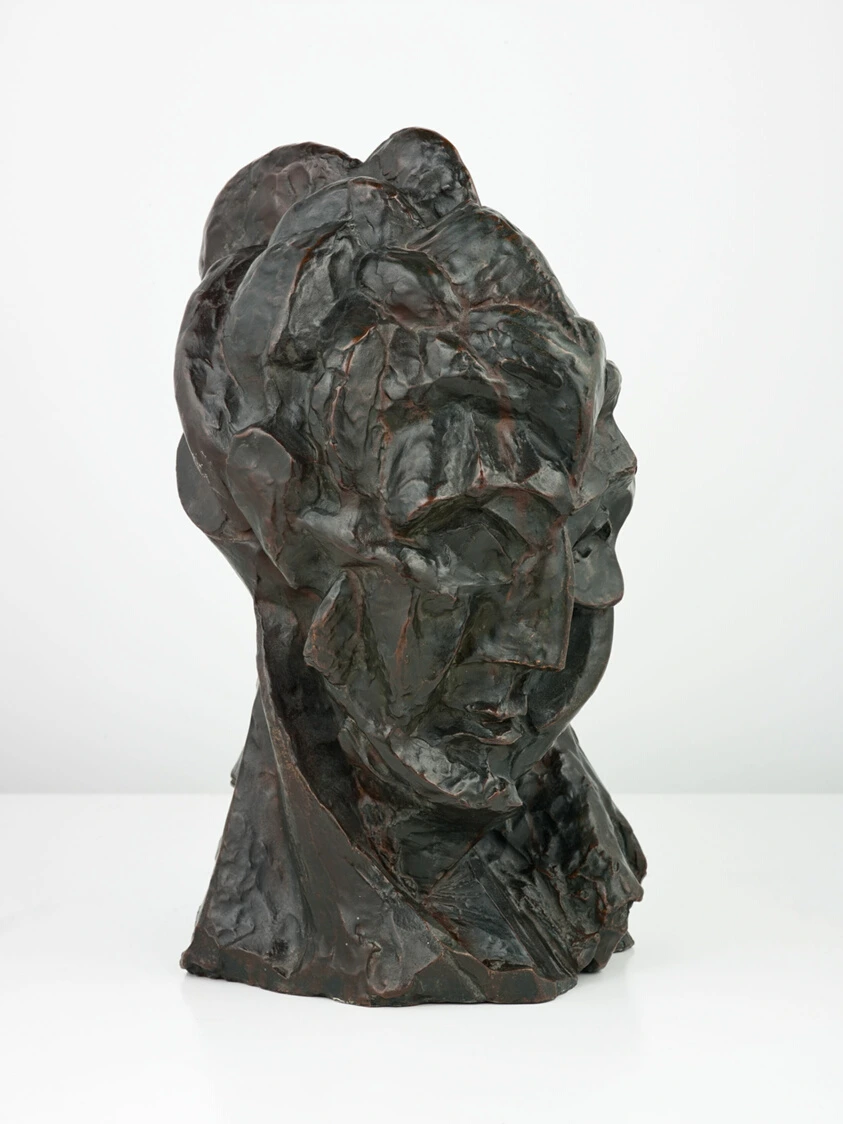
Head of a Woman with a Chignon (Fernande)

Description

This work depicts the artist and model Fernande Olivier (1881–1966). She was Picasso’s partner for eight years and frequent subject. The pair spent the summer of 1906 in the small town of Gósol in the Spanish Pyrenees and it was here that Picasso made the drawing. The artist rendered Olivier’s face and hair in passages of black chalk or brown and pink opaque watercolor, omitting any background detail. According to Olivier, their relationship was tumultuous because of their mutual jealousy, but, as a model and companion who catered to his demanding lifestyle, she was essential to his early success.

Provenance

Ambroise Vollard (1866–1939), Paris, before 1932 [Zervos 1932]; sold to Georges Salles (1889–1966), Paris; by descent [according to Thomas Gibson as quoted in letter from Lew Manilow, dated Sept. 30, 1992 in curatorial file]. Sold by Thomas Gibson Fine Art, London, to Susan and Lew Manilow, Chicago, around Sept. 1992; partially given to the Art Institute of Chicago, 2020.

Head of a Woman with a Chignon (Fernande)

Pablo Picasso

summer 1906

Accession Number

214455

Medium

Black chalk and opaque watercolor on tan laid paper

Dimensions

62 × 47 cm (24 7/16 × 18 9/16 in.)

Classification

gouache

Museum

The Art Institute of Chicago

Chicago, United States

Credit Line

Gift of Susan Manilow in memory of Lew Manilow
Background & Context

Background Story

This 1906 drawing of Fernande Olivier, Picasso's lover and muse during the Bateau-Lavoir years, marks the decisive shift from the lyrical naturalism of the Rose Period to the geometric rigor of early Cubism. Executed in black chalk and opaque watercolor on tan laid paper, the portrait shows Fernande's familiar features—high cheekbones, heavy-lidded eyes, distinctive chignon—transformed by a new analytical approach that treats the head as an assemblage of intersecting planes rather than a continuous form. The hair is rendered as a series of dark masses that echo the African masks Picasso was studying at the Musée d'Ethnographie du Trocadéro; the neck is elongated and thick, suggesting sculpture rather than living flesh. Yet the drawing retains a tenderness that would soon disappear from Picasso's treatment of the female face: Fernande's gaze is still individual, still recognizable as the woman who shared his poverty and ambition during the years of artistic revolution. The medium of chalk and opaque watercolor allowed Picasso to move between precise line and tonal mass, exploring the boundary between drawing and painting that he would cross repeatedly throughout his career. The sheet also reveals his working process: faint construction lines are visible beneath the final image, showing how he established the structural axes before committing to the bold contours that define the finished head. This drawing belongs among the most important documents of modernism's birth, capturing a private moment between two people who knew they were making history but could not know what kind.

Cultural Impact

This portrait documented the birth of Cubism through an intimate likeness, preserving Fernande Olivier's individuality while demonstrating the geometric analysis that would transform European art.

Why It Matters

It matters as a love letter that became a manifesto—Picasso drawing his girlfriend while accidentally inventing the future.