Provenance
The artist, New York, May 1889; given to George Peter Alexander Healy (1813–1894), Paris and Chicago, May 1889 [painting inscribed on bottom: "New York / May 1889 / To Geo. P. A. Healy. From his Friend Eastman Johnson"]; by descent to his wife, Louisa Healy (1818–1905; born Louisa Phipps, also Mrs. George P.A. Healy), Chicago, June 1894; given to the Art Institute of Chicago, 1905.
Accession Number
40647
Medium
Oil on canvas on panel
Dimensions
45.7 × 35.2 cm (18 × 13 7/8 in.)
Classification
Painting
Credit Line
Gift of Mrs. George P.A. Healy
Background & Context
Background Story
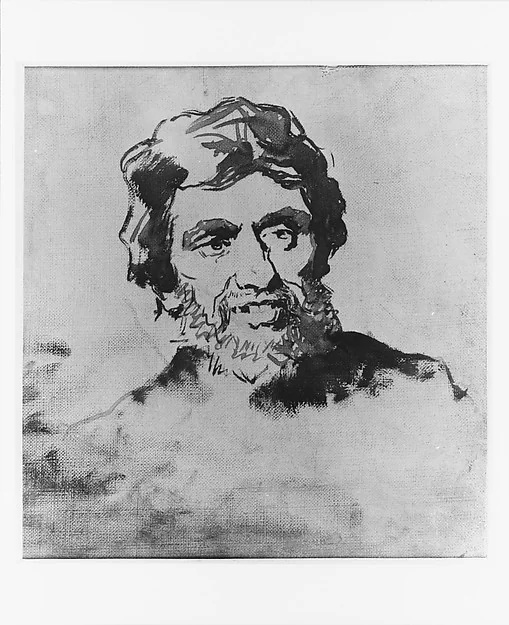
Eastman Johnson's "Self-Portrait" (1889) is an oil on canvas mounted on panel depicting the artist in his later years. Johnson (1824–1906) was one of the most celebrated American painters of the 19th century, known for his genre scenes of everyday American life, his portraits of notable figures including Abraham Lincoln, and his sensitive depictions of Native American subjects. This self-portrait shows Johnson at age 65, still active and engaged with his art. The handling is confident and economical, the features rendered with the directness and honesty that characterized Johnson's approach to portraiture. The dark background focuses attention on the face, which emerges from the shadows with remarkable presence. Johnson's gaze is direct and steady, meeting the viewer with the calm authority of an artist who had achieved success and recognition through a long career. The canvas mounted on panel provides a stable support. This self-portrait is a valuable document of American art history, showing the face of an artist who helped define the course of 19th-century American painting.
Cultural Impact
Eastman Johnson was one of the most important American painters of the 19th century, a founding member of the Metropolitan Museum of Art and a key figure in the development of American genre painting.
Why It Matters
This self-portrait captures Johnson in his later years with characteristic honesty and directness, the confident handling and steady gaze conveying the authority of an artist who helped shape American art in the 19th century.