Accession Number
20260
Medium
Lithograph in black on tan wove paper
Dimensions
24.4 × 17.1 cm (9 5/8 × 6 3/4 in.)
Classification
lithograph
Credit Line
Gift of Mrs. Albert and Miss Alice Roullier
Background & Context
Background Story
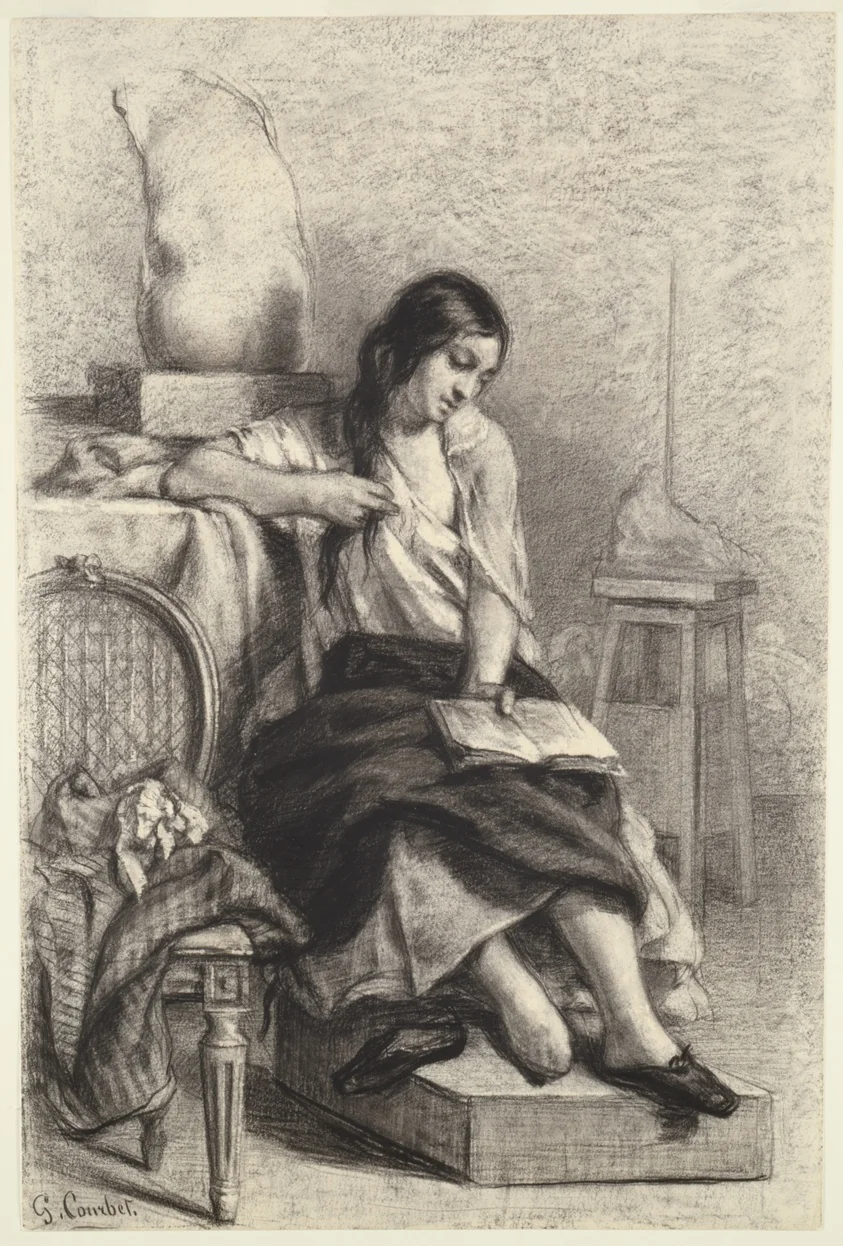
This lithograph of "The Apostle Jean Journet" by Gustave Courbet captures the French Realist at his most politically and spiritually engaged, the image showing the self-proclaimed apostle—a figure from the religious and social margins of nineteenth-century France—with the unidealized directness that Courbet brought to all his subjects. Jean Journet was a real person, a wandering preacher and social reformer who claimed divine inspiration and advocated for the poor, and Courbet's decision to portray him reflects the artist's own sympathy for the oppressed and his contempt for official religious and political authority. The lithograph technique is characteristically bold and summary: the black ink on tan wove paper creates strong contrasts that emphasize the physical presence of the figure, the lines economical but expressive, the overall effect one of democratic accessibility rather than aristocratic refinement. The undated impression probably belongs to the period of Courbet's most intensive printmaking activity in the 1850s and 1860s, when he was producing lithographs to disseminate his images to a wider audience and to support his political activities. Art historians have connected this print to the broader tradition of social realism in European art, from the peasant scenes of Millet to the urban imagery of Daumier, noting that Courbet's treatment is more physically immediate, less sentimentally idealized than these contemporaries. The work also demonstrates Courbet's mastery of the lithographic medium: the bold contrasts, the expressive line, and the refusal of academic polish all reflect the artist's commitment to an art that speaks directly to the people.
Cultural Impact
This lithograph made social-margins spiritual preaching democratically accessible through bold tan-paper contrasts, using economical expressive line to align Realist physical immediacy with 1850s political printmaking dissemination.
Why It Matters
It matters because Courbet drew a poor preacher and made him look like he could change the world—proving that even the powerless could be monumental if the ink was bold enough.