Accession Number
117762
Medium
Etching on cream wove paper
Dimensions
Plate: 12.4 × 22.8 cm (4 15/16 × 9 in.); Sheet: 26.7 × 33.4 cm (10 9/16 × 13 3/16 in.)
Classification
etching
Credit Line
Gift of Dorothy Braude Edinburg to the Harry B. and Bessie K. Braude Memorial Collection
Background & Context
Background Story
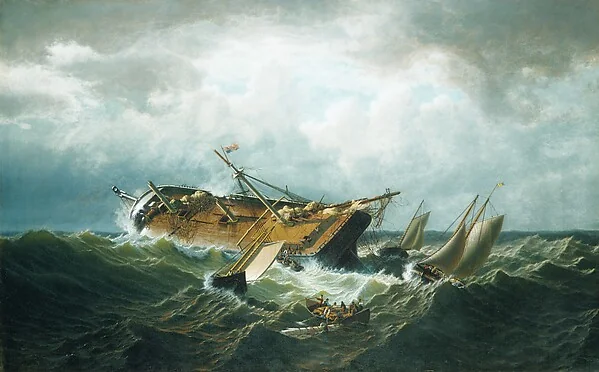
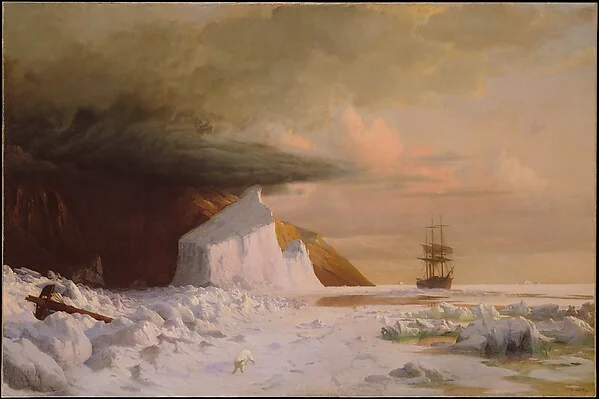
"Arctic Seascape" is an undated etching on cream wove paper by William Bradford that captures the American Arctic painter in his most graphically refined and atmospherically delicate mode, the image showing an Arctic seascape rendered with the same attention to light, ice, and atmospheric effect that characterized his most powerful paintings. The composition is a small etching—plate 12.4 × 22.8 centimeters, sheet 26.7 × 33.4 centimeters—showing an Arctic seascape with the etching on cream wove paper creating a surface of extraordinary precision and atmospheric depth. The cream wove paper provides a warm, luminous ground that makes the etched lines appear rich and substantial, enhancing the sense of Arctic light and ice. The undated nature of this work suggests that it may be a late print, produced to disseminate Bradford's Arctic vision to a wider audience and to preserve the memory of his northern travels. Art historians have connected this print to the broader tradition of the Arctic image in American art, from the paintings of the Hudson River School to the photographs of the period, noting that Bradford's treatment is more focused on the atmospheric clarity and the topographical precision, the transformation of observed reality into luminous vision, than the scientific record or the ethnographic documentation of these other traditions.
Cultural Impact
This undated etching made Arctic seascape graphically delicate through small 12cm precise atmospheric depth and cream-wove-paper warm Arctic-light luminosity, using late printmaking dissemination to transform observed ice-sea into luminous vision beyond Hudson River School scientific ethnographic record.
Why It Matters
It matters because Bradford etched the Arctic and made the paper feel like it was holding a piece of frozen light—proving that even a print could be cold and beautiful if the etching was precise enough.