Provenance
Knoedler Galleries, New York; sold to Mr. Marechal Brown, Villanova, Penn. William S. Rubin, New York, by 1963; sold to Richard Zeisler, New York, by 1963 [receipt in curatorial file].
Accession Number
185759
Medium
Oil on canvas
Dimensions
101.6 × 76.5 cm (40 × 30 1/8 in.)
Classification
Painting
Credit Line
Bequest of Richard S. Zeisler
Background & Context
Background Story
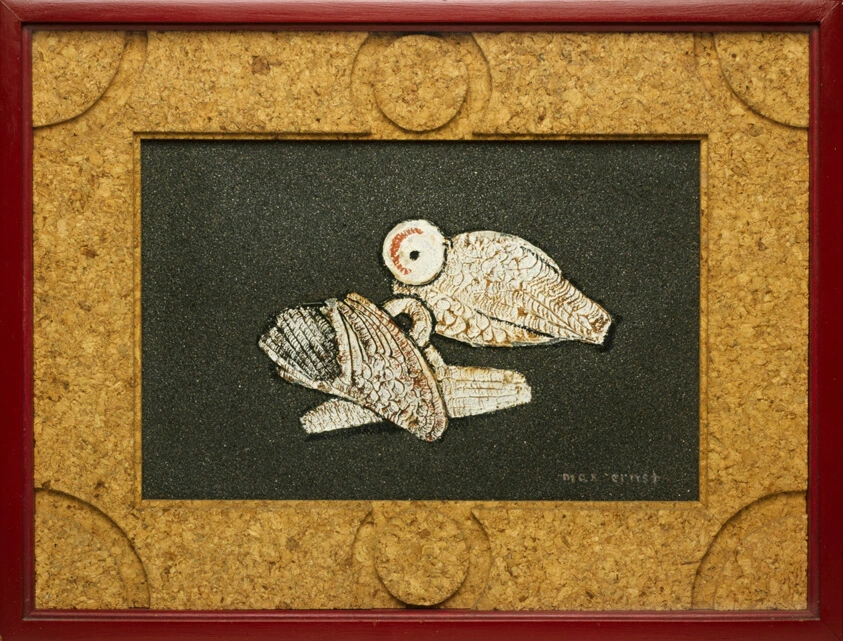
"Halleluiah" is a 1948 oil on canvas by Max Ernst that captures the German Surrealist in his most exuberantly celebratory and mythologically engaged mode, the image showing a composition that suggests both the Christian hymn and the pagan ritual with the same hallucinatory clarity and cosmic ambition that characterized his most powerful postwar paintings. The composition is a large canvas—101.6 × 76.5 centimeters—showing a fantastical scene with the oil on canvas creating a surface of extraordinary richness and visionary intensity. The title suggests both the religious ecstasy of the Christian tradition and the cosmic celebration of the Surrealist imagination, the painting becoming a meditation on the relationship between the sacred and the profane, the human and the divine. The 1948 date places this work in the period of Ernst's return to France and his re-engagement with the European Surrealist tradition after his American exile. Art historians have connected this painting to the broader tradition of the religious subject in modern art, from the paintings of Rouault to the sculptures of Lipchitz, noting that Ernst's treatment is more focused on the mythological suggestion and the cosmic celebration, the transformation of religious theme into Surrealist vision, than the devotional sincerity or the theological content of these other traditions.
Cultural Impact
This 1948 oil canvas made sacred exuberance cosmically hallucinatory through large 101cm fantastical visionary richness and postwar return-to-France mythological intensity, using European re-engagement to transform Christian hymn into Surrealist cosmic celebration beyond Rouault devotional theological sincerity.
Why It Matters
It matters because Ernst painted a halleluiah and made the canvas feel like it was shouting at the stars in colors that don't exist—proving that even praise could be strange if the Surrealism was bold enough.