Accession Number
117194
Medium
Oil on canvas
Dimensions
75 × 60 cm (29 1/2 × 23 5/8 in.)
Classification
Painting
Credit Line
Through prior gift of the Mary and Leigh Block Collection
Background & Context
Background Story
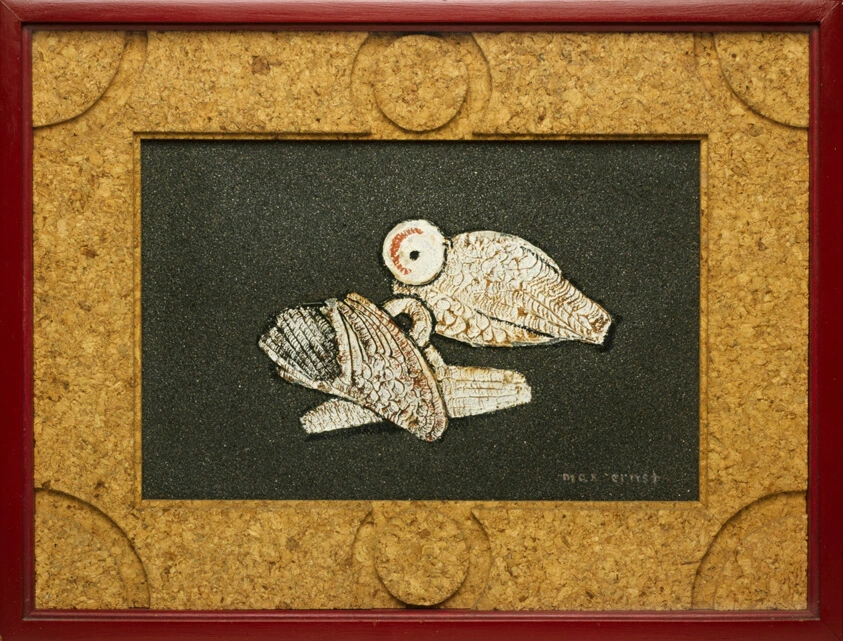
Max Ernsts Mattamathics from 1948 is an oil painting that exemplifies the German-born Surrealist painters combination of automatic techniques with the precise rendering of dream imagery that made him one of the most inventive artists of the 20th century. The title Mattamathics is a characteristic Ernst neologism that combines his own first name Matta with the word mathematics, suggesting a system of calculation that operates according to the logic of dreams rather than the logic of reason. The year 1948 places this painting in the period after Ernsts emigration to the United States during World War II and his subsequent return to France, when he was developing new techniques of painting that combined his earlier inventions of frottage, grattage, and decalcomania with the more painterly approach of his American period. The oil on canvas medium, applied with the combination of automatic techniques and precise rendering that characterizes Ernsts mature work, creates a surface in which recognizable forms emerge from and dissolve into fields of painterly energy, producing the dreamlike ambiguity that is the hallmark of Surrealist painting. The painting demonstrates the influence of Matta, the Chilean Surrealist to whom the title alludes, on Ernsts work of the late 1940s, when the two artists were exchanging ideas about the relationship between painting, mathematics, and the unconscious in a way that enriched both of their practices.
Cultural Impact
Ernsts paintings of the late 1940s demonstrate his ability to reinvent Surrealist painting through new automatic techniques and cross-pollination with other artists. Mattamathics influenced the development of postwar Surrealism and the broader tradition of automatic painting that extended through the Abstract Expressionists who recognized Ernst as a precursor.
Why It Matters
A 1948 oil painting by Ernst combining automatic techniques with precise rendering of dream imagery in a neologistic title alluding to Matta, creating a surface where recognizable forms emerge from and dissolve into painterly energy in the Surrealist tradition.