Provenance
Carl William Broemel (the artist) [1891-1984], Cleveland, OH (1924); The Cleveland Museum of Art, Cleveland, OH (May 7, 1924)
Accession Number
1924.1242
Medium
watercolor
Dimensions
Image: 36.8 x 54 cm (14 1/2 x 21 1/4 in.)
Classification
Drawing
Credit Line
Hinman B. Hurlbut Collection
Tags
Drawing Early Modern (1901–1950) Watercolor American Color: White Color: Gray
Background & Context
Background Story
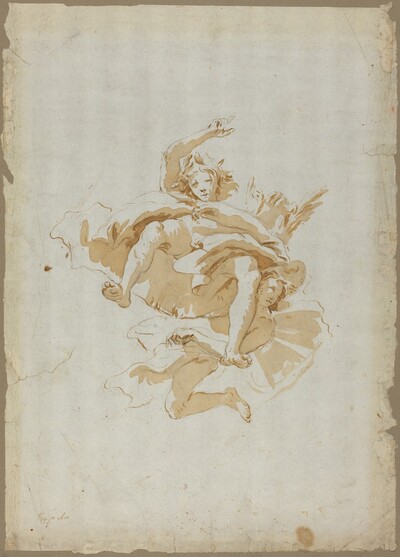
St. George from 1924 depicts the legend of St. George and the dragon in watercolor, combining the mythological subject with the atmospheric luminosity that characterizes all of Broemel's work. The choice of St. George—a knight who defeats a dragon to save a princess—allows Broemel to juxtapose the solid form of the knight and the sinuous form of the dragon against the transparent atmosphere that watercolor renders so effectively. The 1924 date places this in the same period as Air and Sunshine, suggesting that the two watercolors were conceived as companion pieces exploring different subjects through the same atmospheric medium.
Cultural Impact
Broemel's St. George demonstrates that the American watercolor renaissance was not limited to landscape subjects but extended to figurative and mythological themes as well. The legend of St. George defeating the dragon is rendered with the same atmospheric luminosity that Broemel brought to his landscapes, demonstrating that watercolor's capacity for transparent light effects could serve mythological subjects as effectively as atmospheric ones.
Why It Matters
St. George is Broemel's watercolor applied to mythology: the knight and the dragon rendered with the same atmospheric luminosity that he brought to his landscapes. The watercolor medium makes the legend feel transparent and luminous—the dragon and the knight silhouetted against air and sunshine rather than painted on an opaque ground.