Description
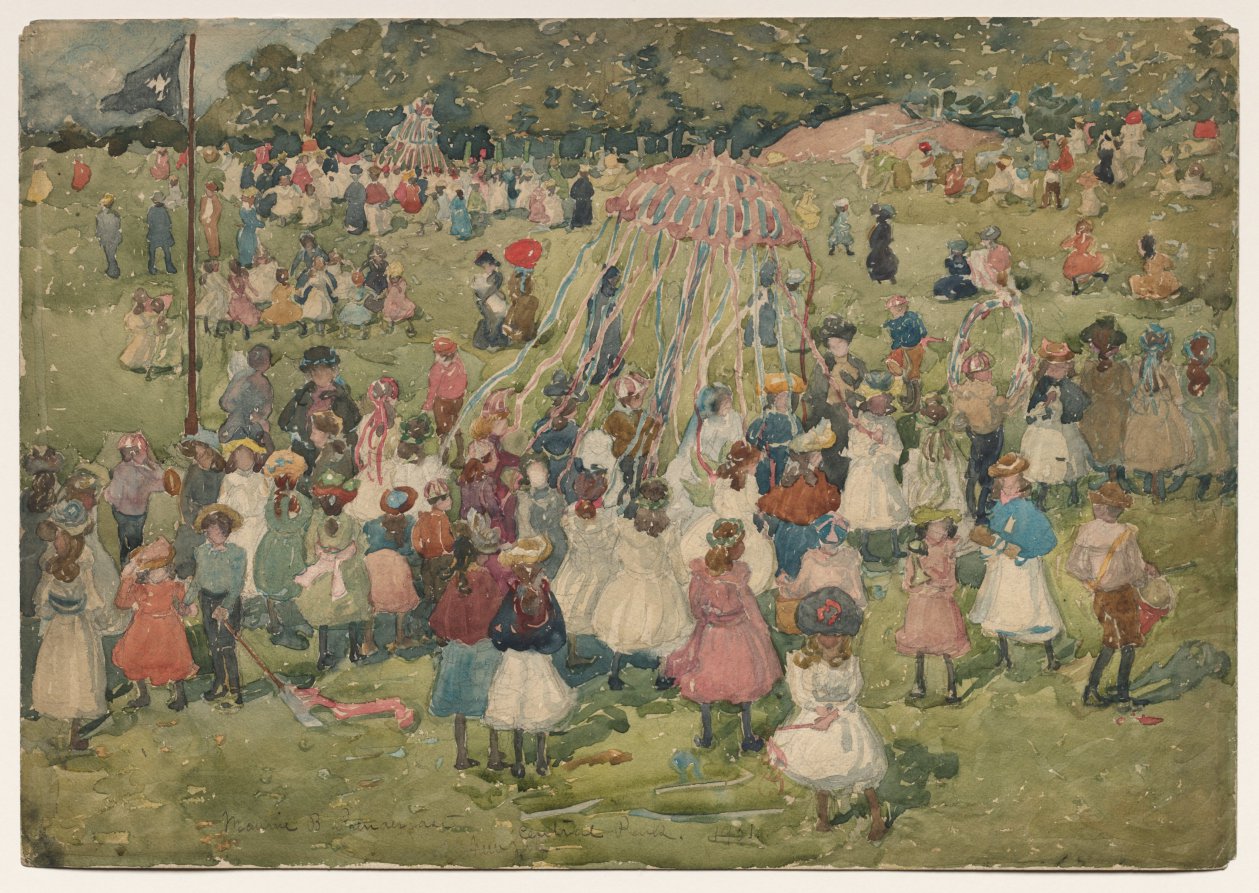
Prendergast developed a distinctive painting style featuring rounded patches of thickly applied color. Like many of his works, On the Beach, No. 3 visually approximates a densely woven tapestry.
Provenance
(Kraushaar Galleries, New York). (bought by CMA 1926)
Accession Number
1926.1653
Medium
oil on canvas
Dimensions
Framed: 81 x 103 x 6.5 cm (31 7/8 x 40 9/16 x 2 9/16 in.); Unframed: 66 x 85.1 cm (26 x 33 1/2 in.)
Classification
Painting
Credit Line
Hinman B. Hurlbut Collection
Tags
Painting Early Modern (1901–1950) Oil Painting Canvas American Color: Gray
Background & Context
Background Story
On the Beach, No. 3 (c. 1905-1915) is one of Prendergast's numbered series—.practice that reflects his approach to the seaside scene as a recurring theme rather than a specific location. The numbering suggests that Prendergast was exploring the decorative possibilities of the beach scene through variation rather than through representation—each version rearranging the elements (figures, sand, water, sky) into new patterns rather than depicting different beaches. The date range places this during Prendergast's mature period, when his decorative method had reached its fullest development. His treatment of the beach scene demonstrates the approach that distinguishes all his best work: the figures are not individual portraits but chromatic elements within a decorative composition; the beach is not a specific location but a horizontal pattern of color; and the water and sky are not naturalistic elements but horizontal bands that organize the composition's visual rhythm. This approach—treating the beach scene as a decorative problem rather than a representational one—connects Prendergast to the European modernists who were similarly reducing visual experience to pattern and color. The painting's numbering also indicates Prendergast's serial practice—his willingness to revisit the same subject multiple times, each version exploring different decorative possibilities.
Cultural Impact
Prendergast's numbered beach paintings influenced how serial variation was practiced in American modernism, establishing the beach scene as a recurring decorative theme. The paintings influenced later American artists who similarly explored subjects through variation rather than representation. On the Beach No. 3 influenced how the relationship between serial practice and decorative composition was understood in American painting.
Why It Matters
This painting matters because it demonstrates Prendergast's serial approach to the beach scene—treating the seaside not as a specific location to be represented but as a decorative theme to be explored through variation. The numbering argues that each version is one possibility among many, and that the beach's significance lies in its decorative potential rather than its topographic identity.