Provenance
Mary Holland Bacher, New York, NY (?-1915); The Cleveland Museum of Art, Cleveland, OH (October 25, 1915)
Accession Number
1915.420
Medium
[]
Dimensions
Image: 12.7 x 22.2 cm (5 x 8 3/4 in.)
Classification
Drawing
Credit Line
Gift of Mrs. Mary H. Bacher, New York
Tags
Drawing Impressionist & Modern (1851–1900) American Color: Brown Color: White
Background & Context
Background Story
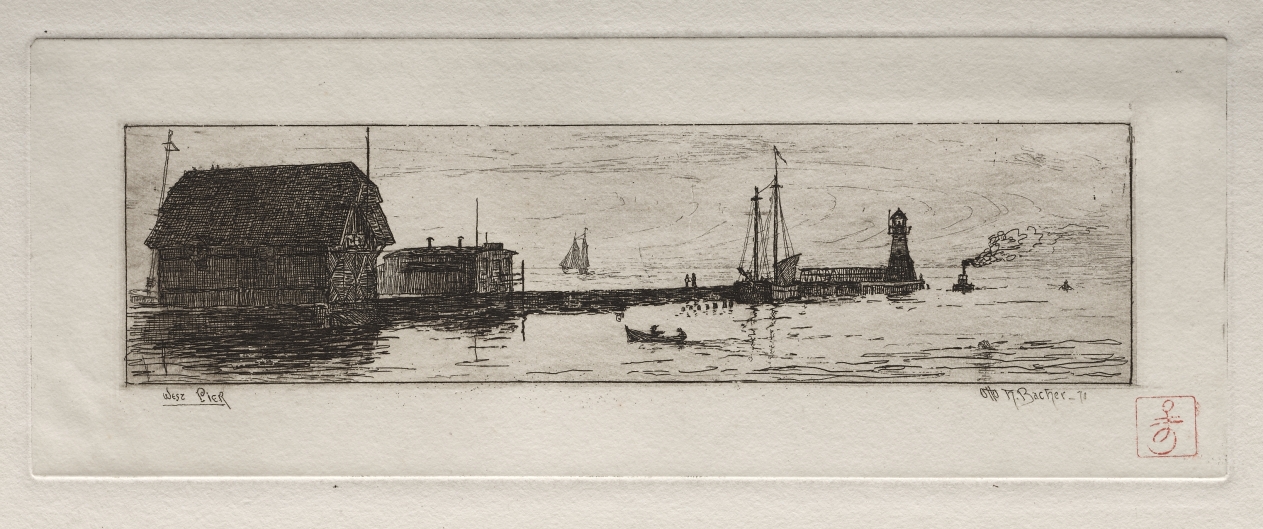
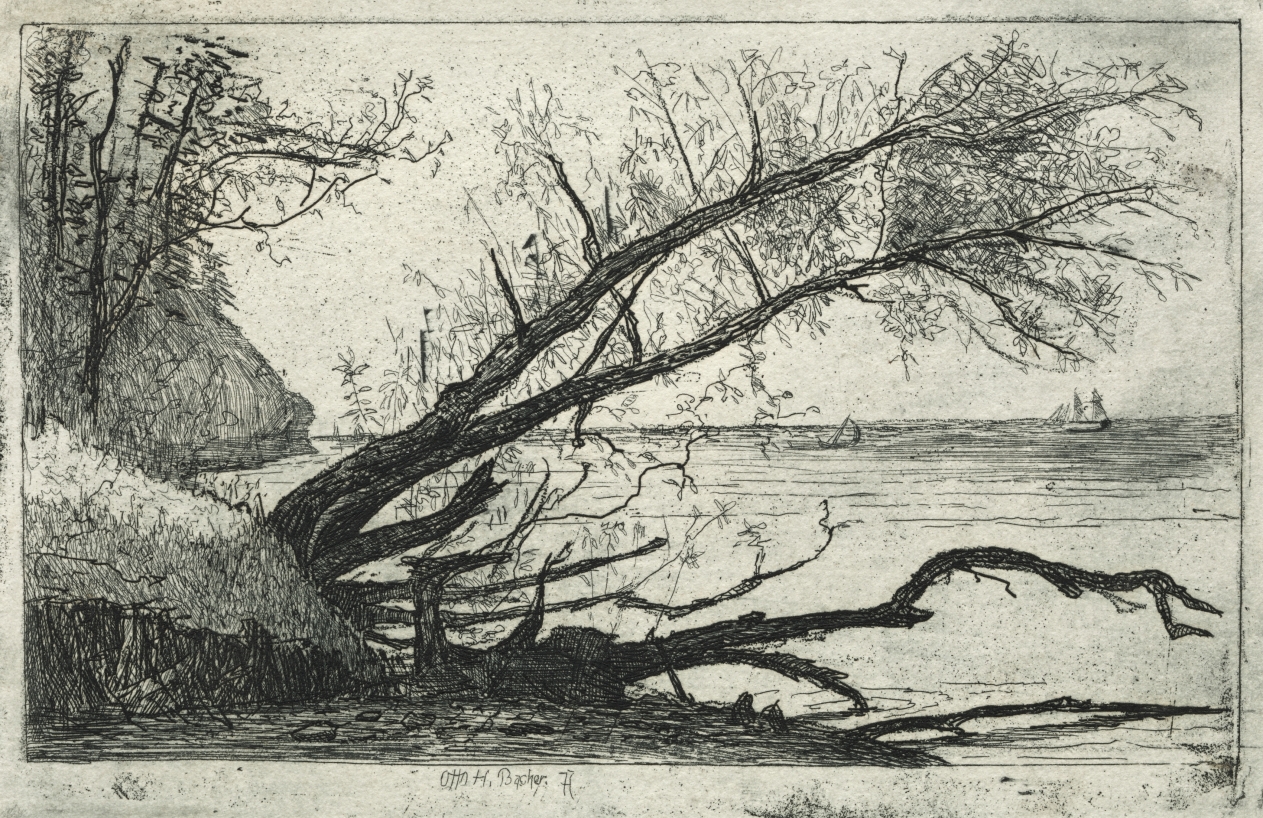
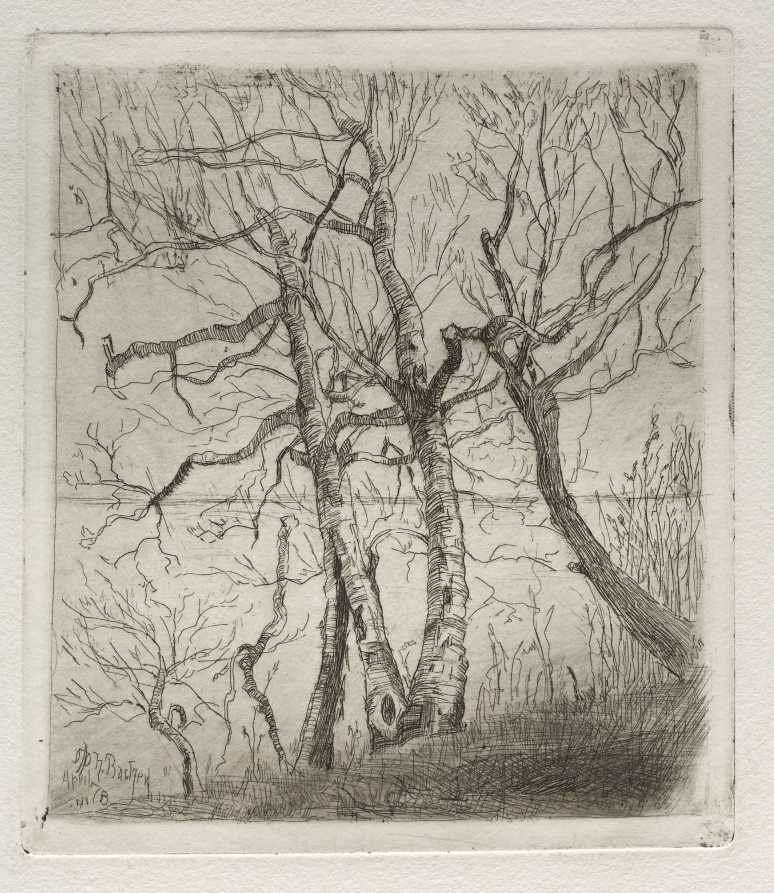
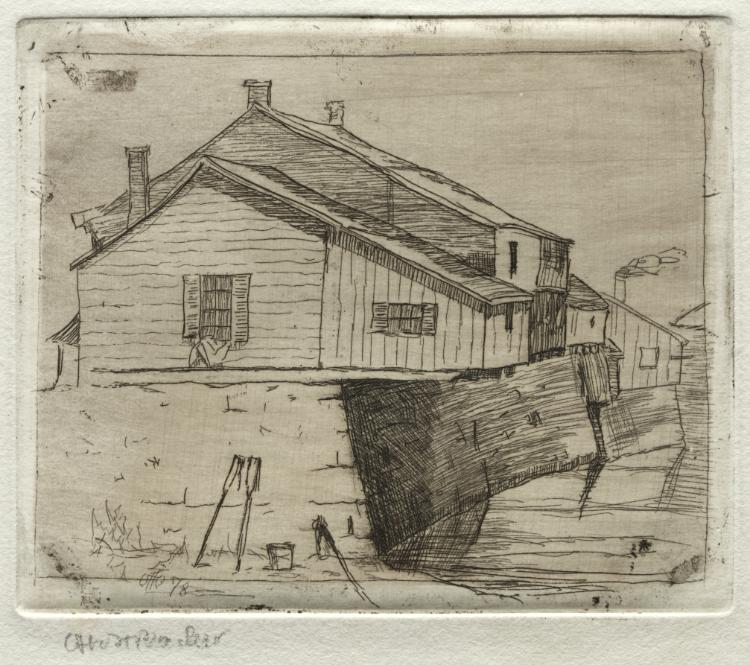
Otto H. Bacher's Spring Street, Cleveland, painted circa 1870-1909, captures a street scene in Cleveland, Ohio, by one of the most accomplished American etchers and painters of the late 19th century. Bacher (1856-1909) was a Cleveland native who studied in Munich under Frank Duveneck and became a member of the Duveneck Boys, the group of American artists who followed their charismatic teacher to Munich and immersed themselves in the city's vibrant artistic culture. Bacher later studied in Venice and became an accomplished etcher, working alongside James McNeill Whistler, who became both a friend and influence. The broad dating of this work, spanning from the 1870s to 1909, encompasses the period when Cleveland was growing from a modest lakefront city into one of America's great industrial metropolises. Spring Street, named for its location near one of the city's natural springs, would have been undergoing the transformation from a residential byway to a bustling urban thoroughfare during this period. Bacher's street scene likely captures the city's architectural and social character at a specific historical moment, whether in the 1870s when horse-drawn vehicles still dominated the streets, or later when electric streetcars and automobiles were beginning to reshape urban life. As a native son who left Cleveland for European training and returned with sophisticated artistic skills, Bacher brought a cosmopolitan eye to the local subject. His ability to find artistic interest in the ordinary streets of his hometown reflects the influence of both the Munich写实主义 and the aesthetic movement's attention to everyday beauty that he absorbed from Whistler.
Cultural Impact
Bacher's Cleveland street scenes document the urban transformation of an American industrial city during a period of explosive growth. His combination of Munich realism and Whistlerian aestheticism, applied to Midwestern subjects, represents an important synthesis of European training and American urban experience.
Why It Matters
This painting preserves a view of Cleveland's urban landscape during its transformation into a major industrial city, rendered by an artist who combined European sophistication with native insight.