Accession Number
1916.1051
Medium
oil on wood
Dimensions
Unframed: 21.8 x 32.6 cm (8 9/16 x 12 13/16 in.)
Classification
Painting
Credit Line
Gift of Mr. and Mrs. J. H. Wade
Tags
Painting Neoclassical & Romantic (1751–1850) Oil Painting French Color: Yellow
Background & Context
Background Story
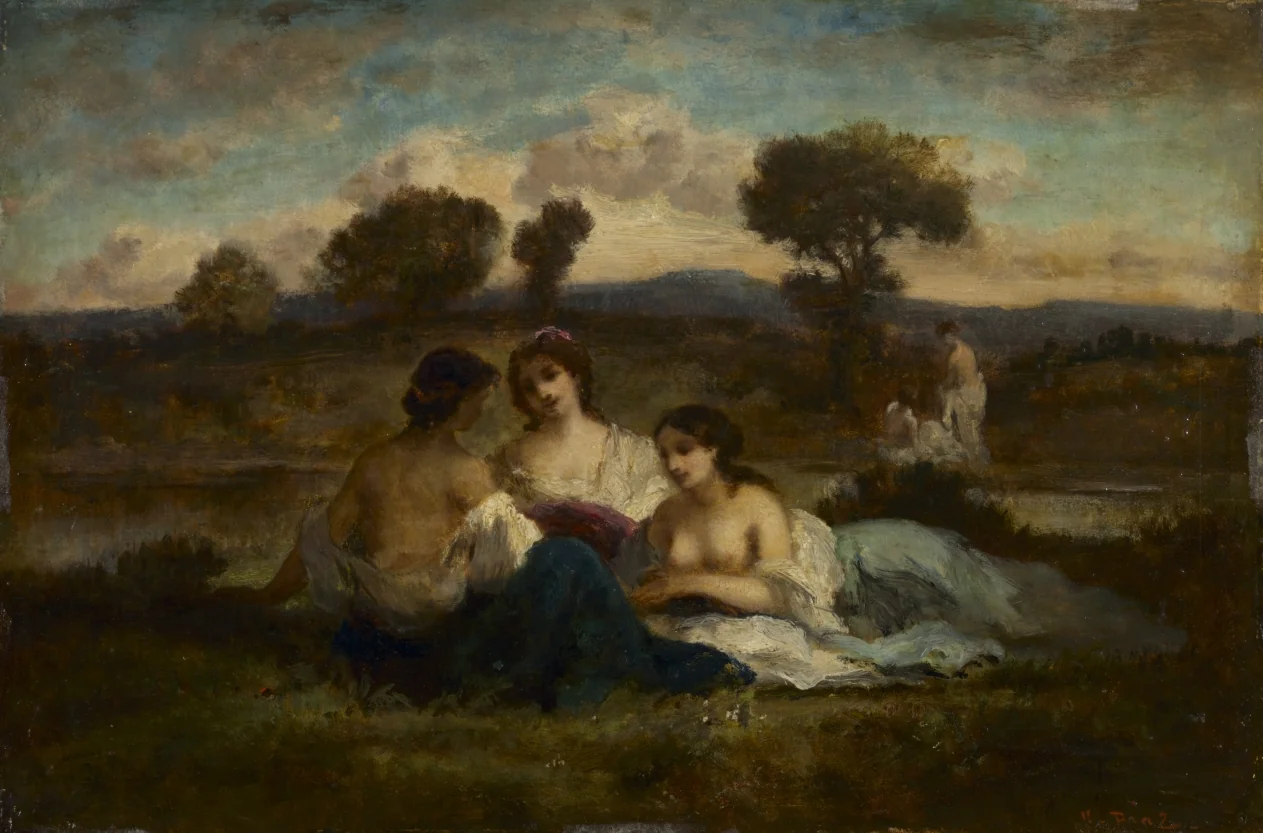
The Bathers is one of Diaz's most characteristic subjects — nude figures in a forest setting — and it combines the two genres for which he was best known: the forest interior and the female nude. The bathers are placed in a woodland pool, surrounded by the dappled light and rich foliage that Diaz painted better than any other Barbizon artist. The small wood panel format gives the painting a jewel-like intimacy, and Diaz's technique — rich, buttery, almost impasto in places — creates a surface that is as sensuous as the subject matter. The date of 'after 1847' places this in the period when Diaz was developing the mature style that would make his forest nudes among the most recognizable images of the Barbizon School.
Cultural Impact
Diaz's forest nudes occupy a distinctive position in 19th-century French painting: they are neither the academic nudes of the Salon (which were idealized and classical) nor the modern nudes of the Impressionists (which were contemporary and candid). Instead, they are mythological woodland beings — nymphs rather than women — who inhabit the forest as naturally as the trees and pools that surround them. This combination of the Barbizon forest and the mythological nude was Diaz's most original contribution to French painting.
Why It Matters
The Bathers is Diaz's signature subject in miniature: nude figures and forest interior combined in a single wood panel. The bathers are not models posing in a studio but nymphs who belong to this forest — and Diaz's rich, tactile paint surface makes the forest as sensuous as the figures who inhabit it.