Provenance
R. de la Guerinière, Paris. R. Caby, Paris. Delattre (dealer), Paris, Rue Rossini 1963. Claude Aubry, Paris. Mr. and Mrs. Severance A. Millikin, Cleveland, 1963. Given to the CMA in 1964.
Accession Number
1964.293
Medium
oil on wood panel
Dimensions
Unframed: 21.2 x 27 cm (8 3/8 x 10 5/8 in.)
Classification
Painting
Credit Line
Severance and Greta Millikin Collection
Tags
Painting Impressionist & Modern (1851–1900) Oil Painting Panel Painting French Color: Gold Color: Blue
Background & Context
Background Story
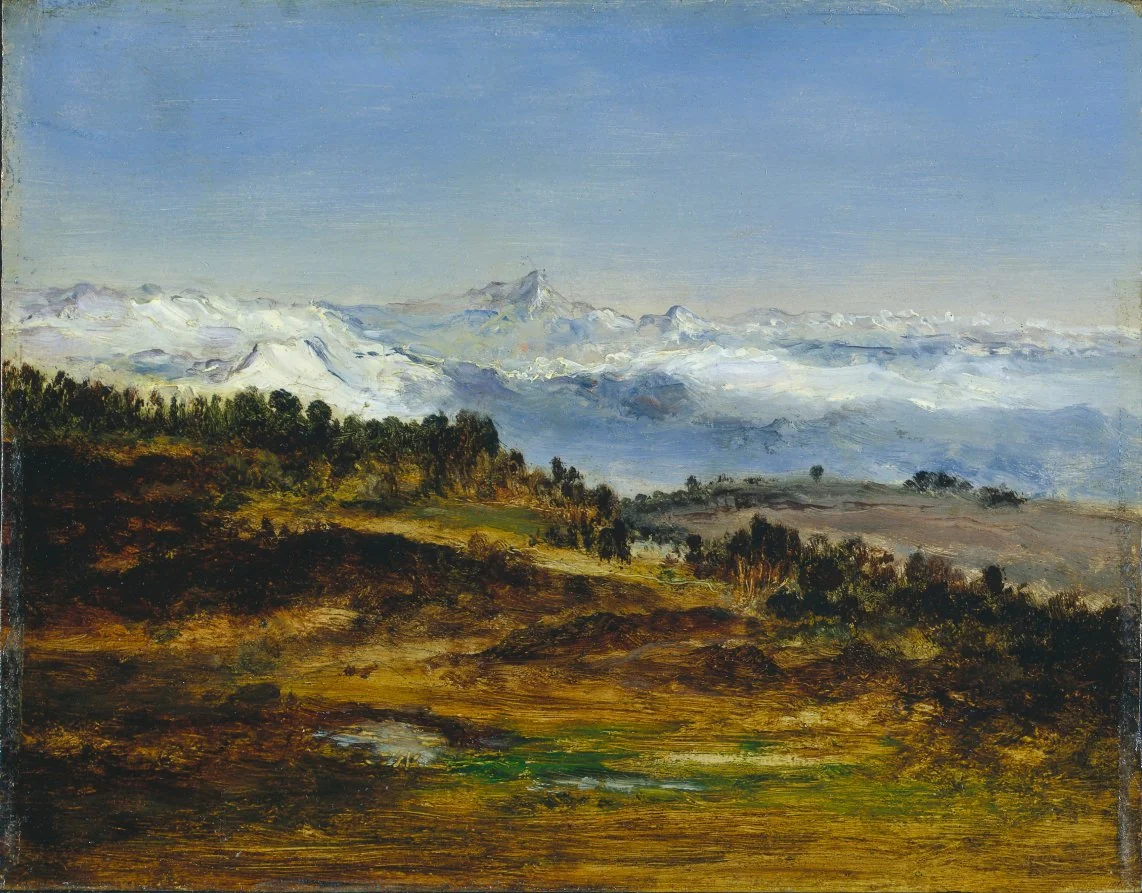
The Midi de Bigorre is one of the most prominent peaks in the French Pyrenees, and Diaz's painting of it from 1871-72 is a departure from his usual Fontainebleau forest interiors. The mountainous subject required Diaz to adapt his technique — which was developed for the intimate scale and dappled light of forest interiors — to the grand scale and clear atmosphere of high mountain landscape. The result is a painting that retains Diaz's characteristic richness of color and texture while accommodating the austerity of the Pyrenean landscape: the peak rises above its foothills with a monumentality that Diaz's forest scenes never attempt.
Cultural Impact
Diaz's Pyrenees painting was made during the difficult years following the Franco-Prussian War and the Paris Commune (1870-71), when many French artists left Paris for the provinces. The Pyrenees, far from the devastated capital, offered a landscape of grandeur and stability that stood in stark contrast to the political turmoil of the period. Diaz's choice of mountain subject may reflect this search for permanence and grandeur in a time of upheaval.
Why It Matters
The Pyrenees, the Peak of the Midi de Bigorre is Diaz outside his comfort zone: not the intimate forest interior but the grand mountain landscape. The painting proves that his rich technique could accommodate austerity as well as sensuality — the peak is as convincingly painted as his beloved forest paths.