Description
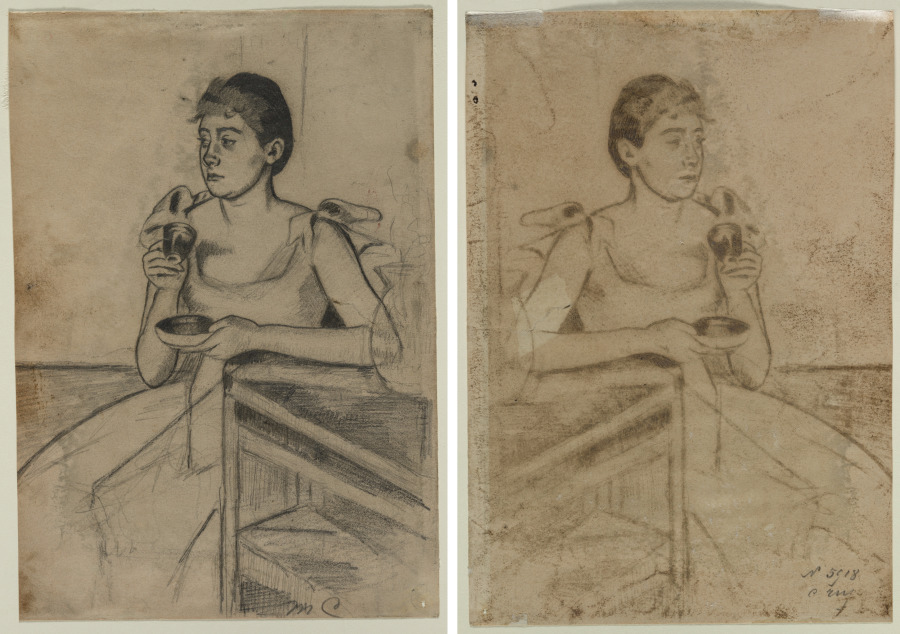
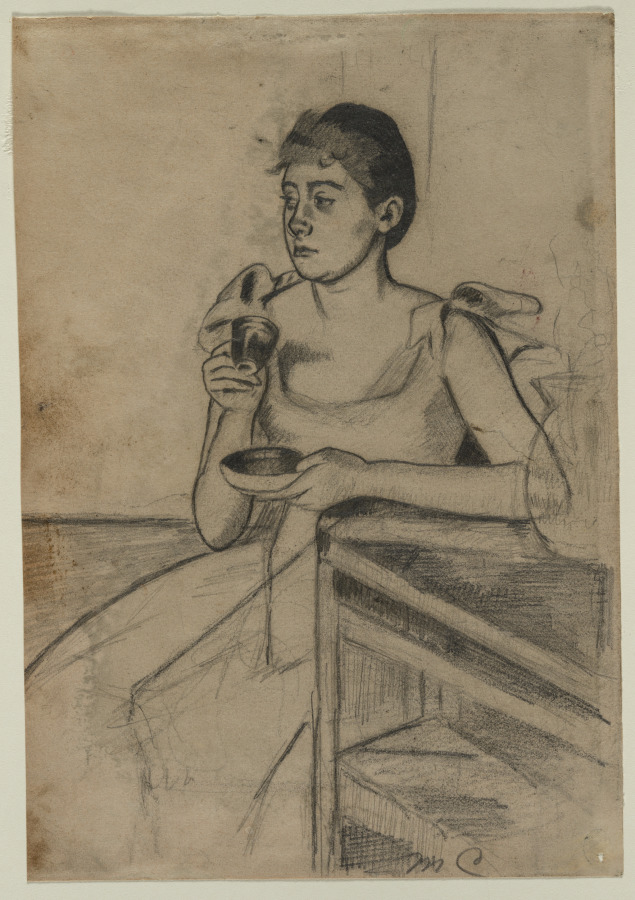
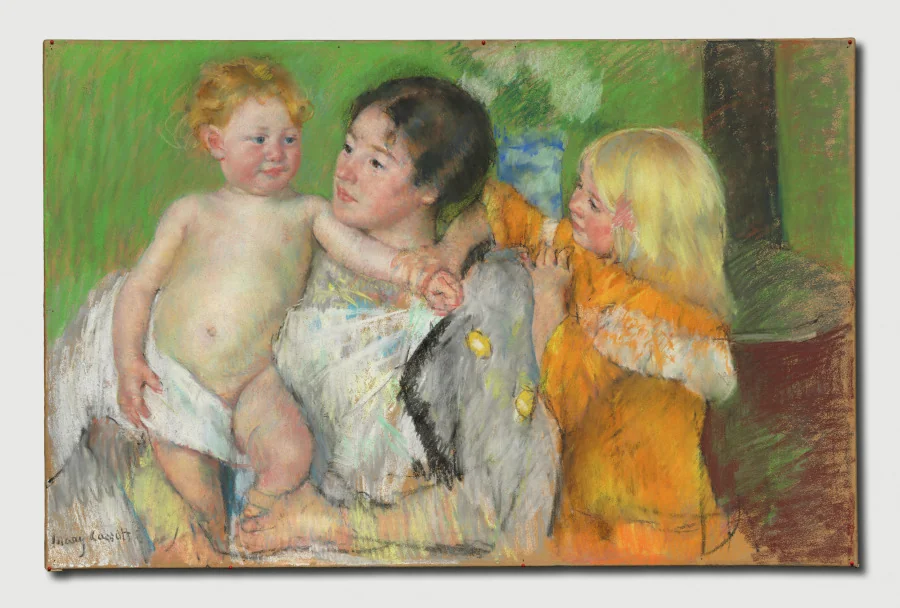
Mary Cassatt began using pastel in the 1870s and continued to experiment with the medium throughout her career. This drawing depicts a mother and child, one of the artist's preferred subjects. Cassatt typically used the technique seen here, in which she finished her sitters' faces with a high degree of detail but rendered the rest of the composition in a much looser and sketchier style.
Provenance
(Durand-Ruel, Paris, sold to Mr. and Mrs. Jeptha Homer Wade, Cleveland, OH) (1901); Mr. and Mrs. Jeptha Homer Wade, Cleveland, OH, given to the Cleveland Museum of Art, Cleveland, OH (1901-1920); The Cleveland Museum of Art, Cleveland, OH (1920-)
Accession Number
1920.379
Medium
pastel
Dimensions
Sheet: 66 x 100 cm (26 x 39 3/8 in.)
Classification
Drawing
Credit Line
Gift of J. H. Wade
Tags
Drawing Early Modern (1901–1950) Pastel American Color: Gold
Background & Context
Background Story
After the Bath from 1901 is a late work by Cassatt, executed in pastel during the period when her failing eyesight was making oil painting increasingly difficult. The subject—a mother bathing her child—was Cassatt's most persistent theme throughout her career, but this late version is rendered with a freedom and spontaneity that her earlier, more tightly composed treatments lacked. The pastel medium allowed Cassatt to work quickly and with the kind of direct, gestural mark-making that her failing eyesight made necessary, and the resulting work has a warmth and tenderness that transcends the physical limitations of the artist.
Cultural Impact
Cassatt's late pastels are among the most moving works in the Impressionist tradition because they demonstrate that physical limitations need not diminish artistic quality. After the Bath is rendered with the freedom and spontaneity that pastel allowed, and the mother-and-child subject—Cassatt's lifelong theme—receives a treatment of such warmth and directness that the physical act of making the pastel seems not a limitation but a liberation from the more deliberate technique of her earlier oil paintings.
Why It Matters
After the Bath is late Cassatt at her most spontaneous: a mother-and-child subject rendered in pastel with the freedom and directness that failing eyesight demanded and that the pastel medium allowed. The physical limitations of the artist produced not a diminished work but a liberated one—the pastel's gestural freedom releasing Cassatt from the more deliberate technique of her earlier oil paintings.