Provenance
Mrs. A. Wyant, sold, c. 1898 to J. D. Woodward, New York; Mr. W. H. Abercrombie (see Literature: Eliot Clark, 1920); Charles Harkness, New York
Accession Number
1927.389
Medium
oil on canvas
Dimensions
Unframed: 41.4 x 62 cm (16 5/16 x 24 7/16 in.)
Classification
Painting
Credit Line
The Charles W. Harkness Gift
Tags
Painting Impressionist & Modern (1851–1900) Oil Painting Canvas American Color: Yellow Color: Gray
Background & Context
Background Story
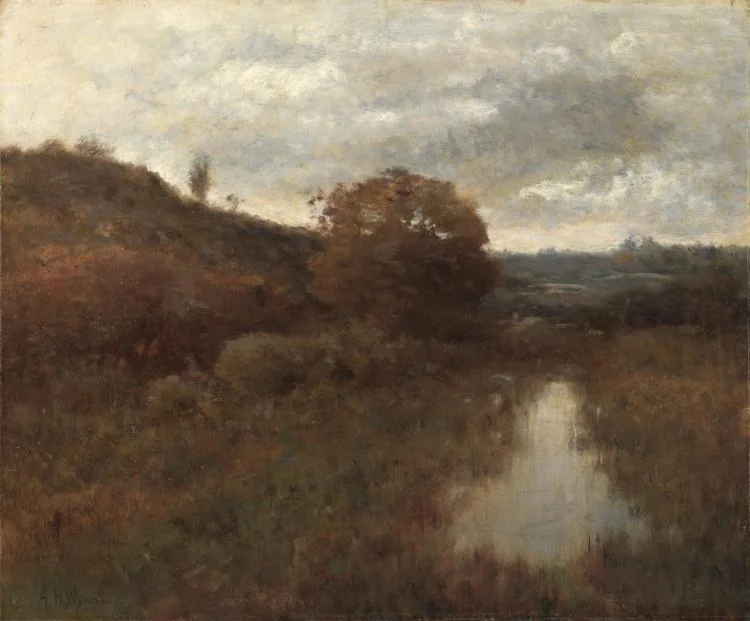
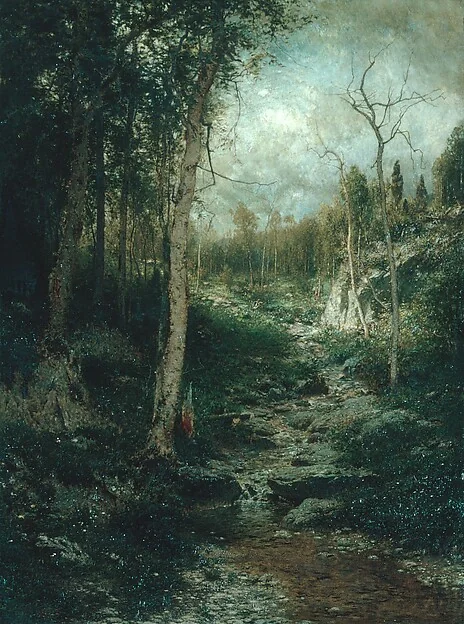
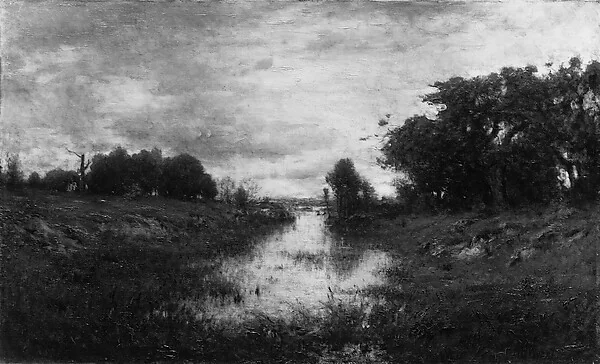
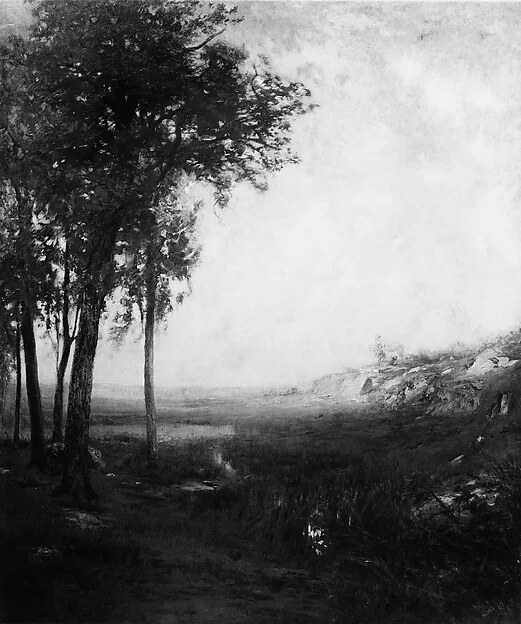
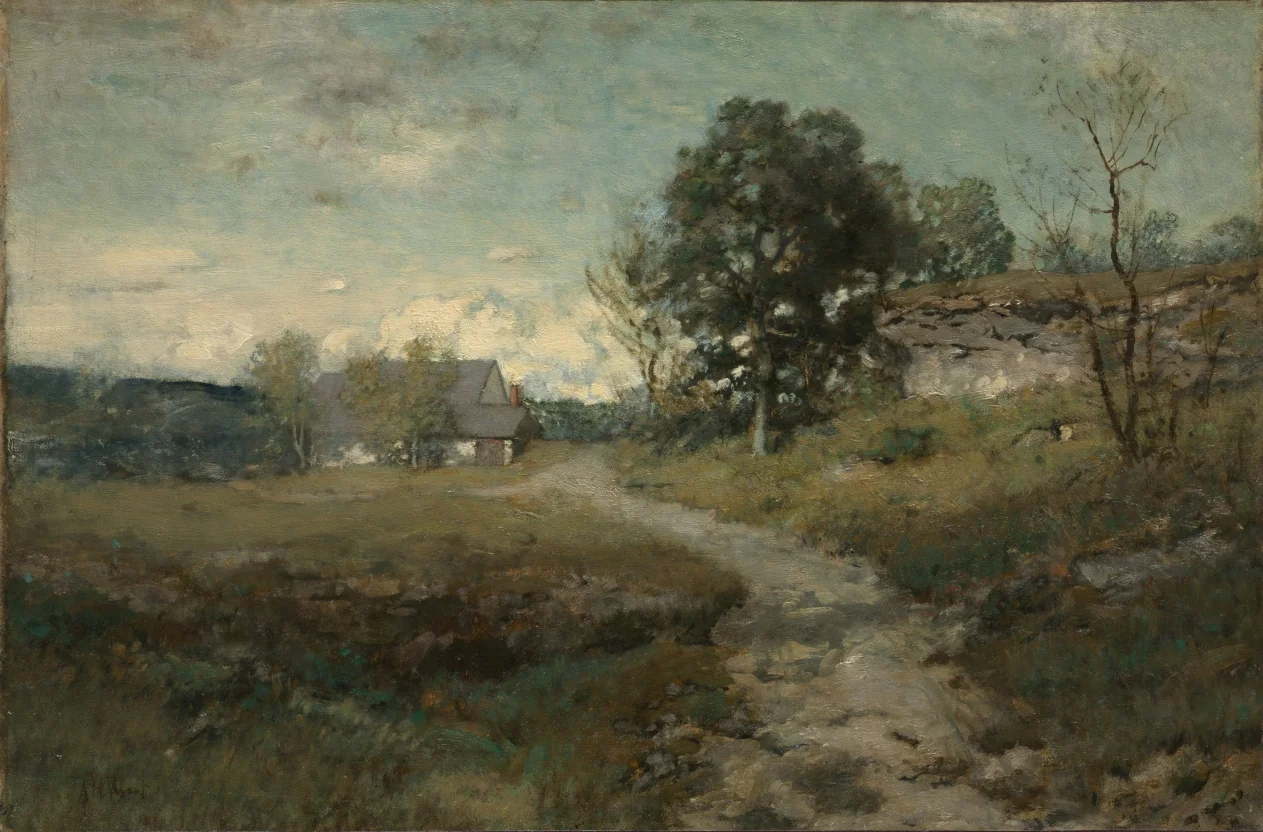
Alexander H. Wyant's "Arkville Landscape" (1880s) depicts the Catskill Mountain region of New York State — specifically the area around Arkville, in the valley of the East Branch of the Delaware River — with the atmospheric sensitivity and contemplative mood that characterized Wyant's mature work. The painting shows the quiet grandeur of the Catskill landscape: gentle hills, meandering streams, and dense forests rendered in the muted, tonal palette that connects Wyant to the Hudson River School on one hand and to the emerging Tonalist movement on the other.
Wyant (1836–1892) was born in Ohio and initially trained as a sign painter before discovering landscape art through the work of George Inness, whose early paintings inspired him to seek formal training. He studied briefly in Cincinnati and then in New York, where he was influenced by the Hudson River School painters, particularly Asher B. Durand, whose detailed naturalism provided Wyant's initial artistic model.
The turning point in Wyant's career came in 1865, when he traveled to Germany and encountered the work of the Düsseldorf School and, more importantly, the landscapes of the Barbizon painters whose work was then transforming European art. The Barbizon emphasis on mood, atmosphere, and the subjective experience of nature resonated deeply with Wyant, and upon his return to America he gradually abandoned the crisp detail of his Hudson River School predecessors in favor of broader handling, subdued color, and an emphasis on poetic feeling over topographical accuracy. After a stroke in 1873 paralyzed his right hand, Wyant taught himself to paint with his left, and his brushwork became even looser and more expressive, contributing to the ethereal, dreamlike quality of his late landscapes.
The Arkville area held special significance for Wyant. In 1888, he built a studio in Arkville, seeking the quiet beauty of the Catskill countryside as both subject and refuge. His Arkville paintings are among his most personal works — landscapes of intimate familiarity rather than discovered vistas, painted by an artist who knew every hill, stream, and tree through years of daily observation. "Arkville Landscape" belongs to this late phase, when Wyant's landscapes achieved a meditative stillness that looked forward to the Tonalist movement of Albert Pinkham Ryder and Dwight Tryon.
Cultural Impact
Wyant's evolution from Hudson River School detail to Barbizon-influenced tonalism helped establish the Tonalist movement in American art, creating a bridge between the panoramic landscapes of the mid-nineteenth century and the introspective, mood-driven landscapes of the fin de siècle.
Why It Matters
"Arkville Landscape" represents Wyant's mature vision — a Catskill landscape rendered not as topographical record but as a meditation on light, mood, and the quiet beauty of the American countryside.