Provenance
Sold to B. Cannon (obtained from the artist); John Emmans, Brooklyn; Emerson McMillin (New York sale: American Art Association, January 20-23, 1913); Charles W. Harkness, New York; Edward S. Harkness, New York
Accession Number
1927.390
Medium
oil on canvas
Dimensions
Unframed: 50.5 x 61 cm (19 7/8 x 24 in.)
Classification
Painting
Credit Line
The Charles W. Harkness Gift
Tags
Painting Impressionist & Modern (1851–1900) Oil Painting Canvas American Color: Orange
Background & Context
Background Story
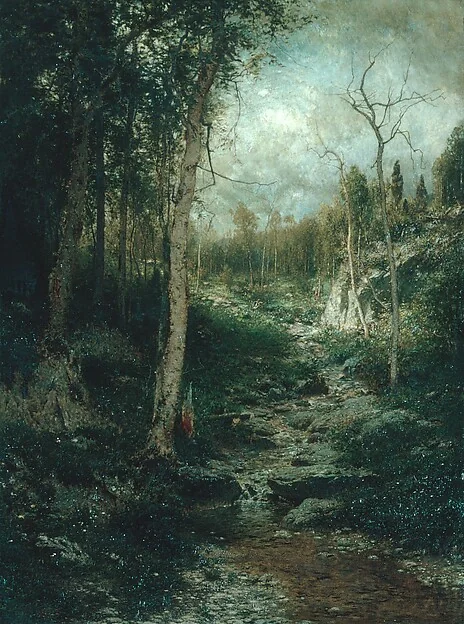
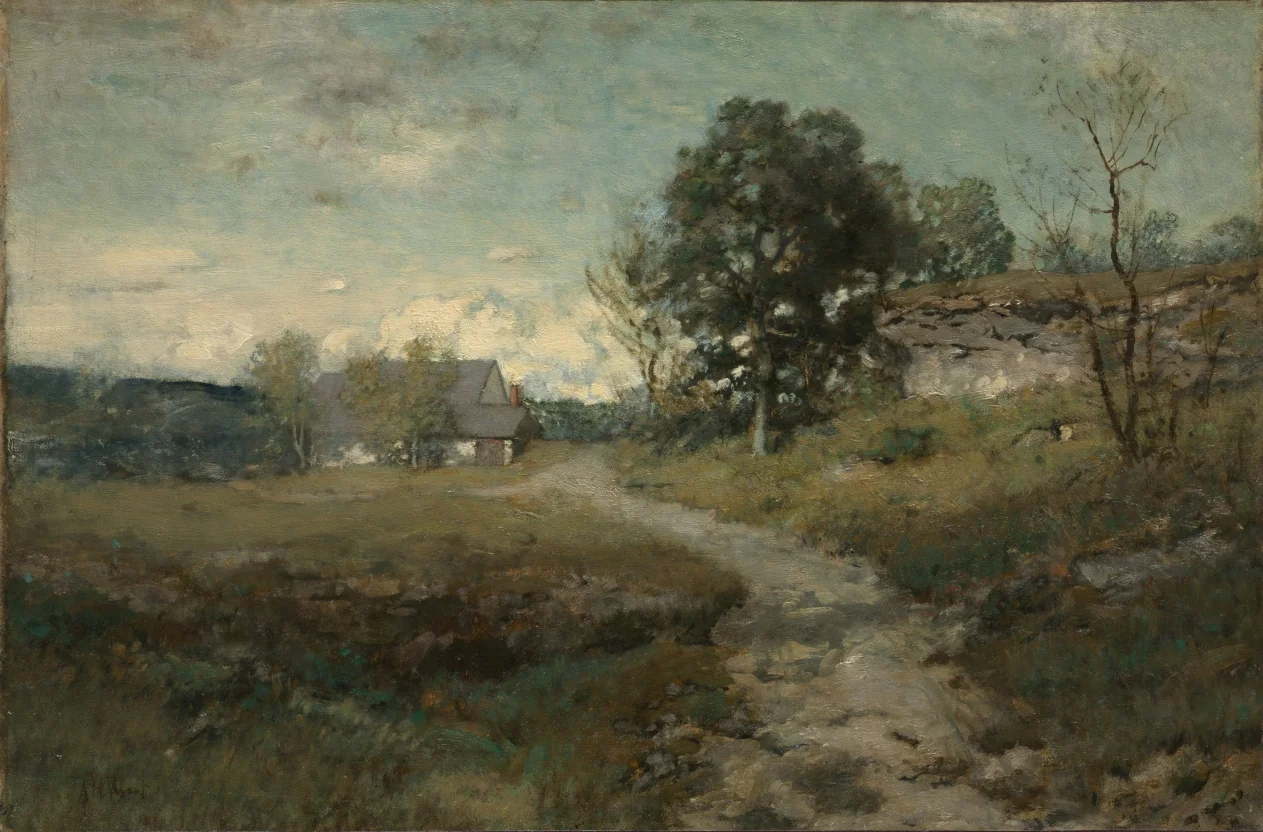
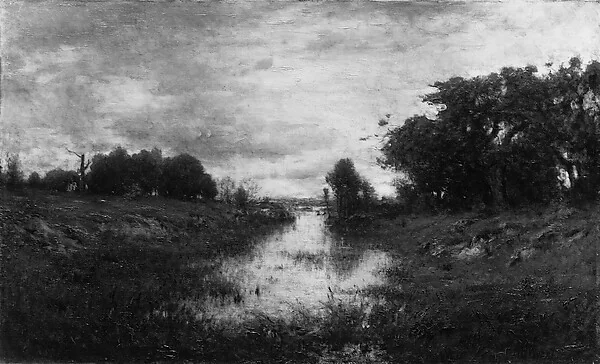
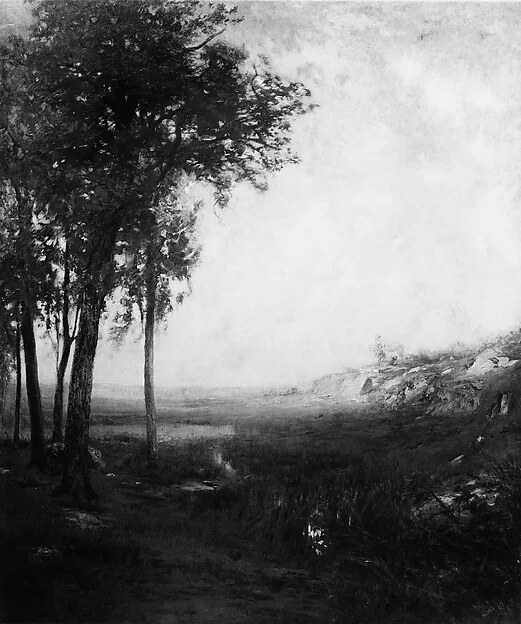
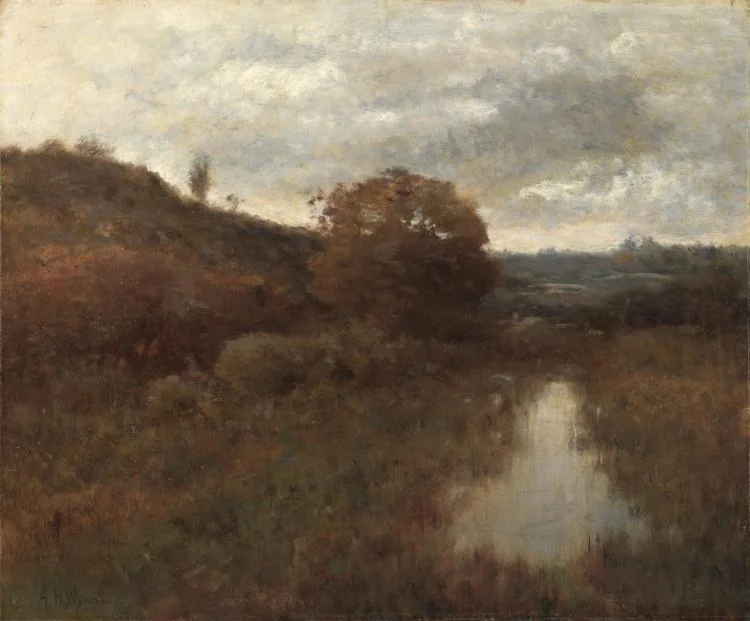
Alexander H. Wyant's "Autumn Landscape and Pool" (1870s-1880s) is a quintessential example of the artist's mature style, in which the detailed naturalism of the Hudson River School gave way to the atmospheric, tonal approach that would define American Tonalism. The painting depicts a pool surrounded by autumn foliage — a quiet, inward-looking scene that emphasizes mood over topography and evocation over description.
The painting belongs to the period after Wyant's 1873 stroke, which paralyzed his right hand and forced him to paint with his left. This physical transformation had a profound effect on his art: the precise, detailed brushwork of his earlier work gave way to broader, more expressive strokes, and the clear, hard light of his Hudson River School beginnings was replaced by softer, more ambiguous atmospheres. The accident that might have ended another artist's career instead liberated Wyant from the conventions of his training, pushing him toward a more personal and deeply felt vision of nature.
The autumn setting was a natural subject for Wyant's evolving tonal sensibility. Autumn in the American Northeast offered a palette of warm browns, golds, and muted reds that perfectly suited his move away from the bright greens and blues of conventional landscape painting. The season's inherent themes of transition and decline — trees shedding their leaves, light fading earlier each day, the landscape preparing for winter dormancy — resonated with Wyant's own experience of physical decline and with the broader cultural mood of melancholy introspection that characterized post-Civil War American art.
The pool in the painting is more than a topographical feature — it is a reflective surface that doubles the landscape, creating a sense of depth and mirroring that suggests inner as well as outer worlds. Pools, ponds, and still water occur frequently in Wyant's late landscapes, serving as natural metaphors for contemplation and self-reflection. The still water reflects the autumn trees so perfectly that the boundary between reality and reflection becomes uncertain, creating the kind of liminal, ambiguous space that Tonalist painters valued most.
Wyant's influence on American landscape painting was significant. Along with George Inness and Albert Pinkham Ryder, he helped establish the Tonalist aesthetic that would dominate American landscape painting from the 1880s through the 1910s, providing an alternative to both the detailed naturalism of the earlier Hudson River School and the Impressionist color that was arriving from France. His late paintings, with their subdued palettes, atmospheric effects, and emphasis on subjective feeling, anticipated the modernist concern with the inner experience of nature rather than its external appearance.
Cultural Impact
Wyant's late landscapes helped establish American Tonalism as a significant movement, offering an alternative to both Hudson River School naturalism and French Impressionism that privileged mood, atmosphere, and subjective response to nature.
Why It Matters
"Autumn Landscape and Pool" captures Wyant's mature vision — autumn woods reflected in still water, rendered in the muted, atmospheric palette that transformed American landscape painting from topographic description into subjective meditation.