Description
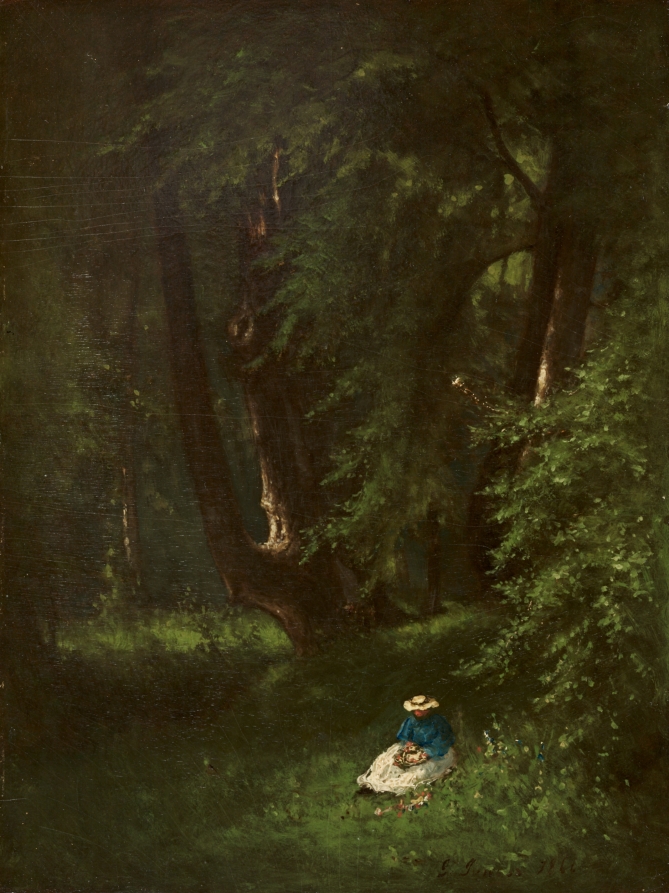
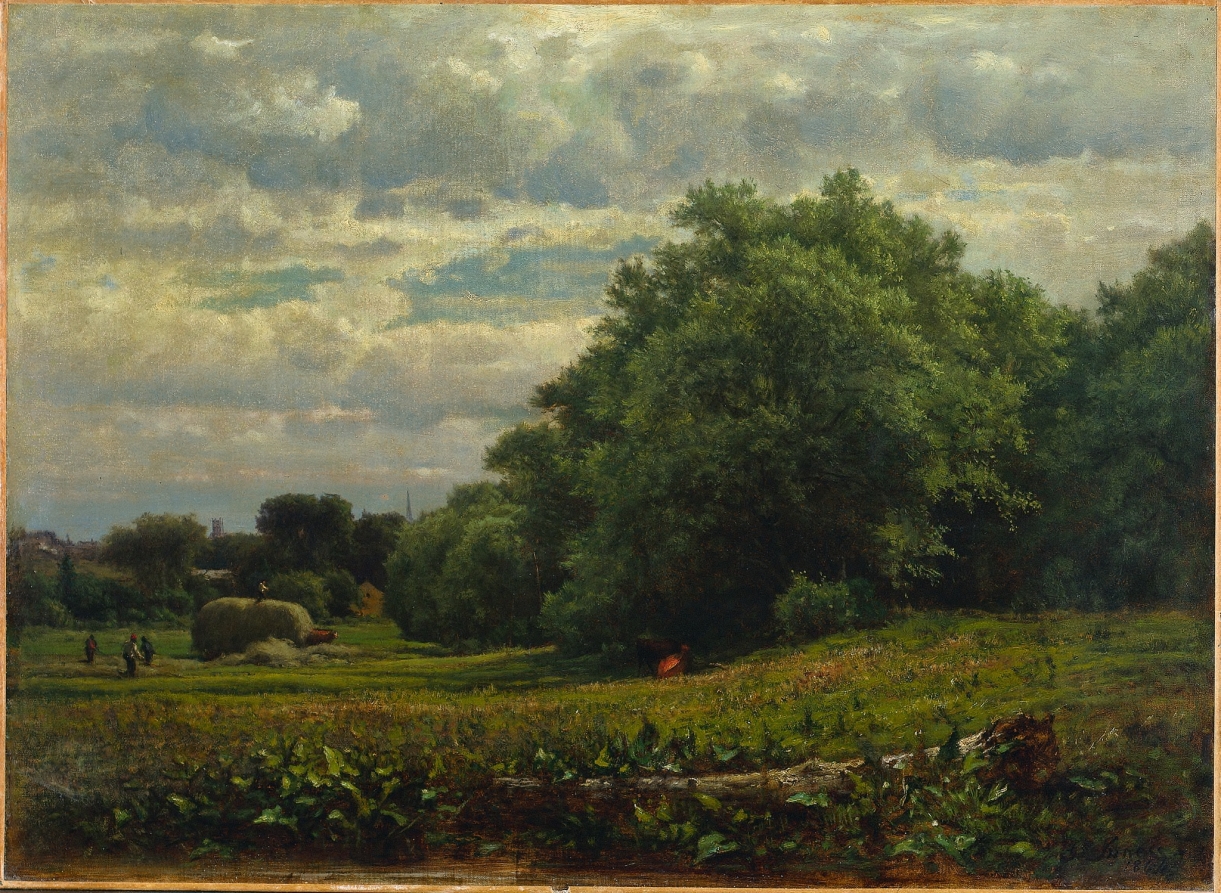
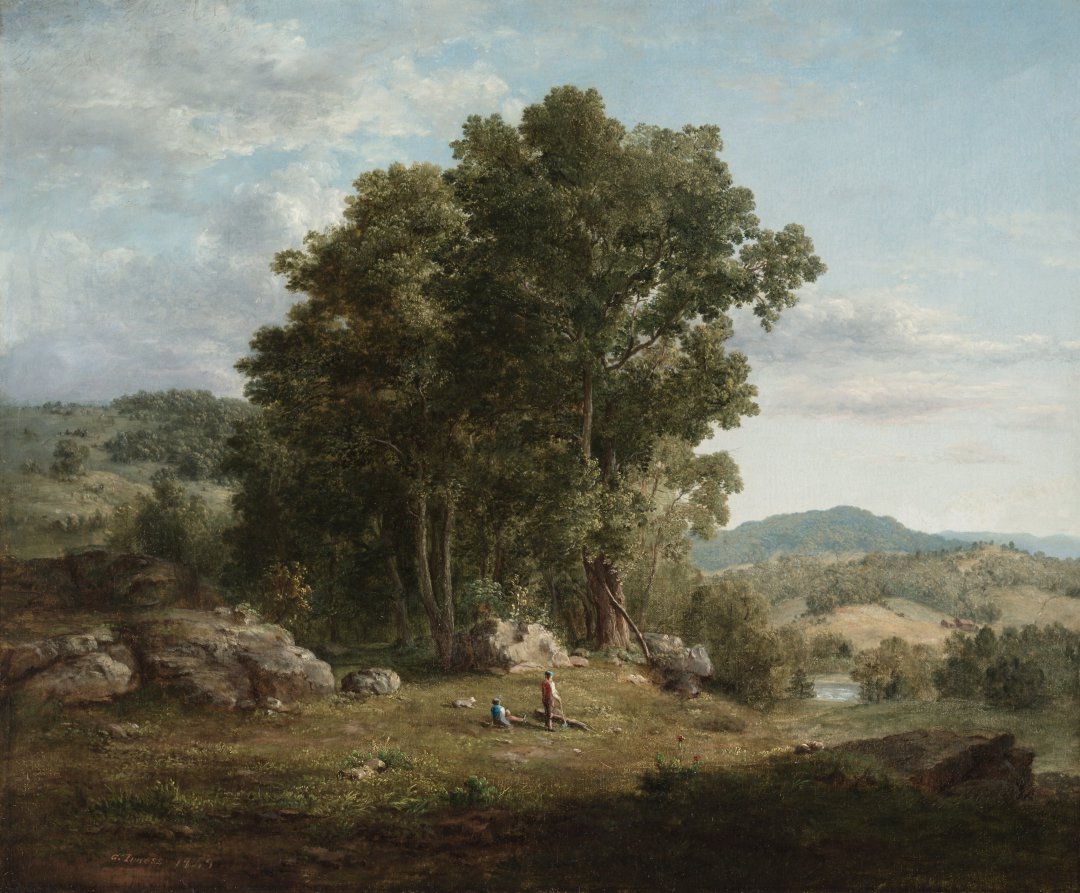
During the later 19th century, when European artists were influencing American landscapists, George Inness looked to France for stylistic inspiration. After a trip to Europe in 1853 and 1854, which brought him into contact with contemporary French painters, Inness adopted a looser way of handling paint. By the 1880s he was interested in conveying the spiritual aspects of nature.
Provenance
The Cleveland Museum of Art, Cleveland, Ohio
Gift of the Estate of Charles F. Brush (1929-); Charles F. Brush [1849-1929], Cleveland, OH1 (By 1913 -1929)
Accession Number
1929.464
Medium
oil on canvas
Dimensions
Framed: 79.5 x 92 x 6 cm (31 5/16 x 36 1/4 x 2 3/8 in.); Unframed: 56.2 x 70 cm (22 1/8 x 27 9/16 in.)
Classification
Painting
Credit Line
Gift of the Estate of Charles F. Brush
Tags
Painting Impressionist & Modern (1851–1900) Oil Painting Canvas American Color: Orange Color: Gold
Background & Context
Background Story
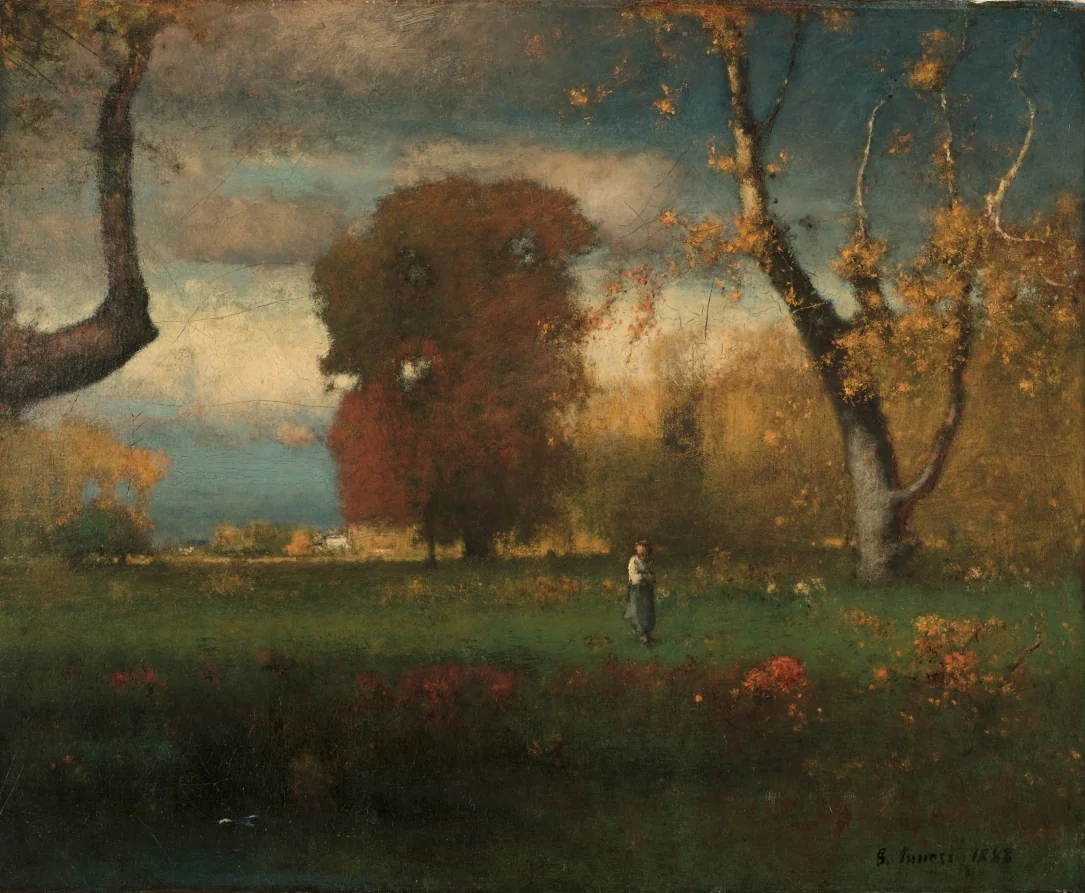
Landscape (1888) represents Inness's mature Tonalist style at a period of great productivity and artistic confidence. By 1888, Inness had fully developed the atmospheric approach that defined his contribution to American art: landscapes in which form dissolves into light, detail submits to mood, and the visible world becomes a vehicle for spiritual experience. The painting's generic title—simply Landscape—suggests Inness's mature conviction that the specific location mattered less than the spiritual reality it manifested. His Swedenborgian faith taught that the natural world was a reflection of the divine, and his mature landscapes increasingly emphasized this spiritual dimension by subordinating topographical specificity to atmospheric effect. The year 1888 was a productive one for Inness, who was painting with the assurance of an artist who had found his method and could apply it to any subject. His handling of this landscape likely demonstrates the technical fluency of his late work: broad, confident brushwork that suggests form rather than delineating it; a palette of warm, muted tones that create atmospheric unity; and the overall effect of a landscape viewed through a veil of light that connects the physical to the spiritual.
Cultural Impact
Inness's mature landscapes influenced the development of American abstract painting by demonstrating that representational painting could approach the condition of abstraction while remaining rooted in observed reality. The paintings influenced early American modernists who similarly sought to dissolve form into color and atmosphere. The spiritual dimension of Inness's landscapes influenced how American art was understood in relation to religious experience, establishing a tradition of contemplative painting that connected American modernism to transcendentalist philosophy.
Why It Matters
This painting matters because it represents Inness's mature conviction that landscape painting's purpose is not to describe the visible world but to use it as a vehicle for spiritual experience. The painting's generic title—Landscape—encourages viewers to look beyond the specific place toward the universal reality that Inness believed all landscapes manifested, making the painting an argument for art's spiritual function.