
Description
Universally considered one of the greatest artists of the Italian Renaissance, Michelangelo devoted four years to painting the vast ceiling fresco in the Sistine Chapel. This preparatory study portrays one of the 20 athletic male nudes, known as ignudi, who serve as supporting figures at each corner of the Old Testament scenes painted down the center of the ceiling. Michelangelo worked out the positioning of the ignudi in red chalk drawings before beginning to paint each section of wet plaster. The energy and monumentality of the figure in red chalk, whose body extends beyond the sheet, suggests the heroic athleticism of Michelangelo’s sculpture.
Provenance
Pierre Crozat, Paris (L. 3612), his sale 1741 (1741); Pierre Jean Mariette (L. 1852), Paris, his sale 1775-76, lot 236 (1775-76); Bürckel family, Vienna; Dr. Alexander de Frey, Temesvar, Romania, his sale, 1933, lot 7 (as school of Michelangelo) (1933); purchased by Henry G. Dalton (1862-1939), Cleveland (1937); by descent to his nephews George S. and Harry D. Kendrick, Cleveland (1939); gift to The Cleveland Museum of Art, Cleveland, OH (1940-)
Accession Number
1940.465.b
Medium
red chalk heightened with traces of white
Dimensions
Sheet: 23.4 x 33.5 cm (9 3/16 x 13 3/16 in.); Secondary Support: 24.4 x 34.4 cm (9 5/8 x 13 9/16 in.)
Classification
Drawing
Credit Line
Gift in memory of Henry G. Dalton by his nephews George S. Kendrick and Harry D. Kendrick
Tags
Color: Orange Color: White
Background & Context
Background Story
The verso of Michelangelo's double-sided Sistine study sheet (1510–11) features additional figure studies in red chalk, heightened with traces of white. These are working sketches—Michelangelo rapidly exploring poses, gestures, and anatomical relationships for the monumental figures that populate the Sistine Ceiling. The white heightening adds a sculptural quality to the forms, suggesting the way light would fall across the painted figures in the chapel's ambient illumination. The verso studies may relate to different portions of the ceiling than the recto ignudo—perhaps for one of the prophets, sibyls, or other figures in the vast iconographic program. The speed and economy of these sketches contrast with the more finished recto studies, offering a glimpse of Michelangelo's initial thoughts before they were refined into final compositions. Together, the recto and verso of this sheet provide an extraordinarily complete record of Michelangelo's working process, from initial conception (verso) to refined study (recto) to the final painted figure on the Sistine Ceiling itself.
Cultural Impact
This double-sided sheet is a microcosm of Michelangelo's creative method, preserved in one of the most famous drawings in any museum collection, offering insight into the process of genius.
Why It Matters
The verso sketches capture Michelangelo's ideas in their raw, spontaneous state—the first whispers of figures that would become some of the most iconic images in Western art, preserved in the fleeting marks of red chalk on paper.
Related Artworks

Study for the Nude Youth over the Prophet Daniel (recto)
Michelangelo Buonarroti

Study for the Nude Youth over the Prophet Daniel (recto); Figure Studies for the Sistine Ceiling (verso)
Michelangelo Buonarroti
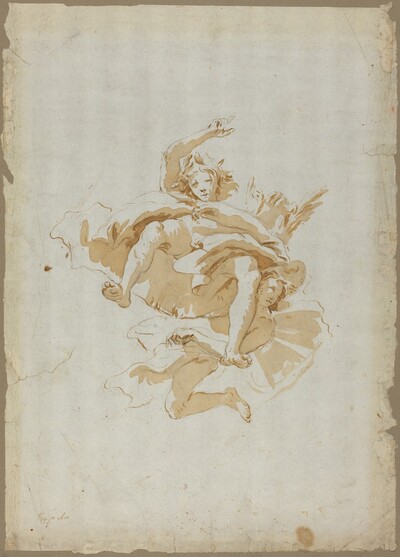
Drawing for a Ceiling Fresco
Anonymous Artist
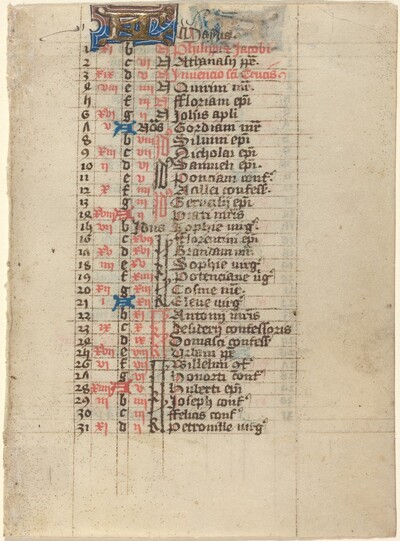
Page from a Book of Hours
French 15th Century