Provenance
Estate of James Parmelee, Washington, D.C. (?-1940); The Cleveland Museum of Art, Cleveland, OH (October 30, 1940-)
Accession Number
1940.731
Medium
charcoal heightened with white
Dimensions
Sheet: 27.9 x 38.4 cm (11 x 15 1/8 in.)
Classification
Drawing
Credit Line
Bequest of James Parmelee
Tags
Drawing Neoclassical & Romantic (1751–1850) Charcoal British Color: Orange
Background & Context
Background Story
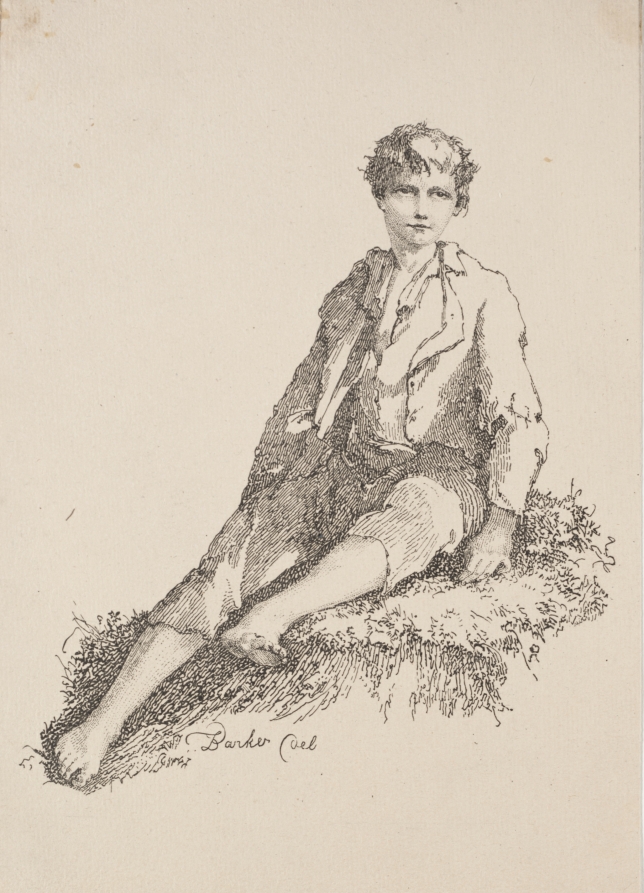
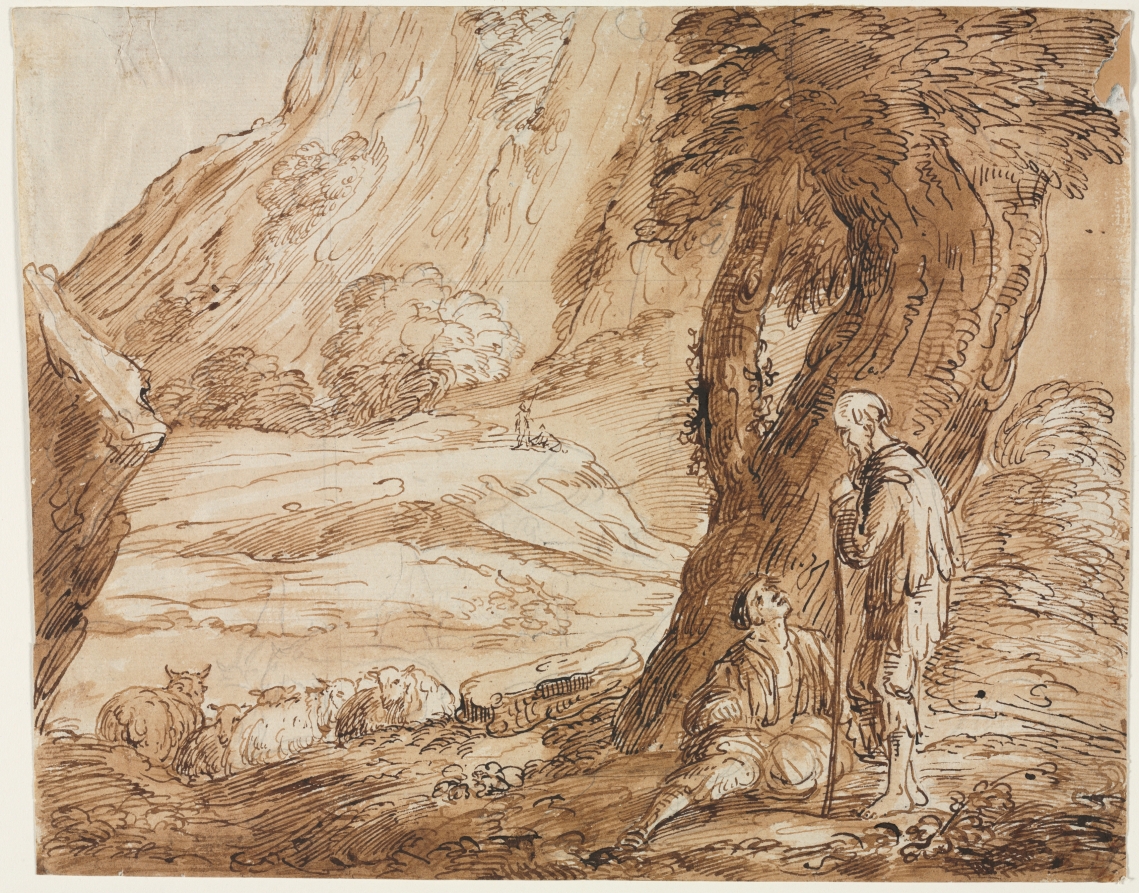
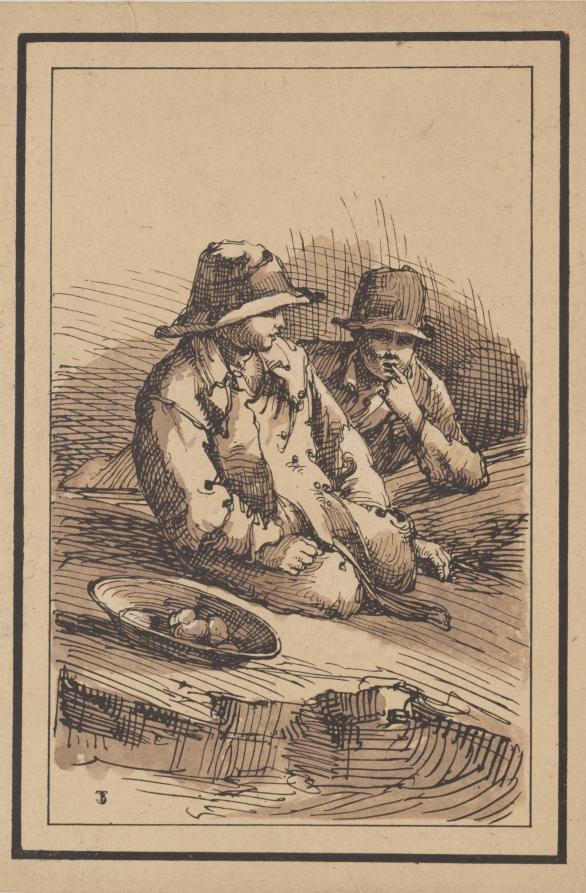
The Halt at the Spring by Thomas Barker, created between approximately 1789 and 1847, depicts a pastoral scene of travelers or animals pausing at a water source—a subject with deep roots in European painting. Barker, known as Barker of Bath, was a significant figure in the British art world of the late eighteenth and early nineteenth centuries. He established himself in Bath, where the wealthy society that frequented the spa town provided a ready market for his rustic genre scenes and landscapes. The subject of resting at a spring connects to a long pictorial tradition stretching back to Claude Lorrain's idealized landscapes and continuing through the Dutch Italianate painters. Barker's treatment likely combines this classical pedigree with the distinctly English quality of observation that characterized his best work. The spring itself serves as both a practical stopping point and a symbol ofrefreshment and renewal, while the act of halting suggests a moment of rest within a journey—a compositional device that allows the artist to explore stillness and movement simultaneously. Barker was particularly skilled at figure painting within landscape settings, and his works were admired for their naturalism and technical accomplishment. He was one of the first British artists to experiment with lithography, and his genre scenes were widely reproduced as prints, making his imagery familiar to a broad Victorian audience.
Cultural Impact
Barker's pastoral scenes helped define the English rustic genre tradition, influencing how the British public visualized rural life and contributing to the Romantic idealization of the countryside that shaped national identity.
Why It Matters
This work represents an important bridge between classical landscape traditions and distinctly English pastoral painting, exemplifying the genre scenes that made Barker one of Bath's most celebrated artists.