
Accession Number
1942.121
Medium
oil on canvas
Dimensions
Unframed: 71.5 x 92.5 cm (28 1/8 x 36 7/16 in.)
Classification
Painting
Credit Line
Bequest of Julia Morgan Marlatt
Tags
Painting Impressionist & Modern (1851–1900) Oil Painting Canvas American Color: Gray
Background & Context
Background Story
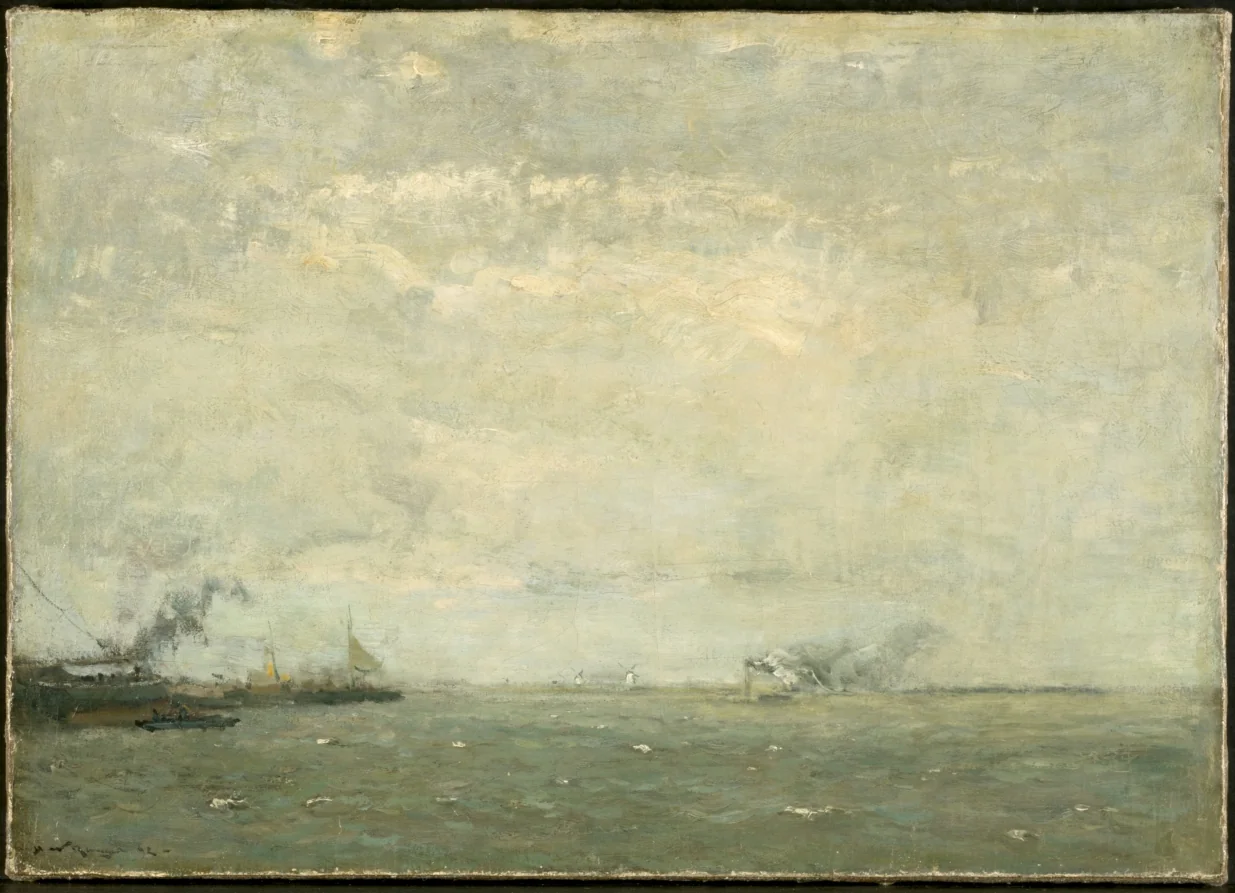
The Lone Sentinel — almost certainly a single prominent tree standing in a landscape — is one of the most characteristic subjects of American Tonalist painting. The solitary tree, silhouetted against an atmospheric sky, embodies the Tonalist aesthetic of quiet contemplation and the spiritual dimension of landscape. Ranger's treatment uses his characteristic subdued palette and broad massing to create a single tonal experience that communicates the emotional quality of the scene — solitude, patience, endurance — more directly than any amount of topographic detail could achieve.
Cultural Impact
The lone tree was a central motif in American Tonalist painting, carrying associations with Emersonian individualism and the spiritual significance of nature that distinguished the American landscape tradition from its European counterparts. Ranger's Lone Sentinel participates in this tradition, using the solitary tree as a vehicle for the mood of contemplative solitude that was Tonalism's most distinctive contribution to American art.
Why It Matters
The Lone Sentinel is Ranger's Tonalist philosophy in a single image: one tree, one mood, one tonal unity. The solitary tree is not just a landscape element — it is a personality, a stance, a way of being in the world. ranger's Tonalism makes the tree a metaphor for the viewer's own solitude.


![Saint Bernard and Saint Catherine of Alexandria with the Virgin of the Annunciation [right panel]](https://api.nga.gov/iiif/e6890364-4d99-4684-a62b-5060ee3c3446/full/400,/0/default.jpg)