Description
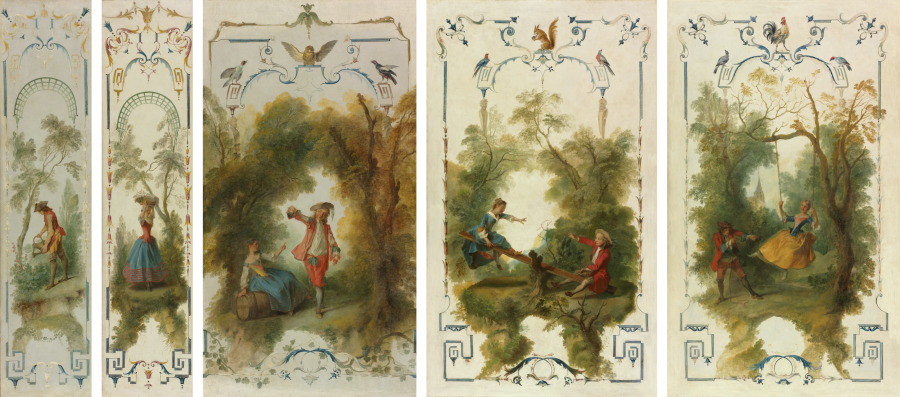
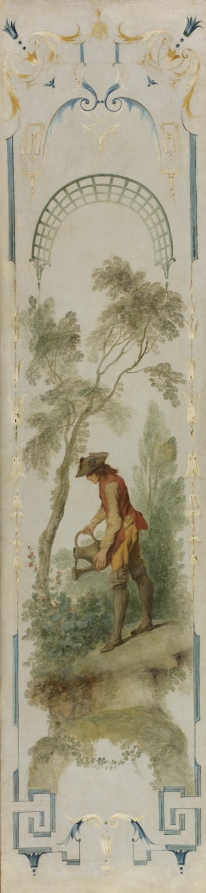
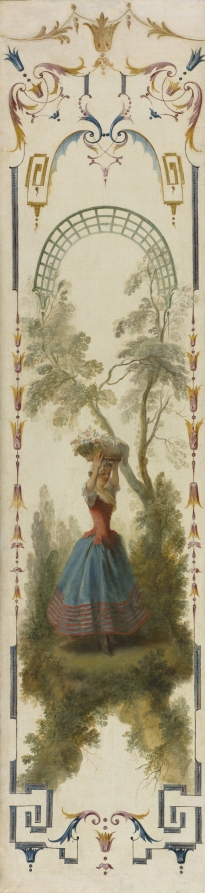
A category of painting invented in France in the early 1700s is the fête galante (gallant party), with subject matter that hovers between fantasy and reality. The figures in theatrical costume derive from Italian street performers seen in Paris, while the playful outdoor garden party connects to leisure activities enjoyed by certain Parisian elites. The arts of conversation, music, and painting—all highly valued by French aristocracy—intersect in this work.
Provenance
William Sharp Ogden (1845-1926), Finchley, London; (Sale: Christie’s, London, December 6, 1927, no. 50) (December 6, 1927); [Wildenstein & Co., New York, NY]; Elisabeth Severance Prentiss (Mrs. Francis Fleury Prentiss) (1865-1944), Cleveland, OH, gifted to the Cleveland Museum of Art (1928-1944); The Cleveland Museum of Art, Cleveland, OH (1944-)
Accession Number
1944.86
Medium
oil on canvas
Dimensions
Framed: 103 x 90.5 x 9 cm (40 9/16 x 35 5/8 x 3 9/16 in.); Unframed: 80.1 x 64 cm (31 9/16 x 25 3/16 in.)
Classification
Painting
Credit Line
Elisabeth Severance Prentiss Collection
Tags
Painting Baroque (1600–1750) Oil Painting Canvas French Color: Brown
Background & Context
Background Story
Declaration of Love (c. 1720) represents a quintessential fête galante subject—the moment of romantic declaration that was the narrative engine of 18th-century French art and literature. The declaration, typically set in a garden or park, provided Lancret with the opportunity to combine landscape painting with the social observation that was his particular gift. The garden, with its formal layout and its associations with the cultivated nature that the French aristocracy preferred, created the setting where romantic declarations could be simultaneously private and public—visible but not overheard. The 1720 date places this during the Régence period, when the strict formality of Louis XIV's court had relaxed and the more intimate social rituals of the Rococo were developing. The declaration of love—a scene of personal intimacy—exemplified the new social mode: where the previous generation had painted formal court ceremonies, the Rococo generation painted private emotional moments. Lancret's treatment of the declaration captures the specific quality of Rococo romance—elegant, playful, and aware of its own theatricality. The figures' gestures, their costumes, and the garden setting together create an image of emotional experience that is simultaneously sincere and performed—the paradox that gives Rococo art its characteristic complexity.
Cultural Impact
Lancret's declaration-of-love paintings influenced how romantic intimacy was represented in 18th-century French art, establishing the garden declaration as a standard Rococo subject. The paintings influenced later French artists who similarly depicted private emotional moments within public settings. The declaration of love influenced how the relationship between sincerity and performance was explored in visual art.
Why It Matters
This painting matters because it captures the Rococo's characteristic combination of emotional sincerity and social performance—the declaration of love that is simultaneously authentic and theatrical. This paradox, which gives the fête galante its enduring fascination, was Lancret's particular subject, and his treatment of the declaration preserves the period's most characteristic emotional mode with the precision that both art history and social history require.