Provenance
Viscount Pierre de Chezelles and Vicomte Hippolyte le Sellier de Chezelles; Lord Duveen (1869-1939), London, England (by 1926 - at least 1933); Mr. 'Commodore' Louis Dudley Beaumont (1857-1942) and Mrs.
Beaumont (Helene M. Thomas) (1895-1988), Cap d’Antibes, France (about 1935–36-1942); Louis Dudley Beaumont Foundation, by gift to the Cleveland Museum of Art (1942-1948); The Cleveland Museum of Art, Cleveland, OH (1948-)
Accession Number
1948.176.5
Medium
oil on canvas
Dimensions
Framed: 157 x 96 x 5.5 cm (61 13/16 x 37 13/16 x 2 3/16 in.); Unframed: 150.8 x 89.7 cm (59 3/8 x 35 5/16 in.)
Classification
Painting
Credit Line
Gift of the Louis Dudley Beaumont Foundation
Tags
Painting Baroque (1600–1750) Oil Painting Canvas French Color: Yellow Color: White
Background & Context
Background Story
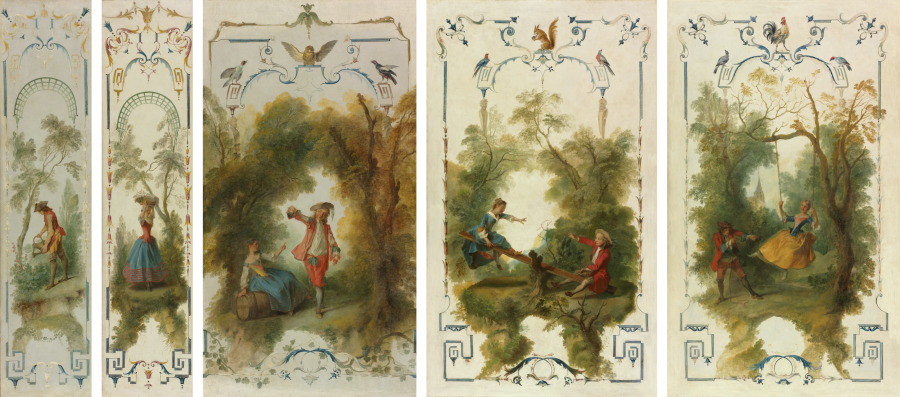
The Swing (c. 1723-1727) is one of Lancret's most celebrated compositions, depicting an aristocratic woman swinging in a garden while her companion pushes her—a subject that became one of the 18th century's most iconic images. The swing—the Rococo's most characteristic device—was a garden amusement that facilitated the display of costume, the spectacle of movement, and the specific combination of risk and pleasure that made swinging so erotically charged. The 1723-27 date places this during the period when the swing subject was being developed by several French painters—Fragonard's more famous version would follow in 1767—but Lancret's treatment was among the earliest and most influential. The swing's mechanics—the suspended seat, the pushing figure, and the arc described by the swinging woman—provided compositional opportunities that Lancret exploited with characteristic skill: the figure at the apex of the swing, momentarily suspended between rising and falling, created a moment of visual tension that was simultaneously decorative and suggestive. The garden setting, with its formal layout and its associations with aristocratic leisure, provided the appropriate context for the swing's display of elegant pleasure. The painting also documents the social rituals of the French aristocracy during the period before the Revolution—the specific quality of aristocratic leisure that was both gracious and oblivious to the forces that would eventually destroy it.
Cultural Impact
Lancret's swing paintings influenced how the Rococo's most iconic subject was developed, establishing conventions that Fragonard would later transform into one of the most celebrated paintings of the 18th century. The paintings influenced later French artists who similarly found subjects in the interplay of pleasure and risk that the swing represented. The swing subject influenced how aristocratic leisure was visually coded, connecting physical amusement to social and erotic meaning.
Why It Matters
This painting matters because it represents the origin of one of the 18th century's most iconic subjects—the swing as a vehicle for the Rococo's characteristic combination of elegance, pleasure, and erotic suggestion. Lancret's treatment, more decorous than Fragonard's later version but equally aware of the subject's implications, preserves the early Rococo's balance of play and meaning.