Provenance
Viscount Pierre de Chezelles and Vicomte Hippolyte le Sellier de Chezelles; Lord Duveen (1869-1939), London, England (by 1926 - at least 1933); Mr. 'Commodore' Louis Dudley Beaumont (1857-1942) and Mrs.
Beaumont (Helene M. Thomas) (1895-1988), Cap d’Antibes, France (about 1935–36-1942); Louis Dudley Beaumont Foundation, by gift to the Cleveland Museum of Art (1942-1948); The Cleveland Museum of Art, Cleveland, OH (1948-)
Accession Number
1948.176.4
Medium
oil on canvas
Dimensions
Framed: 157 x 96 x 5.5 cm (61 13/16 x 37 13/16 x 2 3/16 in.); Unframed: 150.7 x 89.4 cm (59 5/16 x 35 3/16 in.)
Classification
Painting
Credit Line
Gift of the Louis Dudley Beaumont Foundation
Tags
Painting Baroque (1600–1750) Oil Painting Canvas French Color: Yellow Color: Gold Color: White
Background & Context
Background Story
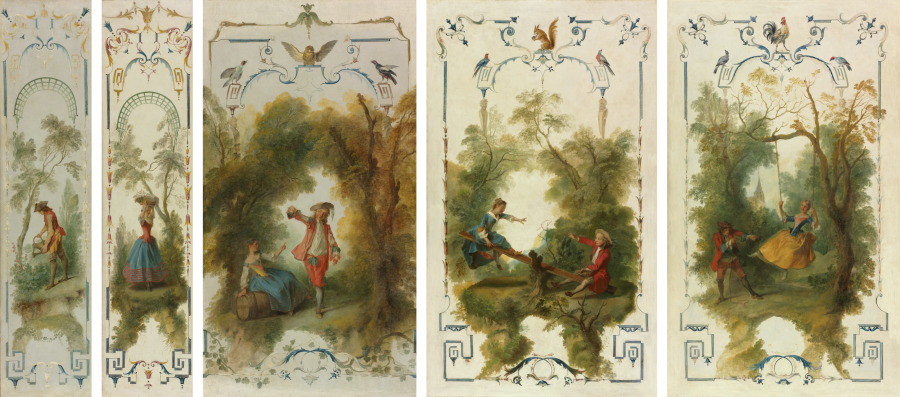
The See-Saw (c. 1723-1727) captures a moment of aristocratic play—a garden game that provided Lancret with a subject combining figure painting, landscape, and the depiction of amusement that was the fête galante's characteristic theme. The see-saw, a simple device consisting of a plank balanced on a fulcrum, was one of many garden games that 18th-century French aristocratic society enjoyed. The game's mechanics—two figures balanced at opposite ends, each rising and falling as the other descends—provided Lancret with a compositional challenge that his decorative intelligence was well equipped to solve. The 1723-27 date places this during the period when Lancret was developing his most accomplished fête galante style—the balanced compositions, the elegant figures, and the landscape settings that defined the genre. The see-saw subject also carries the erotic implications that were central to fête galante meaning: the alternation of rising and falling, the physical intimacy of shared play, and the display of costume and posture that garden games facilitated all served the Rococo's characteristic interplay of innocence and suggestion. Lancret's treatment captures the game's physical comedy while maintaining the decorative elegance that distinguished his work from more prosaic genre painters.
Cultural Impact
Lancret's garden-game paintings influenced how aristocratic play was represented in 18th-century French art, establishing the garden game as a significant fête galante subject. The paintings influenced later Rococo artists who similarly found subjects in the interplay of play and suggestion. The see-saw subject influenced how the physical comedy of play was represented within the decorative conventions of the fête galante.
Why It Matters
This painting matters because it captures the Rococo's characteristic interplay of play and meaning—the garden game that is simultaneously innocent amusement and suggestive allegory—within a decorative composition that serves both the genre's social observation and its artistic conventions.