Description
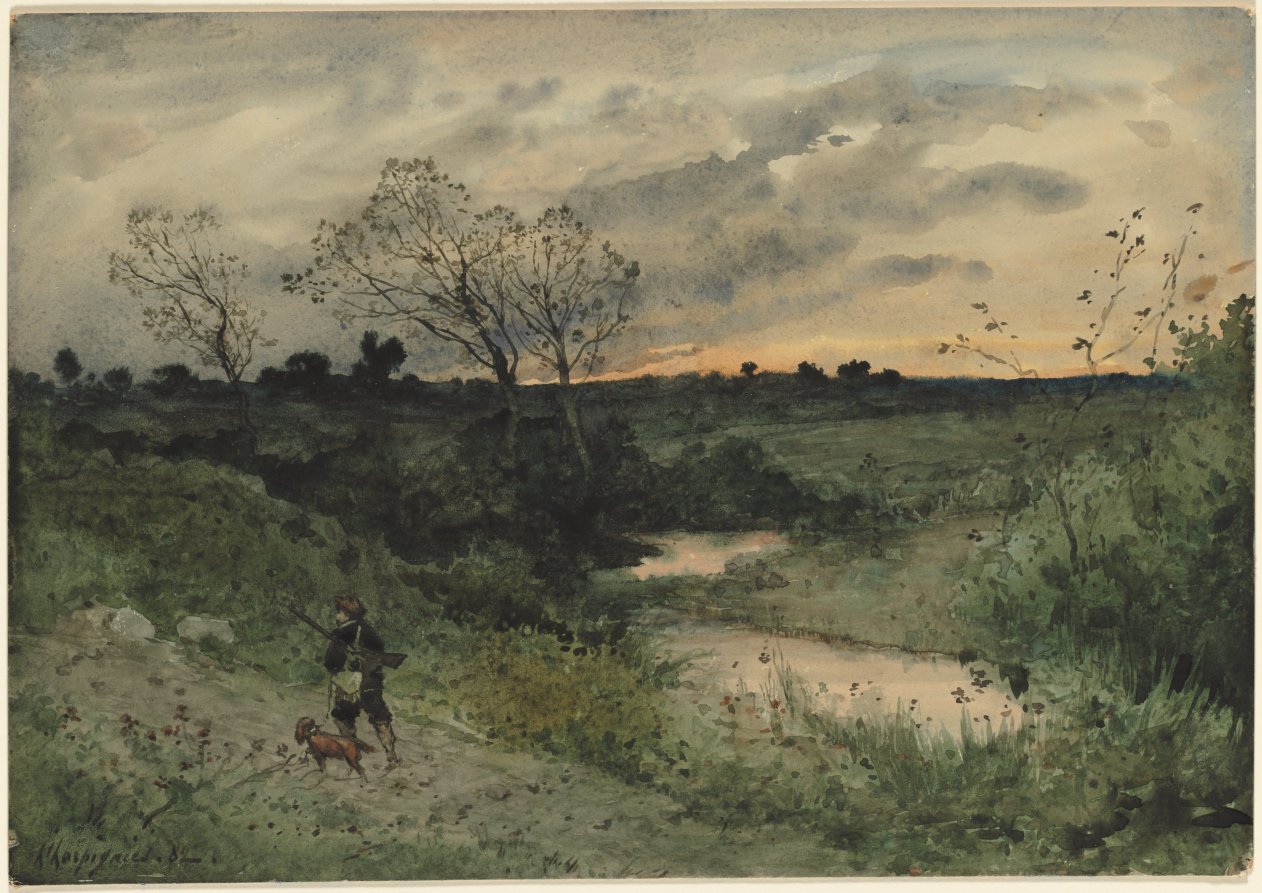
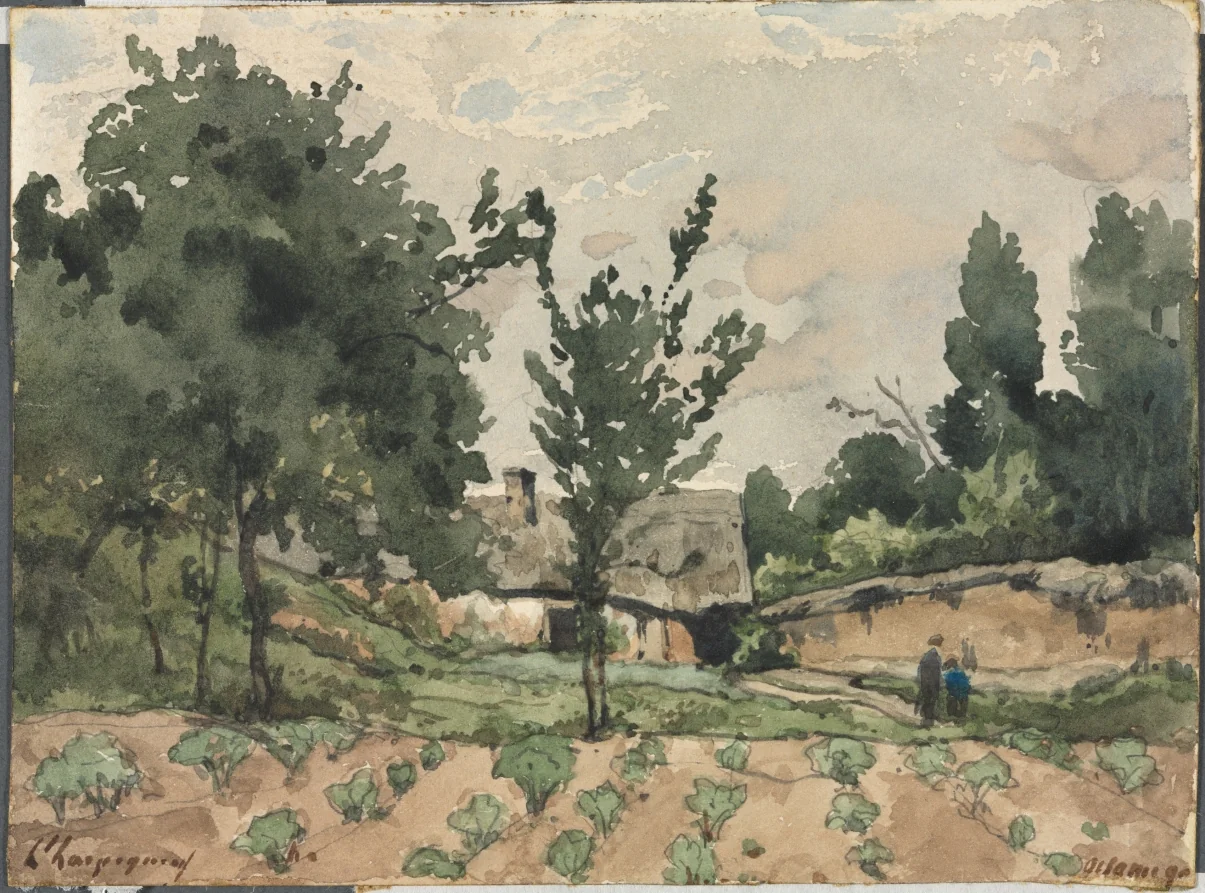
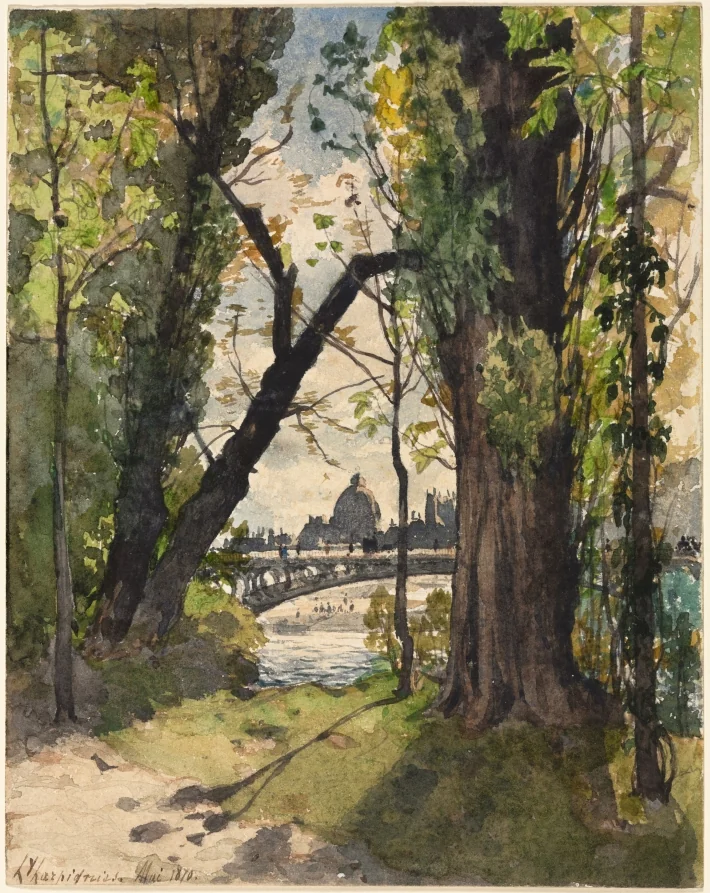
This watercolor belongs to a series of views of Paris which Harpignies painted just before the beginning of the Franco-Prussian War. Although Harpignies is often placed with the artists of the Barbizon school, he did not work in Fontainebleau—although he was influenced by the compositions of Camille Corot (also in this gallery). A talented and influential watercolorist, Harpignies’s primary subjects were landscapes and views of Paris. In this sheet, the artist records a view from the Bois de Boulogne, a famous park on the western edge of Paris.
Provenance
[]
Accession Number
1946.287
Medium
watercolor
Dimensions
Sheet: 23.9 x 19 cm (9 7/16 x 7 1/2 in.)
Classification
Drawing
Credit Line
In memory of Ralph King, gift of Mrs. Ralph King; Ralph T. Woods, Charles G. King; and Frances King Schafer
Tags
Drawing Impressionist & Modern (1851–1900) Watercolor French Color: Yellow
Background & Context
Background Story
This watercolor of the Institut de France seen from the Pont Royal is Harpignies' most Parisian subject — a view of the institution that embodied French intellectual life, painted from one of the city's most characteristic viewpoints. The Institut de France, with its celebrated dome and neoclassical façade, is one of the landmarks of the Parisian Left Bank, and the view from the foot of the Pont Royal provides a compositional framework that combines architecture, river, and sky in a single design. Harpignies' watercolor technique — fluid washes for the sky and water, more precise handling for the architecture — demonstrates the versatility that made him one of the most respected watercolorists of his generation.
Cultural Impact
Harpignies was primarily a landscape painter, but his Parisian views demonstrate his ability to apply landscape principles to urban subjects. The Institut de France is treated not as an architectural subject to be rendered in precise perspective but as an element in a larger composition of sky, water, and building — landscape principles applied to the city.
Why It Matters
View of the Institut de France is Harpignies treating Paris as landscape: the building, the river, the bridge, and the sky organized into a composition that prioritizes atmosphere over architecture. The watercolor medium — fluid washes for sky and water, more precise handling for the building — is perfectly suited to this approach.