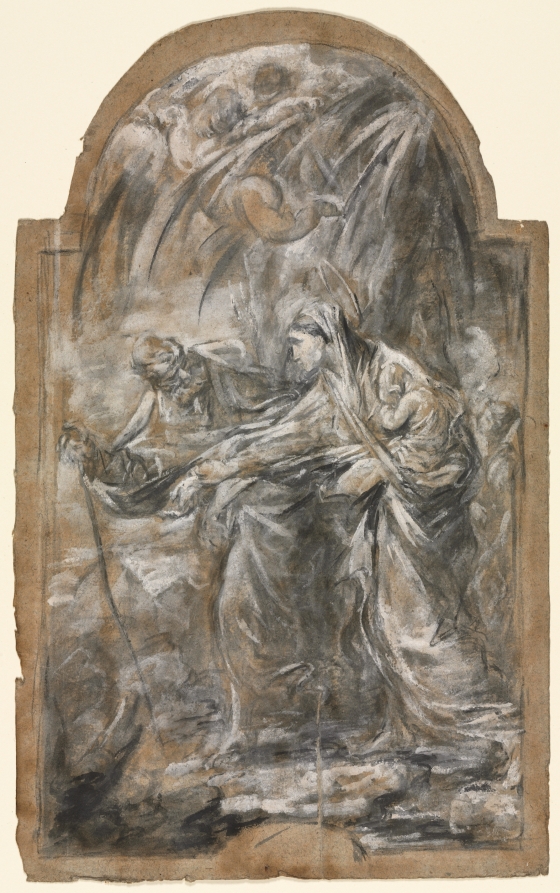
A Standing Woman Holding a Child, a Seated Male at her Feet
first half 18th century?
Accession Number
1950.318
Medium
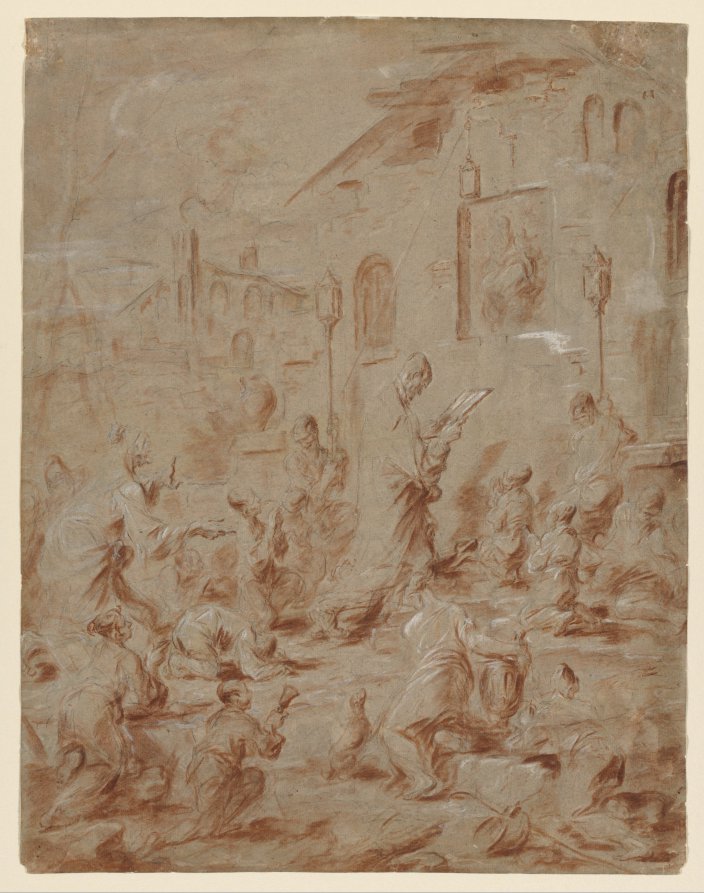
pen and brown ink with brush and brown wash over red chalk
Dimensions
Sheet: 19.2 x 22.9 cm (7 9/16 x 9 in.)
Classification
Drawing
Credit Line
Gift of Alessandro Brass in memory of Mary Spedding Milliken
Tags
Drawing Baroque (1600–1750) Ink Italian Color: White Color: Gray
Background & Context
Background Story
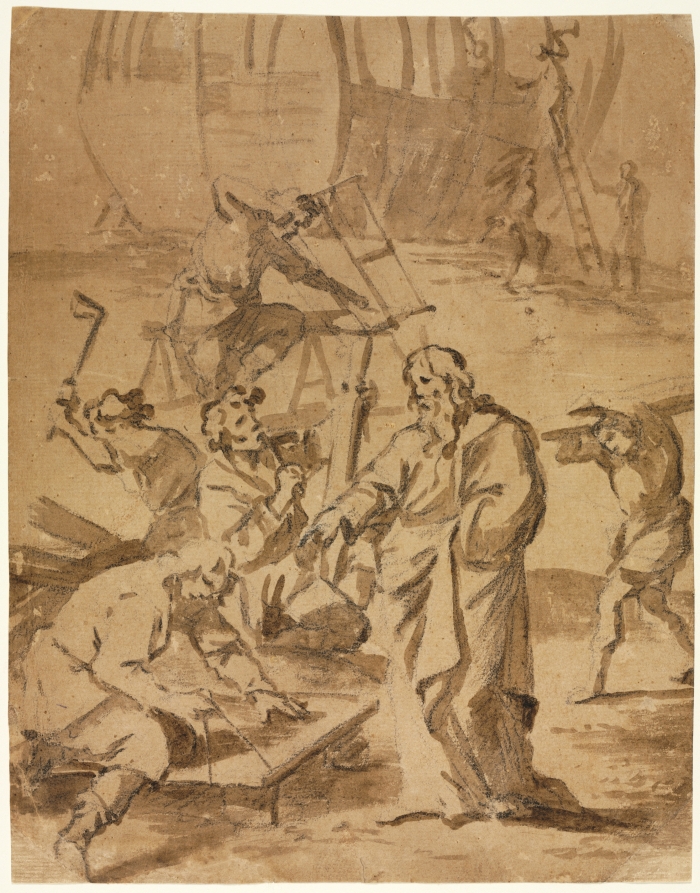
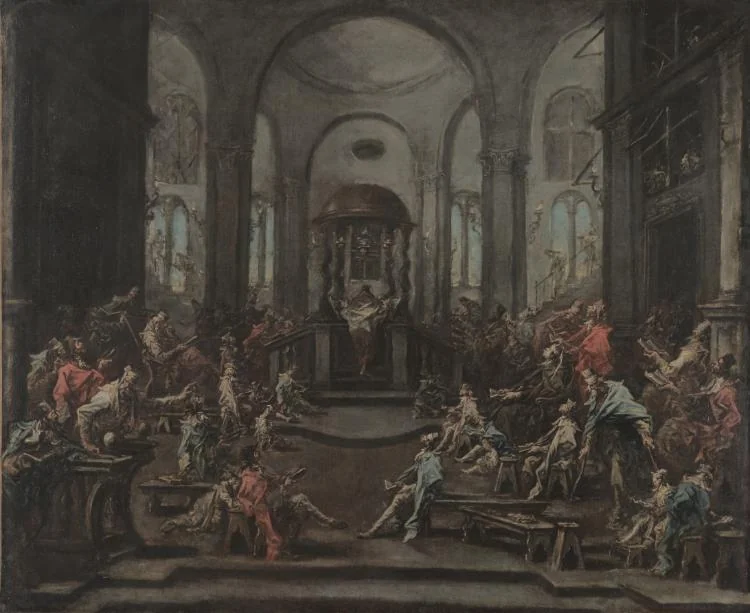
This drawing of a standing woman with a child and a seated male figure demonstrates Magnasco's working method in a medium that reveals his characteristic rapid execution more directly than his paintings. The combination of red chalk underdrawing, pen and brown ink, and brush and brown wash shows the three stages of his process: the red chalk establishes the composition, the pen and ink defines the forms, and the wash provides the tonal values that create depth and atmosphere. The elongated figures and rapid pen work are immediately recognizable as Magnasco's signature style, even in a drawing that lacks the dramatic subject matter of his more famous paintings.
Cultural Impact
Magnasco's drawings are rarer than his paintings but provide essential evidence of his working method. The three-stage technique visible in this drawing—red chalk, pen and ink, brown wash—is the same process that underlies his more finished works, revealing that his apparently chaotic brushwork is built on a solid foundation of careful composition and controlled tonal planning.
Why It Matters
A Standing Woman Holding a Child reveals Magnasco's process: red chalk for composition, pen and ink for form, brown wash for atmosphere. The elongated figures and rapid execution are instantly recognizable, but the drawing shows that even Magnasco's most turbulent paintings are built on a foundation of careful planning.