Provenance
Collection of the artist (Lugt 143, estate stamp, lower right, in black ink). Carl F. Clarke, Detroit, Michigan
Accession Number
1954.402
Medium
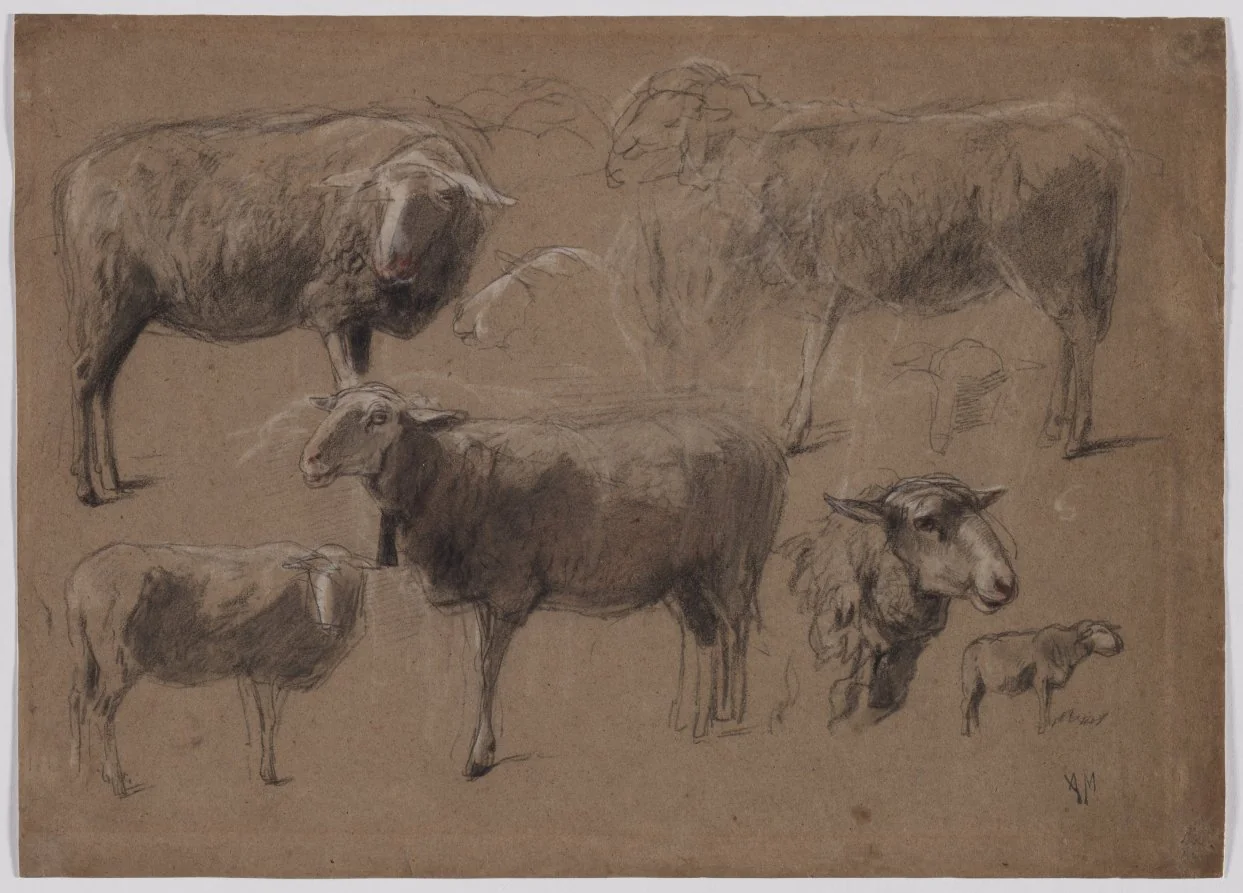
black and white chalk, with red chalk
Dimensions
Sheet: 32.5 x 45.5 cm (12 13/16 x 17 15/16 in.); Secondary Support: 32.5 x 45.5 cm (12 13/16 x 17 15/16 in.)
Classification
Drawing
Credit Line
Bequest of Carl F. Clarke
Tags
Drawing Neoclassical & Romantic (1751–1850) Dutch Color: Brown
Background & Context
Background Story
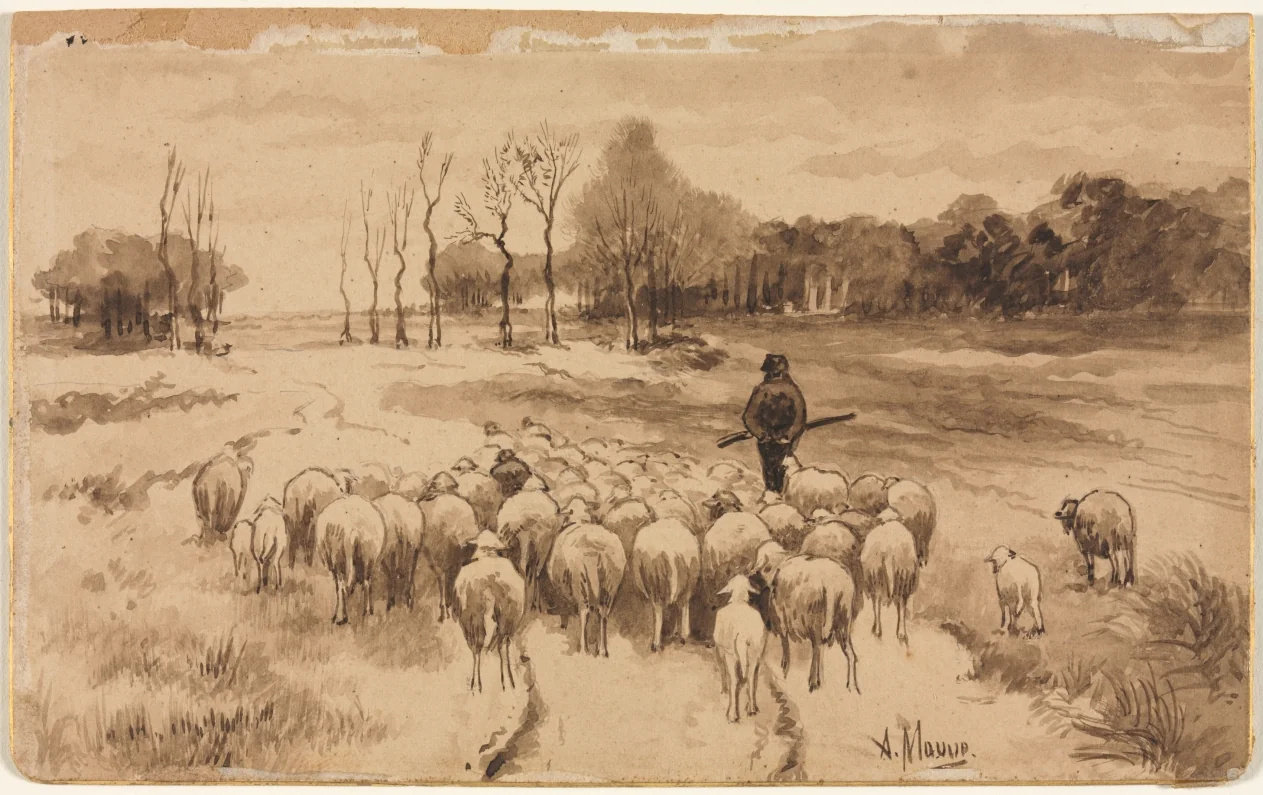
Anton Mauve (1838-1888) was a Dutch painter of the Hague School, known for his atmospheric landscapes with sheep and shepherds that defined the pastoral tradition in Dutch painting for generations. Studies of Sheep from c. 1850-88 is a chalk study depicting sheep in the combination of black, white, and red chalk that allows a range of tonal values and color notes for the animal's fleece and the landscape setting. The study demonstrates Mauve's ability to capture the physical presence and character of sheep with a minimum of means—the black, white, and red chalk suggest the fleece, the shadows, and the warmth of the animal's body with an economy that distinguishes the best animal studies.
Cultural Impact
Mauve's sheep studies are among the most accomplished works in the Dutch tradition of animal drawing because they combine the Hague School's atmospheric sensitivity with the specific observation of animal anatomy and character. Studies of Sheep demonstrates the working method behind Mauve's celebrated pastoral landscapes: the careful observation of sheep in chalk studies that provided the raw material for the finished paintings of sheep and shepherds grazing in the Dutch polders.
Why It Matters
Studies of Sheep is Mauve's working method in chalk: black, white, and red chalk capturing the physical presence and character of sheep with an economy of means that distinguishes the best animal studies. The chalk study provided the raw material for Mauve's finished pastoral landscapes—the careful observation behind the atmospheric compositions.