Provenance
Valentine; Valentine (not stamped, not in Lugt) (according to a note on an old mat (now lost) recorded on present mat)
Accession Number
1954.675.a
Medium
brush and brown wash over graphite; framing lines in graphite
Dimensions
Sheet: 16.5 x 26.1 cm (6 1/2 x 10 1/4 in.)
Classification
Drawing
Credit Line
The Norweb Collection
Tags
Drawing Neoclassical & Romantic (1751–1850) Graphite & Pencil French Color: Orange
Background & Context
Background Story
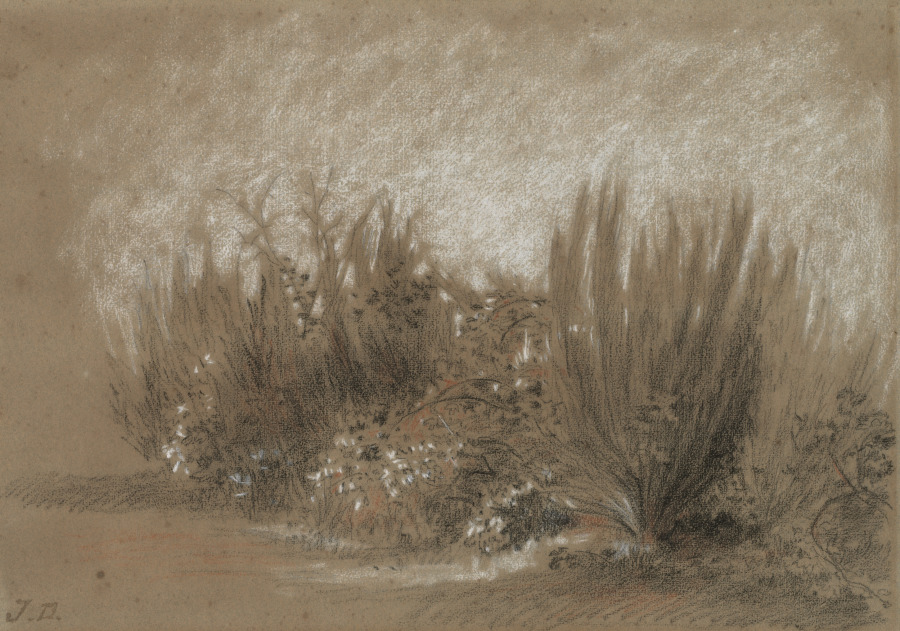
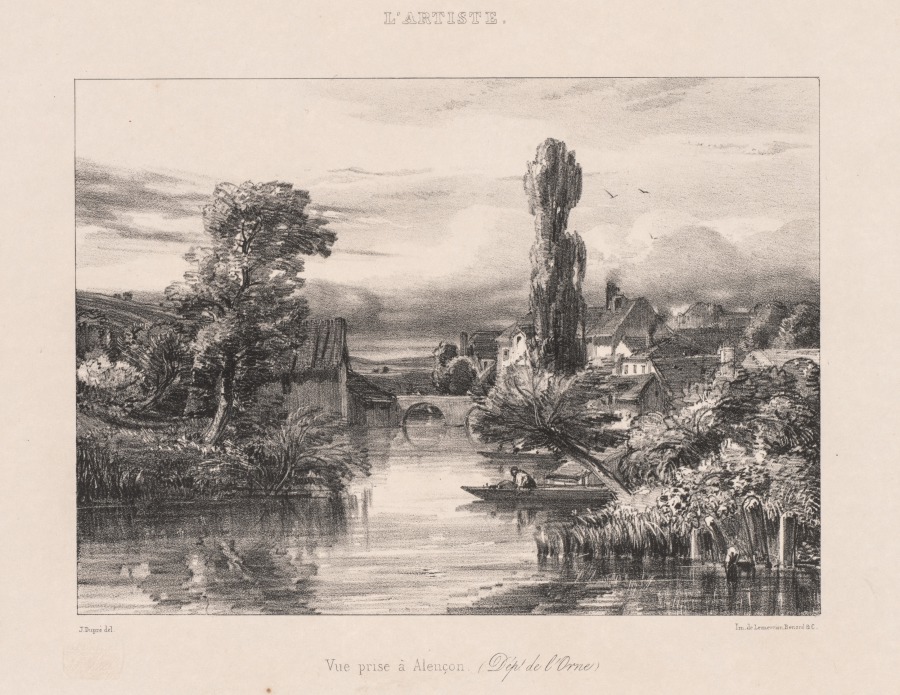
This drawing in brush and brown wash demonstrates Dupré's mastery of the landscape sketch. Working in wash over graphite underdrawing, he could rapidly capture the structure and atmosphere of a scene with minimal means. The cattle provide scale and a focus for the composition, but the true subject is the landscape itself — its trees, its sky, its sense of space. Brown wash was a favored medium of the Barbizon painters for outdoor studies, its warmth suiting the golden light of the Forest of Fontainebleau region.
Cultural Impact
The Barbizon painters' drawings and washed sketches are increasingly recognized as among their most modern works. Freed from the obligation to produce finished exhibition canvases, they could experiment with abbreviated notation, unconventional cropping, and atmospheric effects that would have seemed too radical for salon display. Dupré's wash drawings anticipate the rapid notation of later Impressionist sketches.
Why It Matters
Landscape with Cattle in wash is Dupré thinking visually — capturing an impression with economy and directness that his finished canvases sometimes lose. These sketches are where Barbizon naturalism comes closest to Impressionist immediacy.