Accession Number
1955.544
Medium
oil on canvas
Dimensions
Unframed: 45.3 x 66 cm (17 13/16 x 26 in.)
Classification
Painting
Credit Line
Anonymous Gift, The Frank E. and Theano Wattles Case Memorial Collection
Tags
Painting Impressionist & Modern (1851–1900) Oil Painting Canvas American Color: Orange
Background & Context
Background Story
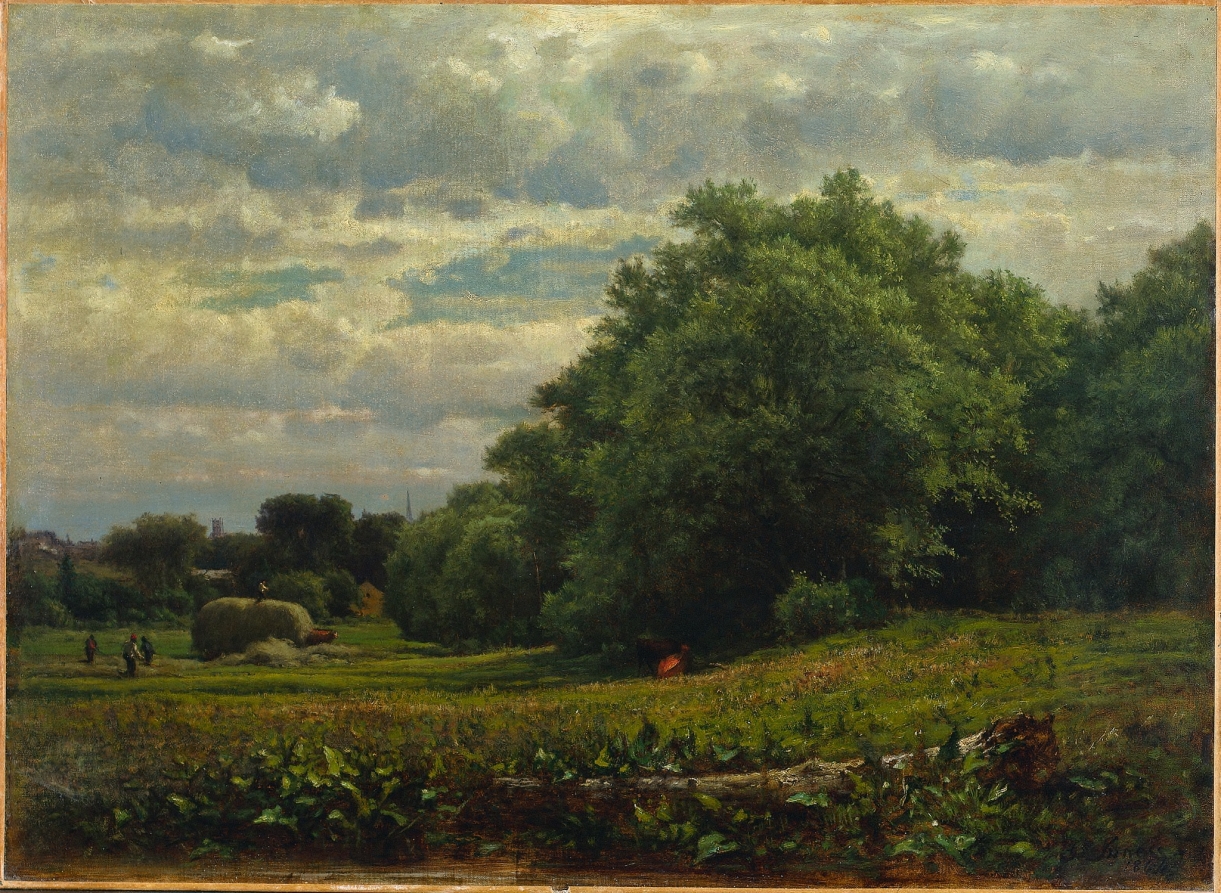
Cows in a Field (before 1956) is an Inness subject that connects him to the broader American pastoral tradition. Cattle in landscape had been a significant subject since Aelbert Cuyp's Dutch Golden Age paintings, and the American pastoral tradition—through Homer, Inness, and others—adapted European pastoral conventions to New World conditions. Inness's treatment of cows in a field applies Tonalist principles to this conventional subject: the cattle are absorbed into the atmospheric unity of the scene rather than standing out as individual animals, their forms dissolving into the field's light and air. The painting's date (before 1956, likely much earlier) suggests it may belong to any period of Inness's mature career. The cow subject, while apparently humble, allowed Inness to explore the relationship between animal life and landscape, between the individual and the environment, that was central to Tonalist philosophy. The pastoral setting—cows in a field under an American sky—carries symbolic significance in Tonalist terms: the animals' peaceful existence within their environment suggests the harmony between creature and creation that Swedenborgian theology understood as the natural world's deepest reality.
Cultural Impact
Inness's pastoral paintings influenced the American Tonalist tradition of atmospheric pastoral, establishing conventions for representing cattle within landscape that influenced later American painters. The paintings influenced how American agricultural subjects were represented in art, introducing atmospheric and spiritual dimensions that elevated pastoral painting beyond mere genre convention. The cow subject connected Inness to the broader European pastoral tradition while establishing a distinctly American version.
Why It Matters
This painting matters because it demonstrates how Tonalist principles could serve even the most conventional landscape subjects. Cows in a field—a subject that had been painted thousands of times—becomes in Inness's treatment an image of atmospheric beauty and spiritual resonance, arguing that artistic significance is not a function of original subjects but of original seeing.