Description
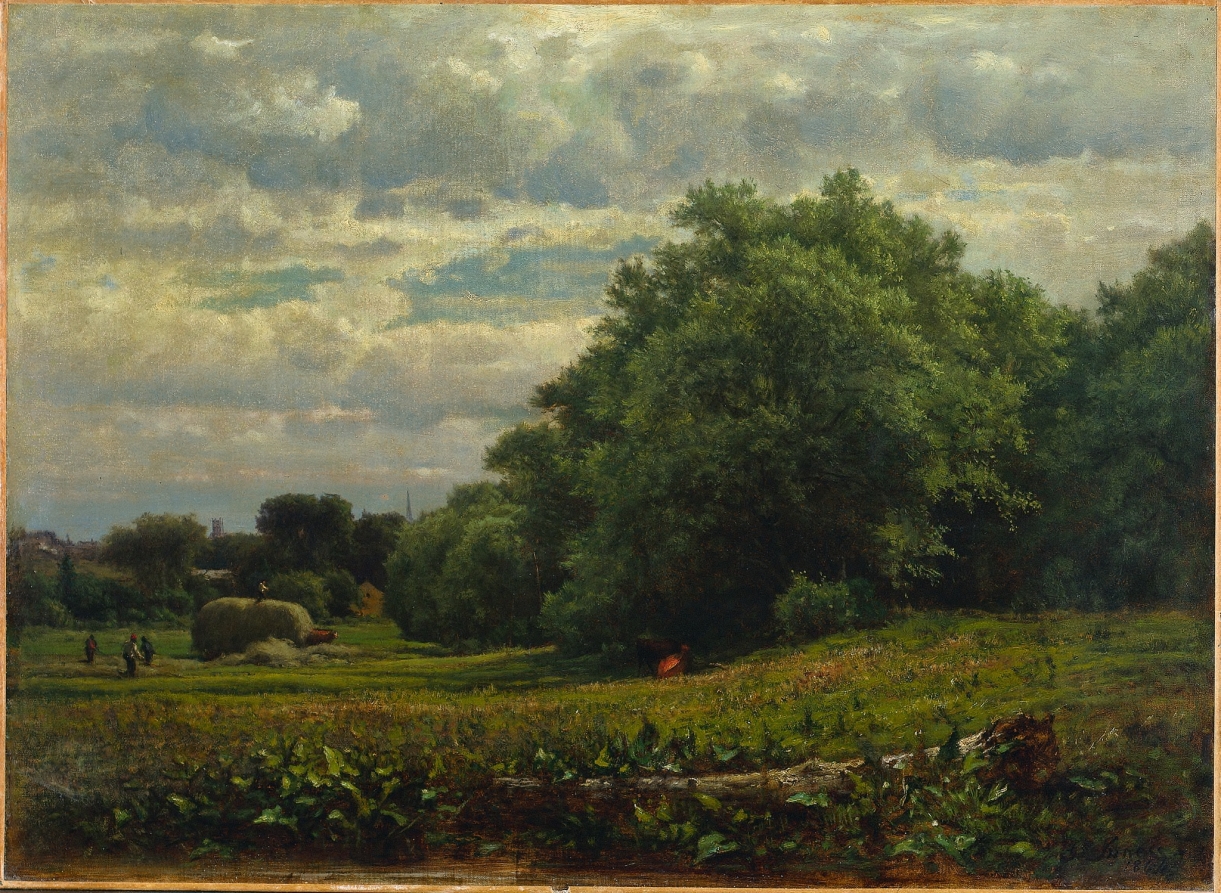
Highly prolific, Inness created more than 1,000 works during a career lasting 50 years. Dated just two years before his death, Sunny Autumn Day epitomizes his late style in which the physical landscape is transformed into something akin to a spiritual apparition. Featuring blurred forms and atmospheric effects from translucent colors, this scene reflects Inness’s mystical view of the natural world.
Provenance
Thomas B. Clarke, New York, NY [1884-1931], purchased from artist1 (By October 1892-1899); (American Art Galleries, American Art Association, New York, Feb. 14-18, 1899, no. 184, sold to Mr. and Mrs. Chauncey J. Blair) (1899); Chauncey J. [1843–1916] and Mary Mitchell Blair [1856-1940], Chicago1 (1899-); Walter Clark Runyon [1857-1929] and Berenice Agnew Runyon [b. 1873], Scarsdale, NY1 (-1925); (Macbeth Gallery, New York, and George E. Gage Gallery, Cleveland, sold to Elizabeth Bingham Blossom)1 (1925); The Cleveland Museum of Art, Cleveland, Ohio (1956-)
Accession Number
1956.578
Medium
oil on canvas
Dimensions
Framed: 111.4 x 137.5 x 12.1 cm (43 7/8 x 54 1/8 x 4 3/4 in.); Unframed: 81 x 106 cm (31 7/8 x 41 3/4 in.); Former: 101 x 127 x 7.6 cm (39 3/4 x 50 x 3 in.)
Classification
Painting
Credit Line
Anonymous Gift
Tags
Painting Impressionist & Modern (1851–1900) Oil Painting Canvas American Color: Yellow Color: Gold
Background & Context
Background Story
Sunny Autumn Day (1892) is a late work that captures the season Inness loved most—the American fall—with the warm, golden light that distinguishes his best autumn paintings. The year 1892, two years before Inness's death, finds the artist still painting with undiminished energy and increasing authority. The sunny autumn day of the title specifies the exact conditions Inness sought: not the dramatic colors of peak fall foliage but the gentler warmth of late autumn sunlight on a landscape that has largely shed its leaves. This distinction reveals Inness's preference for atmospheric subtlety over visual spectacle—the same sunny day that a Hudson River School painter might treat with chromatic emphasis, Inness renders with atmospheric nuance. The painting's Tonalist handling creates a unified atmosphere where sunlight, air, and landscape merge into a single visual experience. The autumn season, with its associations of completion, harvest, and the approach of winter, carried symbolic resonance for the aging Inness—a Swedenborgian who understood seasonal change as reflection of spiritual realities. The painting's warm palette—gold, amber, and the muted greens of late autumn—creates Innes's characteristic atmosphere of spiritual warmth that made his late paintings among the most sought after in American art.
Cultural Impact
Inness's late autumn paintings influenced American Tonalist painting at its most accomplished, establishing standards of atmospheric warmth and spiritual resonance that defined the movement. The paintings influenced later American painters from the American Impressionists to early modernists who similarly valued atmospheric effect over topographical detail. The autumn subject, treated with Tonalist subtlety rather than Hudson River School chromatic display, influenced how American fall scenery was represented in art.
Why It Matters
This painting matters because it represents an artist who had spent a lifetime developing his vision and was still finding new depth in familiar subjects. The sunny autumn day of 1892 is not merely a weather condition but a spiritual state—the warmth, clarity, and gentle beauty of an autumn afternoon become, in Inness's treatment, evidence of divine benevolence manifesting through the natural world.