Provenance
Chevalier de Damery, Paris; A. W. M. Mensing, Amsterdam; Edward Belden Greene, Cleveland; Chevalier de Damery, Paris; A. W. M. Mensing, Amsterdam; Edward Belden Greene, Cleveland
Accession Number
1960.132
Medium
black and red chalk
Dimensions
N/A
Classification
Drawing
Credit Line
Gift of Mrs. A. Dean Perry in memory of Mr. and Mrs. Edward Belden Greene
Tags
Drawing Neoclassical & Romantic (1751–1850) French Color: Orange
Background & Context
Background Story
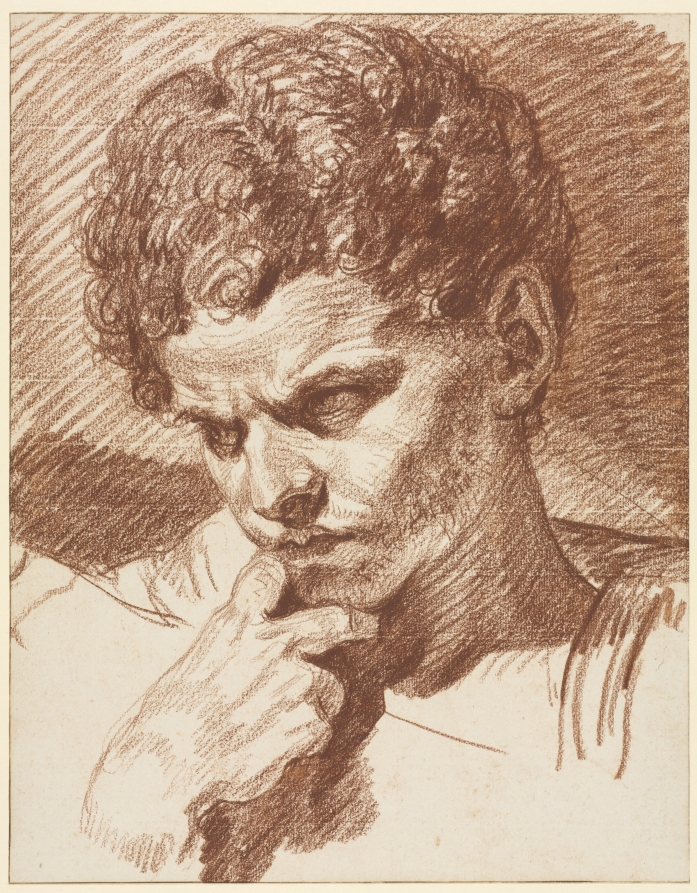
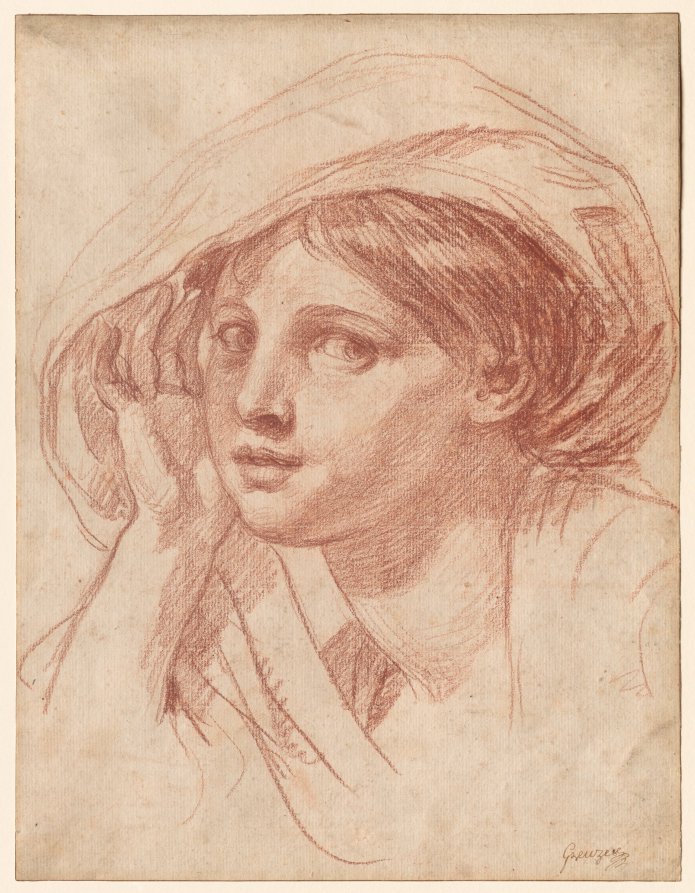
Jean-Baptiste Greuze (1725-1805) was a French painter known for the sentimental genre scenes and expressive heads that made him one of the most popular painters of the French 18th century. Head of a Girl from 1763 depicts a young girl in the expressive, sentimental manner that distinguishes Greuze's best head studies from the more formal portrait painting of his contemporaries. The 1763 date places this in Greuze's most productive period, when his expressive heads and sentimental genre scenes were the most popular paintings in Paris, and the Head of a Girl shows the expressive manner that made Greuze the darling of the Parisian public.
Cultural Impact
Head of a Girl is important in the history of French 18th-century painting because it demonstrates the expressive, sentimental manner that Greuze brought to head studies as an alternative to formal portraiture. Greuze's expressive heads—combining the sensitivity of the portrait with the sentimentality of the genre scene—represent an important type of 18th-century French painting that influenced the development of both portraiture and genre painting.
Why It Matters
Head of a Girl is Greuze's expressive sentimentality: a young girl rendered in the sensitive, sentimental manner that made him one of the most popular painters of the French 18th century. The 1763 head study shows Greuze's alternative to formal portraiture—the expressive head that combines sensitivity with sentimentality.