Provenance
Edward Belden Greene, Cleveland; Jongkind sale (Lugt 1401, lower right, in black ink) [C.W. Kraushaar Art Galleries, New York (according to departmental cataloging sheet)]; Edward Belden Greene, Cleveland
Accession Number
1960.134
Medium
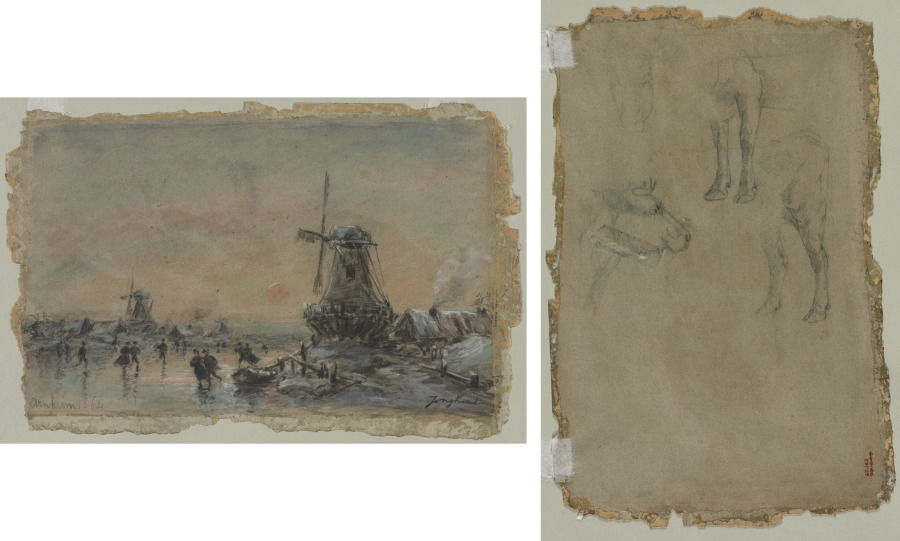
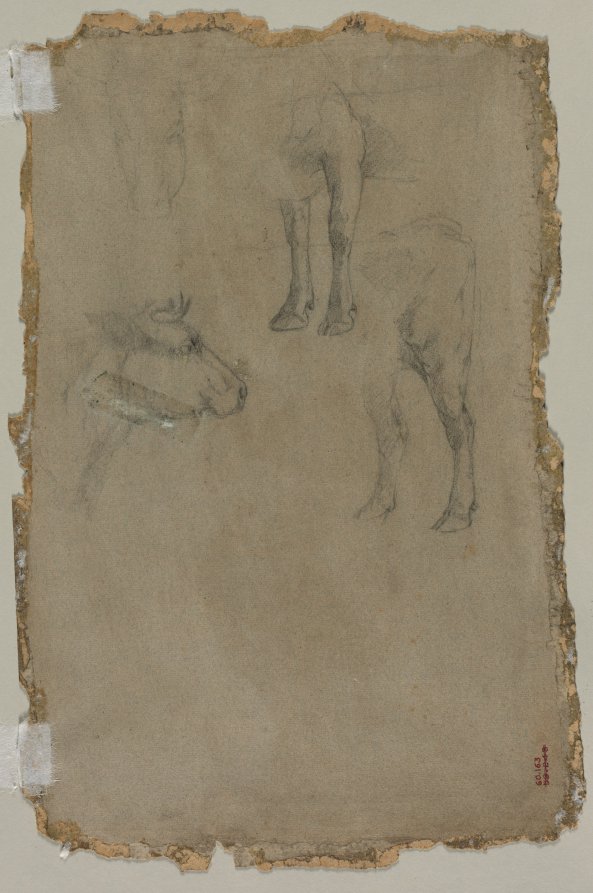
watercolor and gouache over black chalk
Dimensions
Sheet: 13.4 x 21 cm (5 1/4 x 8 1/4 in.)
Classification
Drawing
Credit Line
Gift of Mrs. A. Dean Perry in memory of Mr. and Mrs. Edward Belden Greene
Tags
Drawing Impressionist & Modern (1851–1900) Watercolor Gouache Dutch Color: Gray
Background & Context
Background Story
Bercy, now a neighborhood in eastern Paris but in Jongkind's day a wine port on the Seine, captures the riverside industry that fascinated the Impressionists before they had a name for their movement. Cranes, warehouses, and wine casks line the quai, and the Seine reflects the busy sky. Jongkind painted Bercy repeatedly — it was close to his Paris studio and offered the combination of water, industry, and atmospheric effects that suited his talents perfectly.
Cultural Impact
The blending of watercolor and gouache over black chalk underdrawing was Jongkind's signature technique: the chalk provides structure, the watercolor provides transparency and atmosphere, and the gouache provides opaque highlights. This layering method was a direct influence on the young Monet, who adopted Jongkind's habit of working outdoors in mixed media before committing to the pure oil technique that would define Impressionism.
Why It Matters
Bercy shows Jongkind's formula in its purest form: working harbor plus atmospheric effect equals modern landscape. It is a small painting with outsized influence.