Accession Number
1967.131
Medium
oil
Dimensions
Sheet: 35.2 x 27.3 cm (13 7/8 x 10 3/4 in.); Image: 30.7 x 22.3 cm (12 1/16 x 8 3/4 in.); Secondary Support: 45 x 33.4 cm (17 11/16 x 13 1/8 in.)
Classification
Drawing
Credit Line
Delia E. Holden Fund
Tags
Drawing Neoclassical & Romantic (1751–1850) Oil Painting Italian Color: Brown Color: Gray
Background & Context
Background Story
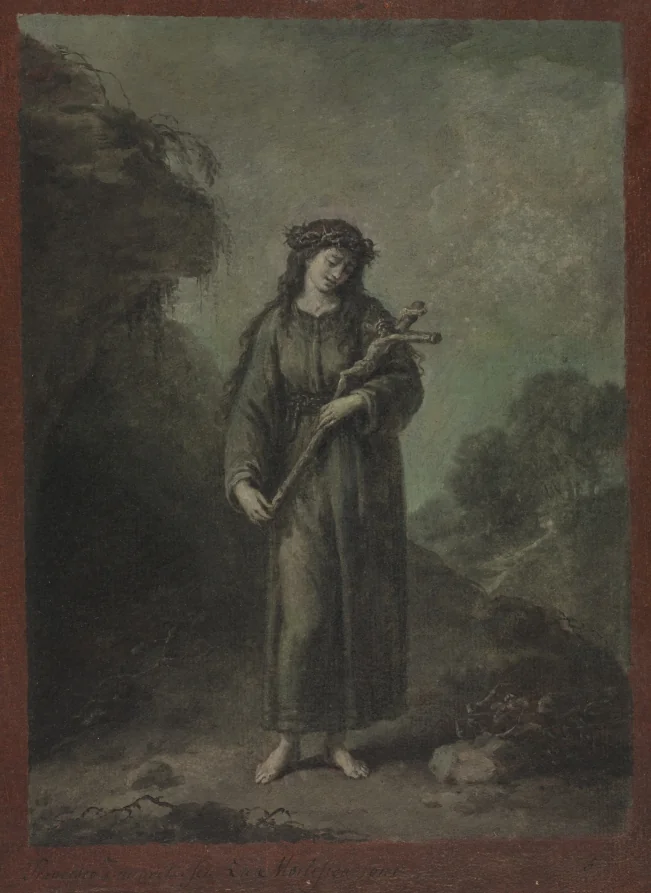
Francesco Zuccarelli (1702-1788) was an Italian painter known for the charming, pastoral landscapes that make him the most popular painter of the Italian Arcadian landscape tradition in 18th-century England. The Mortification from 1763 or before depicts an Arcadian landscape in the charming, pastoral manner that distinguishes Zuccarelli's best landscapes from the more formal landscape painting of his contemporaries. Zuccarelli was the most popular landscape painter in 18th-century England, and his charming, pastoral manner made the Arcadian landscape one of the most popular subjects in English painting.
Cultural Impact
The Mortification is important in the history of landscape painting because it demonstrates the charming, pastoral manner that made Zuccarelli the most popular landscape painter in 18th-century England. Zuccarelli's Arcadian landscapes—combining Italian scenery with pastoral figures in a charming, idyllic manner—represent the most popular type of landscape painting in 18th-century England, and The Mortification shows this type at its most characteristic.
Why It Matters
The Mortification is Zuccarelli's charming Arcadian landscape: an idyllic scene in the pastoral manner that made him the most popular landscape painter in 18th-century England. The 1763 painting shows the Arcadian landscape type at its most characteristic—Italian scenery with pastoral figures in a charming, idyllic manner.